Is it finally happening? Are we getting to the point where we can say 'What's Up' to dolphins while high-fiving with them? Has science finally cracked what we've been calling 'gibberish code' for so long?
For as long as people have been around, we've had a complicated relationship with animals. We've worshipped them, feared them, hunted them, kept them as pets, and some of us have even squeezed them into tiny sweaters. But here's the thing: we still don't fully know what they're actually saying to each other.
A barking dog, a whale singing deep out at sea, dolphins clicking and squealing, an elephant's distant rumble — we know that these are messages, but are they words and sentences, or something stranger? Are dolphins laughing at jokes we don't get? Are whales passing down stories? Is any of it even remotely like our own languages?

Turns out, with all the advances in artificial intelligence and bioacoustics, scientists are starting to figure it out. Some researchers now wonder: what happens when, or if, we genuinely learn to communicate with another species?
That's the question at the core of a recent paper in Current Biology, which dives into the fast-moving world of AI-powered animal communication research, and all the tricky ethical questions that come with it. The authors argue that while the technology looks promising, nobody's quite sure if we're ready for the consequences.
From fairy tales to machine learning: Where science is heading?
Here's the thing: talking to animals isn't exactly a new idea. We all spend hours raking back to our pet dog's bark, meowing to our cats, or even teaching the parrots some funny words! But using AI to make it happen? That's a whole different story now.
Scientists in the past ten years have recorded massive libraries of sounds from whales, dolphins, primates, elephants, and birds. What's changed is that computers can now sift through millions of these recordings, spotting patterns and structures that would have taken humans lifetimes to notice.
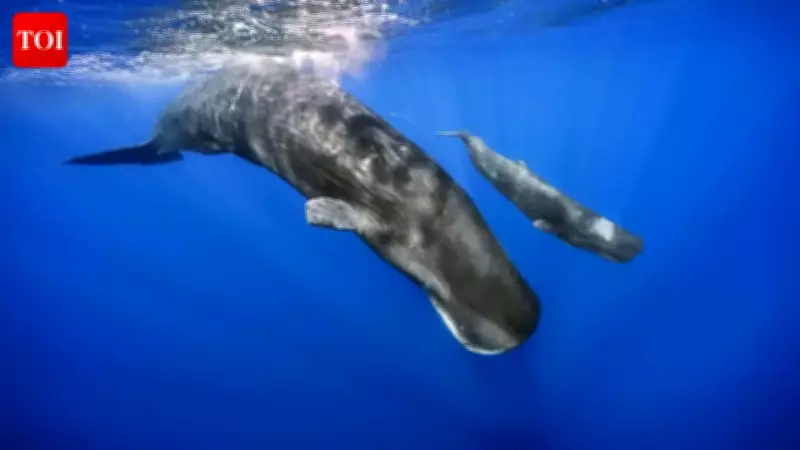
Take Project CETI, for example, which is throwing some serious computing power at sperm whale clicks. Researchers discovered that these whales don't just click at random — they're actually stringing together sophisticated sequences called codas. Some scientists say these systems are edging toward something language-like.
And it's not just whales. Google's DolphinGemma project, plus folks at the Earth Species Project, are searching for repeated patterns in dolphin whistles and other animal calls. The big dream isn't just to listen in, but to actually send messages back in ways animals might understand.
Sounds crazy? Not so much anymore. Last year, researchers identified specific bottlenose dolphin whistles that seem to carry clear, consistent meanings. When scientists played some of these whistles back, dolphins responded — sometimes with alarm, sometimes with curiosity. No one's claiming we're translating 'dolphin' yet, but the lines dividing human and animal communication are blurring.
Why does this potential 'conversation' matter?
Because we're finally learning to listen — and honestly, that potential is huge. Imagine if conservationists actually knew, in real time, when whales were stressed by boat noise, or when elephants were sharing warnings about poachers, or if endangered birds couldn't find a mate. Suddenly, wildlife protection could become much more targeted and a lot more effective.
Understanding animal talk could help save habitats, guide conservation law, and improve the daily treatment of animals. It might also force us to admit that animal intelligence is way more complex than we've given it credit for.
Some discoveries are already turning old beliefs upside down: elephants, for example, use personalized trumpets that act like names. Some birds change their calls depending on the situation. Dolphins and whales? They're not just making random noise. There's order and meaning there, which we just missed before.
If we truly start understanding their conversations, it could change the entire way we see animals. Remember how whale songs sparked public backlash against whaling? If we learn more about animal cultures and relationships, it could create an even bigger shift.

What's the catch?
But here comes the scary part: What if we start to manipulate their voices? There's a real downside here. The same tech that helps us understand animal speech could also give us ways to control or exploit animals.
Picture big companies using decoded animal communication to move livestock around more efficiently, or tourism outfits playing certain sounds to lure dolphins and whales for photo ops. There's even the risk of governments or militaries using this to try to manipulate animal behavior for their own ends.
And it's not just about bad intentions. Sometimes, scientists unintentionally cause harm, like in one infamous study where researchers played the call of a dead elephant back to its relatives. The living elephants became visibly distressed and spent days looking for the family member.
That's why experts warn: nothing about joining in animal conversations is neutral. As soon as we're involved, we change the dialogue.
The real question
Here's where it gets really interesting, because this is about more than just gadgets and algorithms. The real question here is: If they're talking, are we ready to listen?
If we prove that whales have real cultures, or that dolphins regularly share information, or that elephants mourn their dead, what then? Do laws change? Do protections for these creatures get a lot stronger? What if, by truly listening, we realize just how much animals have lost because of us?
The irony here is that the biggest breakthrough might not be that we get to talk to animals. It might be us finally hearing them, and realizing they've always been speaking, and we just weren't listening.
Humans have spent centuries believing intelligence, emotion, even 'language,' has to look like ours. The science coming out now says maybe we've been wrong all along. If one day, thanks to AI, we finally decode the voices of whales, elephants, dolphins, and other species, the key question won't be whether we can talk back. It'll be whether we're ready to listen and willing to act on it based on that.