Vinod Khosla: AI Could Revolutionize Career Advice by Making 'Follow Your Passion' Practical
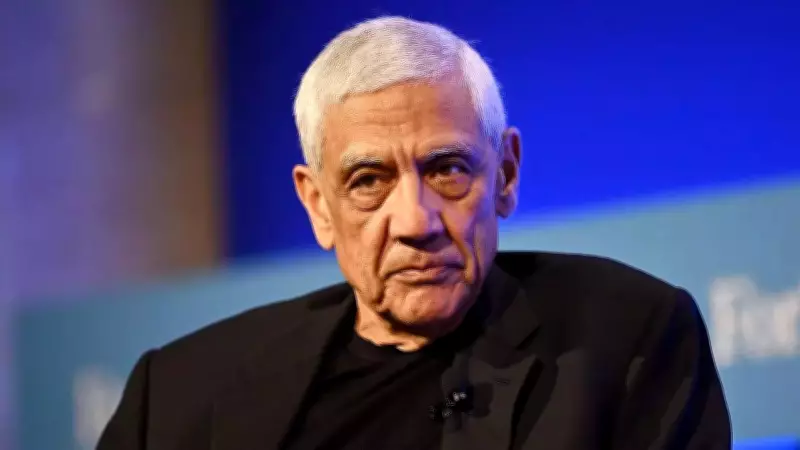
Renowned investor Vinod Khosla has sparked a significant discussion by suggesting that artificial intelligence (AI) might fundamentally alter how society approaches career guidance in the coming decades. During an appearance on Fortune's Titans and Disruptors of Industry podcast, Khosla articulated a vision where the often-debated mantra to "follow your passion" could become a more viable and practical strategy for future generations, thanks to advancements in AI technology.
The Shift from Survival to Passion
Khosla elaborated on his perspective, stating, "Fifteen years from now, you will say—what is bad advice today or used to be … 'Follow your passion. Follow your passion' comes second to surviving. I think that surviving part will go away, and you'll tell every 5-year-old kid, 'Follow your passion.'" He emphasized that in the current job market, this advice frequently clashes with economic realities, as many individuals pursue traditional educational and employment paths primarily to secure their livelihoods. However, Khosla believes AI has the potential to dismantle this conventional model over time, creating an environment where passion can take precedence.
AI's Impact on Jobs and Education
According to Khosla, AI is projected to eventually handle approximately 80% of existing jobs across diverse sectors such as medicine, accounting, sales, and radiology. This widespread automation is expected to drive down labor costs significantly, subsequently reducing the prices of goods and services. In such a scenario, Khosla argues that future generations may no longer require a college degree or even traditional employment to sustain themselves. This shift could democratize access to basic needs, allowing people to focus more on personal interests and creative pursuits.

Broader Industry Perspectives on AI and Careers
The conversation around AI's influence on career planning is gaining momentum in universities and workplaces globally. As AI adoption accelerates, tech leaders are increasingly questioning the relevance of long-standing career paths. In this context, Khosla advises younger generations to cultivate the ability to learn quickly and continuously—a skill he views as less susceptible to replacement by technology.
Echoing this sentiment, LinkedIn CEO Ryan Roslansky has commented on the evolving nature of career strategies. He told students that maintaining a rigid five-year career plan is now "outdated" and "a little bit foolish," given the rapid pace at which AI is transforming the workplace. This highlights a growing consensus that adaptability and lifelong learning are becoming crucial in an AI-driven economy.
Divergent Views Among Tech Leaders
Not all technology executives share the same outlook. OpenAI CEO Sam Altman offered a more optimistic perspective, suggesting that today's graduates are exceptionally fortunate. He told video journalist Cleo Abram that by 2035, these individuals "could very well be leaving on a mission to explore the solar system—in some completely new, exciting, super well-paid, super interesting job." Altman added a caveat, noting, "if they still go to college at all," implying that traditional education might become optional in the future.
Meanwhile, Alexandr Wang, founder of Scale AI and Meta's chief AI officer, has provided specific guidance for younger audiences. Speaking on the TBPN Podcast, Wang recommended that teenagers dedicate substantial time to experimenting with AI tools. He stated, "If you are 13 years old, you should spend all of your time vibe coding. That's how you should live your life." Wang believes that investing around 10,000 hours in such experimentation could confer a "huge advantage" in navigating the AI-centric job market.

Implications for the Future of Work
These insights collectively paint a picture of a future where AI not only automates routine tasks but also reshapes societal values around work and education. Khosla's vision challenges the traditional emphasis on survival-driven career choices, proposing instead a world where passion and personal fulfillment become central to professional life. As AI continues to advance, these discussions will likely intensify, prompting individuals, educators, and policymakers to reconsider how we prepare for and define success in the evolving economic landscape.