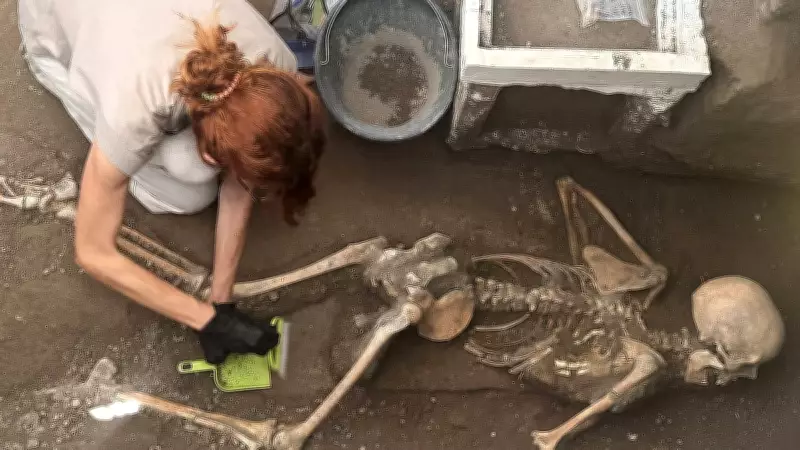
Archaeologists have employed artificial intelligence to generate a detailed image of a victim from the ancient Roman city of Pompeii, who was killed during the catastrophic eruption of Mount Vesuvius in 79 AD. The individual is believed to have been struck down by a shower of volcanic rocks in the early hours of the second day of the eruption, while attempting to flee towards the sea.
New Insights from AI Technology
The use of AI in archaeology has opened up new possibilities for understanding historical events. By analyzing skeletal remains and the surrounding ash layers, researchers were able to reconstruct the victim's appearance and likely final moments. This technique provides a more personal connection to the past, allowing us to visualize the people who lived and died in Pompeii.
The Eruption of Mount Vesuvius
The eruption of Mount Vesuvius in 79 AD was one of the deadliest in European history, burying the cities of Pompeii and Herculaneum under meters of ash and pumice. Thousands of residents perished, many from thermal shock or suffocation. The recent AI reconstruction focuses on a victim who was caught in a volcanic rockfall, a common hazard during the eruption.

- AI analyzed bone structure and ash deposits to create a lifelike image.
- The victim was likely a man in his 30s, based on skeletal analysis.
- His position suggests he was running when he was hit.
Implications for Archaeology
This project demonstrates how AI can enhance archaeological research, providing new ways to analyze ancient remains. The reconstructed image helps humanize the tragedy, reminding us of the individual stories behind historical disasters. Future applications could include recreating other victims or even entire scenes from Pompeii.
The findings were reported by Reuters and have generated significant interest in both the scientific community and the public. As AI technology continues to evolve, its role in uncovering the past is likely to expand, offering fresh perspectives on ancient civilizations.