

IIIT-Allahabad Researchers Pioneer AI Tool for Autism Therapy
In a groundbreaking advancement for autism therapy, researchers at the Indian Institute of Information Technology-Allahabad (IIIT-A) have developed an innovative Artificial Intelligence-based smart tool. This system is designed to analyze emotions, behavior, and learning abilities in children with autism spectrum disorder, enabling the creation of highly personalized therapy plans.
Addressing the Communication Gap in Autism
Children with autism frequently experience challenges in expressing their feelings, which can lead to misunderstandings by parents and specialists. Their smiles, anxiety, or discomfort often go unnoticed or are misinterpreted. The newly developed AI-driven technology aims to bridge this critical communication gap by systematically interpreting behavioral cues and responses.
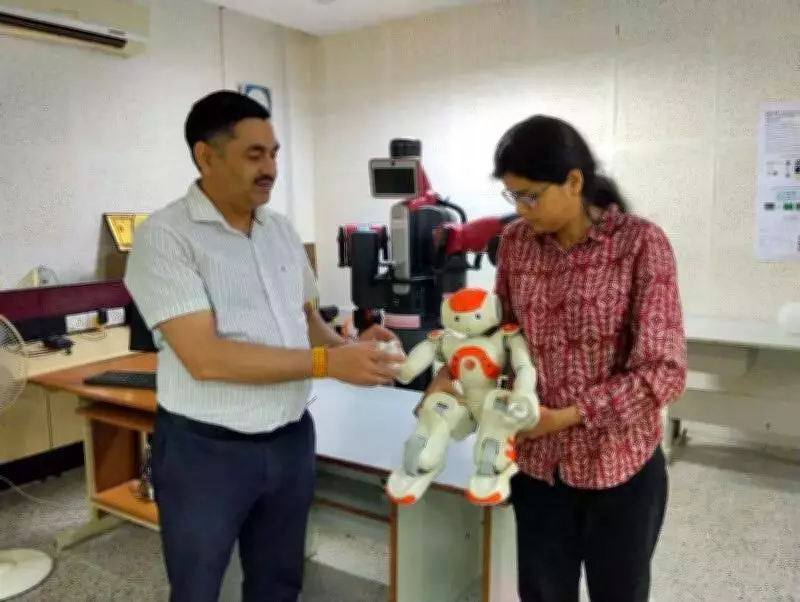
The tool was created by Professor Vrajendra Singh from the Department of Information Technology at IIIT-A, along with research scholar Anishma. The researchers have already filed a patent application for this innovative technology.

How the AI System Works
The AI system operates by meticulously analyzing a child's activities and behavioral patterns to assess their mental and emotional condition. It is integrated with a specially designed interactive robot that communicates with children, observes their actions, and responds accordingly.
Using advanced cameras and sensors, the system continuously monitors the child's activities, including:
- Facial expressions and emotional reactions
- Engagement with surrounding objects and stimuli
- Behavioral responses during interactive sessions
These behavioral signals are stored in a specialized database and analyzed individually to build a comprehensive behavioral profile for each child.
Personalized Responses and Emotional Understanding
The system can identify whether a child is happy, scared, or uncomfortable and respond in a way that makes the child feel understood, explained Professor Singh.
For example, if a child claps, the robot imitates the same action. Such mirrored responses help the child feel that the system is interacting within their emotional space. Over time, this encourages the child to become comfortable and participate in interactive activities designed to support their development.
Cognitive Assessment and Sensory Integration
The technology also evaluates a child's cognitive abilities and learning capacity. It continuously tracks behavioral responses and cognitive engagement to assess developmental progress.
The system can respond with sensory cues such as music. If a child shows signs of stress or fear, it plays calm and soothing music. Based on the child's reaction, the AI learns which type of audio stimulus is most effective in reducing anxiety. It also monitors cognitive stress levels during interactions to optimize therapeutic approaches.
Implementation and Future Development
Researchers are currently introducing the AI tool at therapy centers and special education institutions. Real-world data collected from these centers will help further refine the technology, making therapy and training programs for autistic children more effective in the future.
This development represents a significant step forward in autism therapy, combining cutting-edge technology with compassionate care to improve outcomes for children with autism spectrum disorder.






