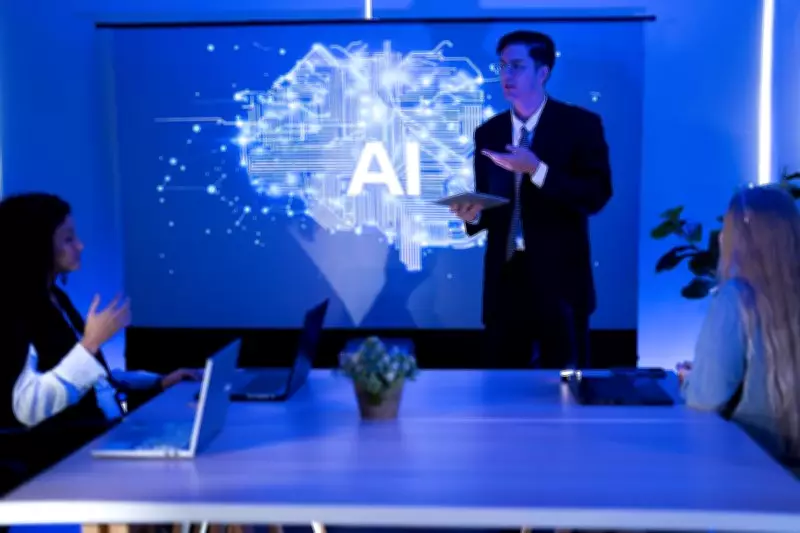
AI's Evolution from Tool to Collaborative Partner in the Workplace
The role of Artificial Intelligence in professional settings is undergoing a profound transformation, moving beyond its initial function as a simple assistant to become an integral ally in the modern workforce. This shift is not just about automation but involves a deeper integration of AI systems that work alongside humans, enhancing capabilities and redefining what it means to be a professional in today's rapidly changing environment.
Redefining Professional Roles and Responsibilities
As AI technologies advance, they are taking on more complex tasks that were once the sole domain of human professionals. From data analysis and customer service to creative design and strategic planning, AI tools are enabling workers to focus on higher-value activities. This evolution is leading to a reimagining of job descriptions, with professionals now expected to collaborate with AI systems, leveraging their insights to drive innovation and efficiency.
The impact is particularly evident in fields like healthcare, finance, and marketing, where AI-driven analytics and predictive models are becoming standard tools. Professionals in these sectors are finding that their roles are shifting from manual execution to oversight and interpretation, as AI handles routine processes with precision and speed.

Enhancing Productivity and Decision-Making
AI's ability to process vast amounts of data in real-time is empowering professionals to make more informed decisions. By providing actionable insights and reducing the time spent on repetitive tasks, AI allows individuals to concentrate on strategic thinking and problem-solving. This boost in productivity is not just about doing things faster but about achieving better outcomes through enhanced collaboration between human intuition and machine intelligence.
For instance, in project management, AI tools can predict potential delays and suggest optimizations, enabling teams to proactively address issues before they escalate. Similarly, in creative industries, AI algorithms can generate initial concepts, which professionals then refine and personalize, blending human creativity with computational efficiency.Challenges and Opportunities in the AI-Driven Workplace
While the integration of AI offers numerous benefits, it also presents challenges that professionals must navigate. Concerns about job displacement, ethical considerations, and the need for continuous skill development are at the forefront of discussions. However, this transition also opens up opportunities for new career paths and specializations focused on AI management, ethics, and implementation.
- Upskilling and Reskilling: Professionals are increasingly seeking training in AI-related skills to stay relevant and leverage these technologies effectively.
- Ethical Frameworks: As AI becomes more pervasive, there is a growing emphasis on developing guidelines to ensure its responsible use in professional contexts.
- Collaborative Models: Organizations are experimenting with hybrid teams where humans and AI work in tandem, fostering a culture of innovation and adaptability.
This reshaping of professional identity underscores a broader trend towards a more dynamic and interconnected workplace, where AI is not just a tool but a partner in driving progress and success.