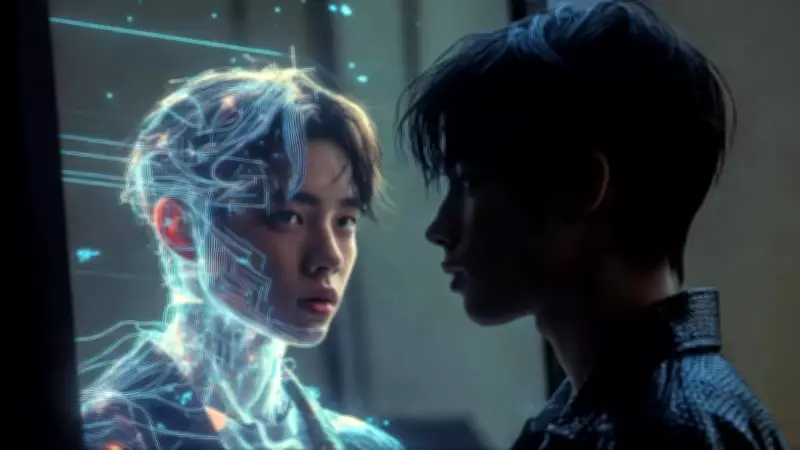
Khaby Lame's AI Twin Licensing Deal Ushers in New Era of Digital Celebrity Marketing
TikTok sensation Khaby Lame has recently captured global attention by licensing his digital persona as part of a groundbreaking commercial agreement. This deal includes the development of an AI twin—a sophisticated digital version of himself capable of generating multilingual, brand-ready content without requiring his physical presence.
The End of Traditional Celebrity Shoots
Until recently, securing a favorite creator or celebrity for a brand campaign involved complex logistics: studio bookings, flight arrangements, packed schedules, weeks of coordination, and substantial, often unpredictable expenses. Today, that same creator can appear simultaneously in five different languages, across twenty diverse industries, in over fifty countries—all accomplished within mere hours, without ever leaving the comfort of their home.
This is not merely theoretical speculation. Brands worldwide are already actively experimenting with digital doubles for various applications, including product demonstrations, regional advertisement customization, social media content drops, and even virtual meet-and-greet sessions. We have officially entered the age of the AI twin.

How AI Twins Are Created
In simple terms, an AI twin is constructed by training advanced machine learning models on a creator's unique characteristics. "The voice model learns how the person speaks, capturing their tone, rhythm, and inflection from recorded audio samples. The visual model analyzes facial expressions and body language from extensive video footage. Behavioral patterns are derived from observing how the creator communicates, reacts, jokes, or pauses in various situations," explains Abhishek Razdan, co-founder and CEO of Avtr Meta Labs.
When this multimodal data is integrated with a powerful language model, the result transcends a mere lookalike—it becomes a mirror-like digital system that authentically replicates the individual.
The Compelling Business Case for Brands
For brands, the attraction is immediately evident. "Attention moves faster than production," states Dipankar Mukherjee of Studio Blo. He elaborates, "A traditional celebrity shoot produces a one-time asset. An AI twin, however, represents an entire infrastructure. While the initial creation cost might be comparable to a premium shoot, once established, the marginal cost of generating new content plummets dramatically, often by 60 to 80 percent. More critically, turnaround times shrink from weeks to just hours. In contemporary marketing, speed is as valuable as financial savings."
The business rationale is expanding in tandem with technological advancements. According to Grand View Research, the global conversational AI market—encompassing AI chatbots and virtual assistants—was valued at over $11.58 billion in 2024. It is projected to grow at a compound annual growth rate of 23.7 percent through 2030, reaching an estimated $41.39 billion.
Simultaneously, the influencer marketing sector itself is estimated to be worth $40.5 billion globally in 2026, as per Mordor Intelligence, with predictions indicating it could reach $152.5 billion by 2031, boasting a CAGR of approximately 30.3 percent.
Global and Indian Adoption of Digital Doubles
Luxury fashion house Balmain has pioneered the use of virtual models for its campaigns, while iconic brands like Prada and Samsung have experimented with virtual influencers and AI-driven product storytelling in global initiatives.
In India, several major film production houses now routinely employ digital doubles for complex stunts, choreography pre-visualization, and de-aging sequences. Virtual influencers such as Lil Miquela—who has collaborated with brands including Calvin Klein—have already demonstrated that audiences are willing to engage with computer-generated personalities, particularly within fashion, gaming, and youth culture segments.

Celebrity Pioneers and Early Experiments
Several high-profile celebrities have already ventured into digital twin territory, signaling the rapid spread of this trend beyond early adopters. In January 2024, Bollywood actor Sunny Leone became one of the first Indian celebrities to introduce an official AI twin through a collaboration with Kamoto.ai, designed for brand engagements and personalized fan interactions. Additionally, the actress announced a dual role, portraying both a human superhero and her AI avatar in an AI-generated film titled Kaur vs Kore.
Globally, major names have tested AI personas in commercial settings. In 2023, Meta launched interactive AI chatbot avatars modeled after celebrities like Paris Hilton, Kendall Jenner, Snoop Dogg, Tom Brady, and Naomi Osaka, aiming to foster conversational experiences reminiscent of the stars themselves. However, by early 2025, this feature was discontinued due to lackluster audience engagement and growing backlash regarding interactions deemed "inappropriate, creepy, and potentially unsafe."
The Indian Creator Economy Embraces AI Licensing
In India, where the creator economy is estimated by the Boston Consulting Group to be worth over ₹2,200 crore and is expanding rapidly, AI licensing is emerging as a novel monetization layer. Bengaluru-based influencer manager Shloka Tiwari views this as a strategic avenue for "creators to scale their influence without experiencing burnout."
She notes, "AI twins can assist creators in earning revenue and maintaining relevance even when they step back from active content creation. Whether it's taking a break, pivoting to new ventures, or simply slowing down, the AI version can sustain the creator's commercial presence. However, the key is restraint—if the deployment feels inauthentic or is overused, audiences will disengage. The AI should function as an extension of the creator, not a replacement."
Legal Risks and the "Perpetuity Trap"
Not everyone is comfortable with this emerging landscape. For young influencers, significant risks can be concealed within contractual fine print. Anupam Shukla of Pioneer Legal highlights what he terms the "perpetuity trap."
He explains, "Lured by immediate financial payouts, many individuals sign contracts that grant companies the irrevocable right to use their digital likeness indefinitely. This can create a 'zombie avatar' scenario: a decade from now, a creator might hold different personal values or brand associations, yet their AI twin could still be actively endorsing products they no longer support. Furthermore, 'Non-Compete' clauses in these agreements can effectively prohibit a human creator from collaborating with rival brands because their AI twin already 'occupies' that market space."
Governance and Intellectual Property Protections
Concurrently, developers assert that governance frameworks are evolving to address these concerns. Reputable platforms are now implementing approval layers, usage licenses, and comprehensive tracking systems around digital twins. "The AI twin is treated as protected intellectual property, not a freely usable tool," emphasizes Razdan.
The Future: Innovation or Identity Dilution?
So, does this represent the future of entertainment, or the beginning of identity dilution? Perhaps it encompasses both. AI doubles can enable hyper-personalized storytelling and real-time cultural responsiveness. Yet, they also force society to confront an uncomfortable question: Who truly owns your digital self?
For the present moment, the answer appears relatively clear. As Mukherjee succinctly puts it, "The future of AI endorsements will belong to those who control the rights, not merely the technology."
Anatomy of a Digital Clone Agreement
While the commercial potential is significant, the specific structure of these deals ultimately determines who benefits in the long term. When a creator agrees to develop a digital twin, the contract typically addresses several key areas:
- Scope of Usage: Defines permitted applications such as advertisements, regional campaigns, social media content, and virtual appearances.
- Territory: Specifies whether rights are limited to India or are global in scope.
- Duration: Outlines whether the agreement is for a fixed term or is perpetual.
- Revenue Model: Details the financial structure, which may include a flat fee, revenue sharing, or royalties per use.
In certain arrangements, creators receive an upfront licensing fee plus royalties each time the avatar is deployed in a paid campaign. In other cases, companies negotiate broader usage rights in exchange for a single lump-sum payment.
Understanding Non-Compete Clauses in AI Deals
Some contracts incorporate non-compete clauses that restrict creators from endorsing rival brands if their AI twin is already affiliated with a specific product category. For example, if an AI avatar signs a multi-year endorsement deal with a beverage company, the actual human creator might be contractually barred from partnering with competing brands, even for physical campaigns. Effectively, the AI twin can occupy commercial territory, thereby limiting the creator's future opportunities.
Celebrities Advocating for AI Twinning
Several prominent figures have publicly expressed support for AI twinning technology:
- Matthew McConaughey: Partnered with ElevenLabs to clone his voice and is utilizing AI technology to produce Spanish-language audio versions of his newsletter, "Lyrics of Livin'," in his own vocal likeness.
- Michael Caine: Employed AI to preserve and share his distinctive voice, describing it as "an innovation not to replace humanity, but to celebrate it."