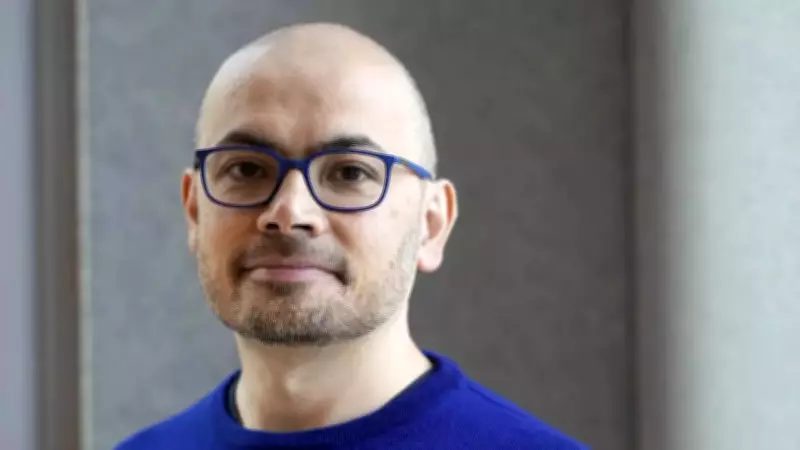
Google DeepMind CEO Highlights AI's Pivotal Role in Advancing Human Health
Demis Hassabis, the CEO of Google DeepMind, has articulated that one of the most significant applications of artificial intelligence (AI) will be in enhancing human health. In a recent post on X, formerly known as Twitter, Hassabis underscored that AI is already playing a vital role in speeding up the process of drug discovery and has the potential to fundamentally transform how new medicines are developed. This vision is being actively pursued at Isomorphic Labs, a company he co-founded in 2021 with backing from Google.
AI as a Catalyst for Medical Breakthroughs
Hassabis's remarks emerge amidst broader discussions concerning AI's effects on employment and automation. He specifically pointed to healthcare as a critical domain where AI could yield long-term benefits for humanity. "One of the most important things we can use AI for is to improve human health," Hassabis wrote in his X post. During an interview with Fortune, he elaborated on this perspective, noting that traditional biotech startups might only manage to develop one or two drugs throughout their entire existence.
In contrast, Isomorphic Labs is striving to establish a comprehensive system, process, and technological framework capable of producing dozens of drugs annually. "That seems crazy right now, but I think eventually, over the next 10 to 20 years, we could get to finding a solution to all disease... if we have a process that can find these needles in a haystack," Hassabis explained. This ambitious goal highlights AI's ability to sift through vast datasets and identify promising treatments more efficiently than conventional methods.

Isomorphic Labs: Pioneering AI-Driven Drug Development
For those unfamiliar, Isomorphic Labs is a Google-supported enterprise dedicated to leveraging AI to aid in the discovery and design of novel pharmaceuticals. Hassabis emphasized that the company's work aims to streamline the transition of treatments from the research phase to development, ultimately aiming to enhance patient outcomes on a global scale. By harnessing AI's computational power, the lab seeks to address complex medical challenges and reduce the time required to bring new therapies to market.
Demis Hassabis's Unconventional Work and Sleep Patterns
In the same Fortune interview, Hassabis also shared insights into his personal routine, revealing that his sleep habits are far from typical. He admitted to sleeping "very little," targeting approximately six hours per night, and described dividing his waking hours into two distinct work periods. "I do try and get six, but I have unusual sleeping habits. I sort of manage during the day," he stated.
Hassabis detailed a schedule that involves packing his office hours with back-to-back meetings, followed by returning home for family time and dinner. Around 10 pm, he embarks on what he terms a 'second day of work,' often continuing until 4 am. This late-night segment is reserved for creative thinking and in-depth research. "I can't imagine being creative at four in the morning. But, I come alive at about 1 a.m.," he told Fortune, illustrating how his unique rhythm fuels his innovative endeavors in AI and healthcare.
The integration of AI into healthcare represents a transformative shift, with leaders like Hassabis driving efforts to harness technology for societal good. As debates over AI's broader implications continue, the focus on health underscores a promising avenue for positive impact.