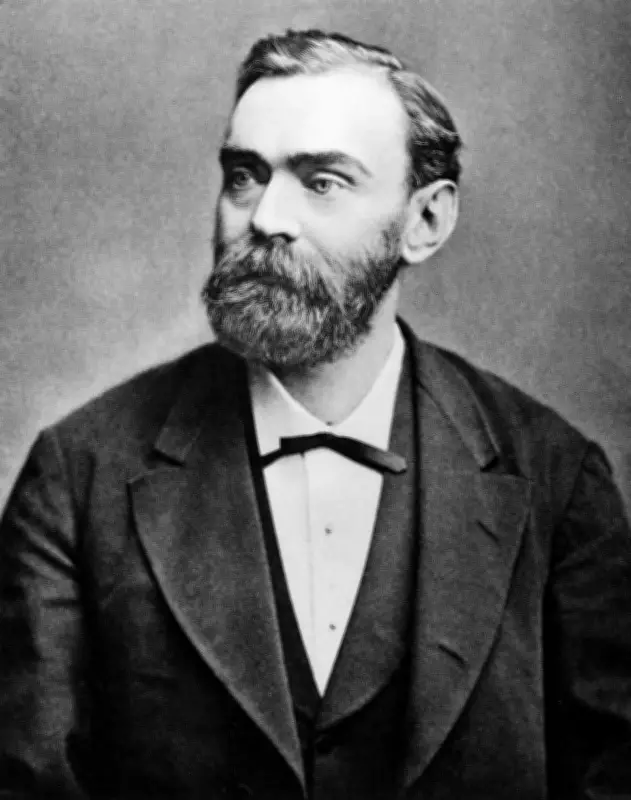
Historical events are filled with accounts of rich industrial tycoons who spend their last moments of life creating colossal monuments for their surnames. In essence, what is expected from such a colossal fortune is that the latter will be maintained carefully from generation to generation in order to secure an enormous amount of wealth for descendants and their property alone. Such inheritances often preserve family wealth more than public benefit.
However, Alfred Nobel chose a different kind of legacy. With the choice of one of the leading industrial pioneers to ignore all personal and familial expectations, the final testament may not only shock the legal community but also provide a completely new model for public giving. Nobel, the Swedish inventor, created just such a testament, leaving most of his fortune not to be inherited by close family members but instead to establish a reward system.
Redefining Industrial Wealth for the Development of Humanity
While there is no problem with financial means for inheritance, the issue often arises in the form of conflict between personal and social obligations. In cases where an individual creates tremendous wealth from global patents and industry, the estate itself tends to remain a family matter. The real philanthropic act is when a legal contract helps to redefine private gain for future societal benefit.

This change came about through legal stipulations, as elaborated on the official Nobel Prize website. It indicates clearly that Nobel laid out his will on November 27, 1895, made several family bequests, but left most of his estate for the prize fund. This was the process that saw the birth of an independent and multi-disciplinary system where evaluating boards could confer recognition upon outstanding efforts in physics, chemistry, medicine, literature, and international peace. Alfred Nobel redefined industrial wealth by establishing a prestigious reward system instead of leaving his fortune to his family. His meticulously crafted will, dedicating the majority of his estate to the Nobel Prizes, created an enduring international benchmark for human achievement.
How Legal Precision Converts an Individual's Inheritance into an International Benchmark
However, merely distributing an astronomical sum of money alone is not enough to ensure a timeless achievement, since the success of any great philanthropic endeavour requires legal procedures to endure for decades to come.
It is this very disciplined legal clarity that ensured the success of the initial capital investment in creating such a prestigious reputation internationally through the years. Since the investment money was specifically linked to practical execution directives instead of general charitable intents, the institutes successfully weathered early family disagreements, leading to the first awarding ceremonies in 1901.
A smooth progression from an extremely controversial private will to an exceptionally well-functioning public programme can be seen by tracking documentation. The structural soundness of the Nobel Prize system was capable enough of handling intense debates in the scientific community, according to the study, The Nobel Prize of Physiology or Medicine, 1923: controversies on the discovery of the antidiabetic hormone.
As the study shows, the clearly delineated categories and procedures for evaluation contained in the 1895 document created a very reliable system that helped international committees to verify discoveries like that of insulin, even amidst intense internal politics. Such an approach totally transformed the conventional way of viewing cultural inheritance. It made it clear that a fortune can be spent or divided, but Nobel's fund was designed to keep rewarding new work.