Anthropic CEO Dario Amodei Explains Departure from OpenAI
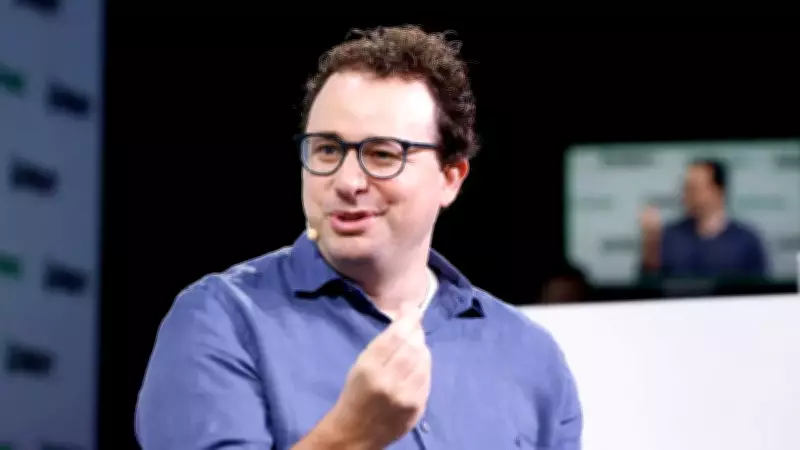
In a revealing podcast interview, Dario Amodei, the CEO of Anthropic, has publicly disclosed the primary reasons behind his departure from OpenAI, the artificial intelligence company he joined in 2016. Amodei stated that fundamental differences over the vision and approach to AI development were the key factors that led him to leave and eventually co-found Anthropic.
Diverging Visions on AI Development
Speaking on Nikhil Kamath's podcast, Amodei explained that after joining OpenAI, he and several colleagues began developing their own distinct ideas about how AI should be constructed and what principles the company should uphold. "Eventually, a few other employees and I just kind of had our own revision for how we wanted to make AI and what we wanted the company to stand for. And so we went off and founded Anthropic," Amodei said during the discussion.
He identified two major reasons for his exit. First, there were significant disagreements regarding how AI should be developed, particularly concerning the vision for scaling AI models. Amodei emphasized that increasing the size of AI models and the amount of data they are trained on can lead to substantial improvements in performance.

The Importance of Scaling Laws
Reflecting on his early observations, Amodei noted that he first noticed this trend in 2019 while working with GPT-2. He detailed that as models were made larger and trained on more data with greater computing power, their capabilities improved dramatically. This pattern, often referred to as "scaling laws," demonstrated that performance gains were closely tied to model size and resources.
While some additional techniques, such as reinforcement learning, were employed to fine-tune results, Amodei asserted that the main driver of progress was simply building bigger models with more data and computing capacity. "There were a lot of folks, inside and outside, who didn't believe it at all. And we really made the case to leadership like, 'This is important, this is gonna be a big deal.' And I think they were kind of starting to believe us and ultimately went in that direction," he added, highlighting the internal debates at OpenAI.
Concerns Over Responsible AI Development
During the podcast, Amodei further revealed that he harbored doubts about OpenAI's approach to responsible AI development. He expressed strong beliefs that if AI models were to achieve capabilities matching the human brain, they could have profound effects on the economy, politics, and society at large.
"If these models are gonna be kind of general cognitive agents, like general cognitive tools that match the capability of the human brain, we'd better get this right," he cautioned. Amodei elaborated on the potential implications, stating, "The economic implications are gonna be enormous. The geopolitical implications are gonna be enormous. The safety implications are gonna be enormous. It's gonna transform how the world works. And so we needed to do it in the right way."
This emphasis on safety and ethical development underpins the founding principles of Anthropic, which Amodei and his colleagues established to pursue their vision of AI advancement with a stronger focus on responsible practices.