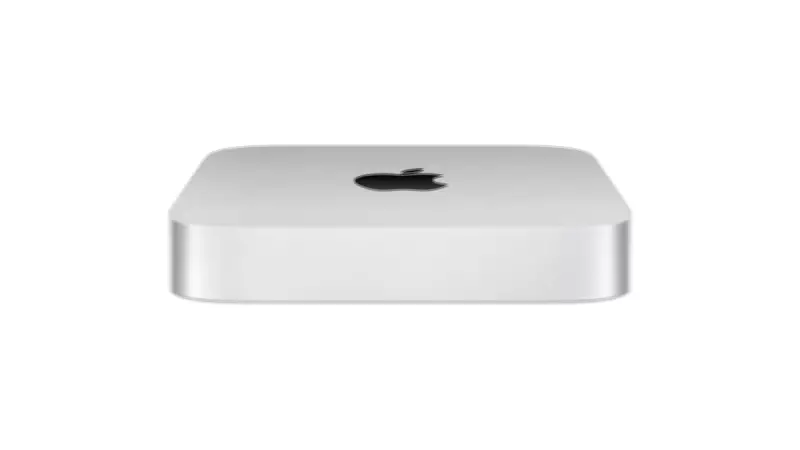
Apple has officially discontinued the 256GB storage option for the Mac mini worldwide. This change means that the 512GB model now serves as the new baseline, effectively raising the starting price of Apple's smallest desktop computer.
Higher Starting Price for Mac Mini
According to Macrumors, the budget-friendly Mac mini has become significantly more expensive. In the United States, the Mac mini now starts at $799 for a configuration featuring the M4 chip, 16GB of RAM, and 512GB of storage. Previously, customers could purchase a base model with 256GB of storage for $599, but that option has been entirely removed from Apple's online store.
High-end configurations using the M4 Pro chip already required a minimum of 512GB of storage, so their pricing remains unchanged. While the 512GB model has always been priced at $799, it is now the only option for those looking to buy a new Mac mini directly from Apple.

Tim Cook Comments on Supply Constraints
The discontinuation comes as Apple faces a global memory chip shortage and higher-than-expected demand for its latest hardware. During a recent earnings call, Apple CEO Tim Cook acknowledged the challenges. 'Realistically, on the Mac mini and the Mac Studio, I believe it will take several months to reach supply-demand balance. We are not at the point where we are saying this is going to end anytime soon. It is not because of a problem per se, other than we undercalled demand, and there are lead times as you know. For this quarter—the June quarter—the majority of the constraint will be on Mac: Mac mini, Mac Studio, and MacBook Neo. It is all of those,' Cook said.
He noted that both the Mac mini and Mac Studio are 'amazing platforms for AI and agentic tools,' which has pushed demand far beyond Apple's initial expectations.
Memory Chip Shortage Impact
A global memory chip shortage, fueled largely by the massive build-out of AI servers, is putting pressure on tech giants. Cook stated that Apple is expecting 'significantly higher memory costs' this quarter but clarified that primary constraints are more on the availability of the advanced nodes its SoCs are produced on, rather than memory.
This development underscores the ongoing challenges in the semiconductor industry and their direct impact on consumer pricing and product availability.