Apple's Siri AI Overhaul Hits Unexpected Roadblocks
In early 2025, Apple's software chief Craig Federighi experienced a moment of profound disappointment during routine product testing. While evaluating the upcoming Siri enhancements before their scheduled release, Federighi discovered that the much-anticipated AI features were malfunctioning significantly. The assistant that Apple had promised would revolutionize voice interactions was failing approximately one-third of the time during his tests, with performance sometimes deteriorating even further.
The Broken Promise of Next-Generation Siri
For months, Apple had been running sophisticated advertisements showcasing Siri's remarkable new capabilities. In one commercial, actress Bella Ramsey demonstrated how the assistant could recall details about people met weeks earlier. Another advertisement illustrated seamless voice navigation between applications, suggesting Apple had finally achieved breakthrough artificial intelligence integration. These marketing campaigns represented more than promotional material—they symbolized Apple's commitment to delivering transformative technology.
When Federighi's testing revealed the substantial gap between promise and reality, Apple faced immediate consequences. The company pulled the advertisements and delayed the product launch. More than a year later, Apple announced a surprising solution: partnering with Google to power its revamped Siri using Gemini AI models in a deal valued at approximately $1 billion annually. This decision represented a significant departure for a company renowned for controlling every aspect of the user experience.

Technical Challenges Behind the Scenes
Apple had been developing the Siri overhaul for years with a seemingly straightforward objective: transform the basic voice assistant into a sophisticated AI companion capable of understanding context and executing actions across applications. The plan involved integrating advanced AI technology similar to ChatGPT with Siri's existing framework.
The execution proved far more complex than anticipated. Federighi later explained at Apple's June 2025 developer conference that the hybrid architecture approach failed to meet Apple's quality standards. Behind this corporate language lay substantial technical difficulties. Engineers encountered persistent bugs in what they described as a "whack-a-mole" scenario—solving one problem only revealed several others.
During an internal March 2025 meeting, senior director Robby Walker attempted to motivate his team with a swimming analogy, acknowledging they had "swam hundreds of miles" but hadn't reached their destination. He admitted uncertainty about when features would actually ship, suggesting they might appear in iOS 19 or possibly not at all. Some team members expressed frustration about the hundreds of unresolved bugs and perceived lack of leadership.
The Talent Exodus Accelerates
As Apple struggled with technical challenges, the company began experiencing significant talent losses from its AI division. The departure began in July 2025 when distinguished engineer Ruoming Pang, who had built Apple's foundation models team from scratch, announced his move to Meta with a compensation package reportedly exceeding $200 million over several years.
This triggered a cascade of departures as Pang's top lieutenants—Tom Gunter, Mark Lee, Bowen Zhang, and Yun Zhu—followed him to Meta. The Financial Times documented approximately a dozen departures from Apple's AI team since the beginning of the year, representing devastating losses for a foundation models group that initially numbered only 50 to 60 people.
Recruiting expert Aaron Sines noted that Pang's departure signaled "a crisis of confidence around what is to come." The exodus revealed that Apple's traditional prestige and purpose were no longer sufficient to retain top AI talent when competitors offered compensation packages reaching $10 to $40 million annually for senior researchers.

Privacy Principles Create AI Limitations
Beyond technical and talent challenges, Apple faced another fundamental constraint: its own privacy values. While competitors like Meta trained AI on billions of user data points from Facebook and Instagram, and OpenAI scraped the internet for training material, Apple had constructed a privacy-first architecture that prevented similar approaches.
The Wall Street Journal highlighted in August 2025 that AI technology seriously threatened Tim Cook's privacy ethos. Apple developed Private Cloud Compute, a system where even cloud-processed AI queries remained encrypted and never stored. The company allowed users to opt out of data collection and permitted websites to block Apple's AI from learning their content—options many websites exercised according to reports.
This principled stance came with measurable costs. Internal data indicated Apple's chatbot was at least 25% less accurate than ChatGPT when answering most queries. As one insider noted, "There are a thousand noes for everything in this area. You have to fight through the privacy police to get anything done."
Leadership Reshuffling and Strategic Shifts
By spring 2025, CEO Tim Cook initiated significant organizational changes. According to reports, Cook concluded that John Giannandrea—the former Google executive hired specifically to address Apple's AI challenges—couldn't execute product development effectively. The solution involved transferring Siri from Giannandrea's control to hardware veteran Mike Rockwell, who would report to Craig Federighi.
Giannandrea retained his title as senior vice president of machine learning and AI strategy but with reduced responsibilities focused on research and infrastructure rather than product development. Some executives reportedly discussed further reducing his role or easing him toward retirement, though he expressed desire to remain until Apple's AI reached "proper shape."
The reorganization exposed existing tensions within Apple's leadership. Federighi, known for cost-consciousness and skepticism toward risky investments, had historically resisted massive AI spending. Even after recognizing AI's importance following ChatGPT's 2022 launch, his instincts conflicted with the technology's demands. As one executive noted, "In the world of AI, you really don't know what the product is until you've done the investment. That's not how Apple is wired."
Why Google Emerged as the Partner
Facing failing models and departing talent, Apple explored partnership options with OpenAI, Anthropic, and Google. The company developed two parallel Siri versions internally—one powered by Apple's "Linwood" models and another using third-party technology codenamed "Glenwood."
While Anthropic initially appeared as the frontrunner, their financial demands proved prohibitive, requesting multibillion-dollar annual fees with sharp yearly increases. Google ultimately secured the partnership for several reasons:
- Gemini 3 models topped AI leaderboards upon their November 2025 launch
- Google possessed proven experience running large-scale services for corporate clients
- Existing search partnership provided a successful template for collaboration
The Financial Times estimated the AI contract could eventually reach $5 billion for Google, structured as cloud computing services rather than direct licensing.
Future Implications and Strategic Positioning
The Google partnership addresses Apple's immediate crisis but raises broader questions about AI's future role in technology interaction. Apple is reportedly developing a new Siri experience codenamed "Campos" that will function as a full chatbot embedded across iOS, iPadOS, and macOS platforms, scheduled for later release.
Interestingly, Apple is designing the system with interchangeable AI models, allowing potential future switches between Gemini, Claude, GPT, or even improved Apple models. This plug-and-play architecture reflects Apple's strategic bet that AI models will become commoditized, shifting competitive advantage toward design, privacy controls, and hardware integration—areas where Apple traditionally excels.
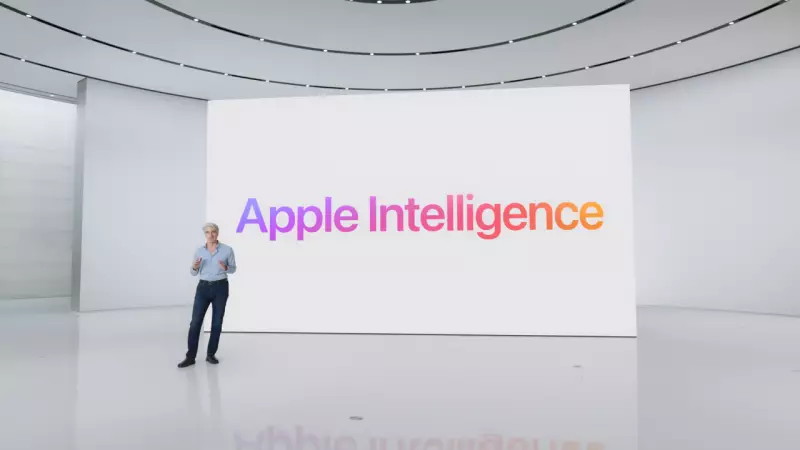
This approach mirrors Apple's historical strategy with technologies it doesn't own, such as search engines, cellular networks, and mapping services. However, outsourcing AI foundation risks ceding breakthrough capabilities that require deep model-hardware integration. Additionally, branding challenges emerge when "Apple Intelligence" marketed as "AI for the rest of us" actually runs on Google's technology.
After revolutionizing voice assistants in 2011, Apple allowed Siri to stagnate for over a decade. When the AI revolution accelerated, the company found itself unprepared, facing delays, talent losses, and underperforming internal models. The Google partnership represents Apple's acknowledgment that it cannot accomplish everything independently—a significant admission for a company built on vertical integration and control.