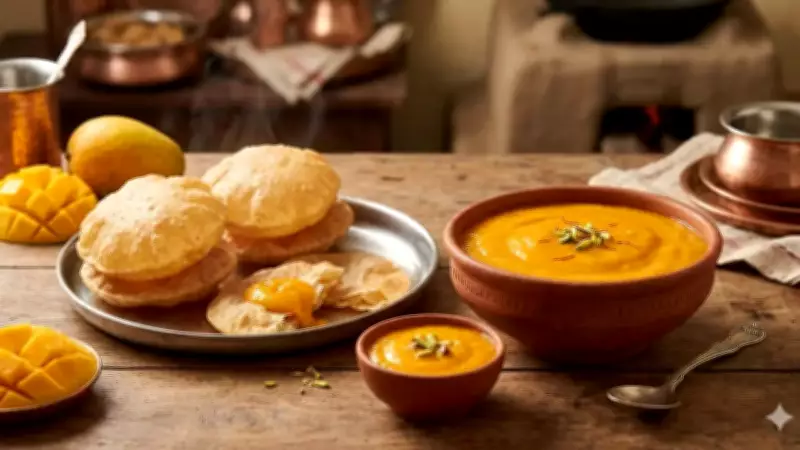
The idea that Alphonso mangoes automatically make the best aamras has become so common that many people rarely question it anymore. Their reputation travels far beyond Maharashtra, helped by export markets, luxury fruit boxes, and seasonal restaurant menus that present Alphonso as the premium choice for almost any mango dish. Yet kitchen traditions around aamras have never been particularly fixed. Different households still rely on whichever mangoes grow locally, ripen properly, and produce the right balance of sweetness, fibre, and texture once pulped.
That wider conversation resurfaced after chef Ranveer Brar spoke about aamras in a recent Instagram video, where he suggested Alphonso mangoes are often overrated for the dish. His comments were less about rejecting the fruit itself and more about how certain mango varieties behave differently once turned into aamras. The discussion quickly spread because it challenged an assumption many people have accepted for years without much debate.
What Chef Ranveer Brar said about Alphonso mangoes and aamras
Alphonso mangoes are usually associated with a deep fragrance and smooth flesh, which makes them excellent for eating directly, especially when fully ripe and chilled. Aamras, though, asks for something slightly different. The mango needs enough body to create a thick pulp without becoming so perfumed that the flavour starts to feel heavy after a few spoonfuls. In his video, chef Ranveer Brar explained that aamras often work better with mangoes that have a cleaner sweetness and softer acidity rather than an overpowering aroma.

Some regional varieties create a lighter texture that sits more naturally alongside puri and simple home-style meals. In many parts of western India, families still rely on local mangoes that rarely appear in supermarket marketing campaigns but perform more consistently once blended into pulp. Small differences in texture also matter more than people often realise. Fibrous mangoes can leave strands through the aamras, while some varieties turn watery after blending, and others become too dense once chilled. According to Chef Ranveer Brar, balance matters more than luxury. He suggested that the best aamras should feel light enough to continue eating rather than overwhelmingly rich or aggressively fragrant. Ripeness changes the result, too. Overripe Alphonso mangoes can become intensely sweet, producing something closer to mango puree, while slightly firmer fruit with fresher acidity tends to hold the texture and flavour together more effectively.
How to make Ranveer Brar’s creamy aamras at home
On his blog, Ranveer Brar shares a simple aamras recipe built around thick hung curd, ripe mango pulp, and a light touch of cardamom and saffron. It is the kind of dessert that feels closely tied to Indian summers, cold, creamy, and not especially complicated to put together. The recipe keeps the focus on texture and the natural sweetness of mangoes rather than heavy flavouring, which is partly why it works so well straight from the fridge on hot afternoons.

Simple ingredients behind Chef Ranveer Brar’s smooth aamras
- 3 ripe mangoes, peeled and chopped
- 2–3 tbsp caster sugar, adjusted to taste
- A small pinch of cardamom powder
- A few saffron strands soaked in 1 tbsp warm milk
- 2–3 tbsp chilled milk or water, if needed for consistency
- Chopped pistachios or almonds for garnish
Chef Ranveer Brar's aamras recipe
- In a large bowl, add the chopped mangoes and caster sugar. Blend using a hand blender until the mixture turns completely smooth and creamy.
- Add the saffron milk and cardamom powder. Blend again briefly so the flavours mix evenly through the aamras.
- If the pulp feels too thick, stir in a little chilled milk or water until it reaches a soft pouring consistency. The texture should stay creamy rather than watery.
- Transfer the aamras to the fridge and chill for at least 30 minutes before serving. Cold aamras tastes smoother and more refreshing, especially during summer.
- Pour into small bowls and finish with chopped pistachios or almonds just before serving. It is traditionally served with hot puris, though many people also eat it on its own as a chilled mango dessert.
Tips behind Chef Ranveer Brar’s smooth and creamy aamras
- Use fully ripe mangoes with naturally sweet pulp. Mangoes with balanced sweetness and slight acidity usually give aamras a fresher taste.
- Avoid overly fibrous mango varieties. They can leave strands through the aamras and affect the smooth texture.
- Blend the mango pulp gently until smooth rather than over-processing it. Excess blending can sometimes thin the texture too much.
- Add sugar gradually after tasting the mangoes first. Different batches of mangoes vary heavily in sweetness during summer.
- Soak saffron in warm milk before mixing it into the aamras. This helps release both colour and aroma more evenly.
- Chill the aamras before serving. According to Chef Ranveer Brar, cold aamras feels thicker and allows the flavours to settle better.
- Keep the consistency slightly thick rather than runny. Aamras is meant to feel creamy enough to pair properly with puris.
- Use fresh cardamom powder lightly. Too much can overpower the natural flavour of the mangoes.