China's Military Embraces Nature-Inspired AI for Next-Generation Warfare
In a significant development in military technology, China's armed forces are training artificial intelligence-controlled weapons by studying the natural behaviors of hawks, coyotes, and other animals. This innovative approach aims to create autonomous drone swarms and robotic systems that could fundamentally transform modern combat strategies.
Learning from the Animal Kingdom
Engineers at Beihang University, one of China's premier military-linked institutions known as the "Seven Sons of Defense," have developed groundbreaking simulation techniques inspired by animal behavior. Their research focuses on defensive drones that mimic how hawks select and target vulnerable prey, while attacking drones learn evasion tactics from doves. In controlled tests, hawk-trained drones eliminated all dove-inspired attackers in just 5.3 seconds during five-on-five simulations.
This research earned the team a patent in April 2024, representing just one of hundreds of swarm intelligence patents granted to Chinese defense entities in recent years. The work reflects China's intense focus on harnessing artificial intelligence to deploy autonomous systems including drone swarms, robot dogs, and other unmanned platforms that could operate with minimal human oversight.

The AI Arms Race Intensifies
The development comes amid what experts describe as an emerging artificial intelligence Cold War between the United States and China. Military applications of AI have quickly become one of the most competitive and hazardous areas of technological advancement, with both nations racing to gain strategic advantages. According to patent filings, government procurement documents, and research papers reviewed by analysts, China's People's Liberation Army is particularly focused on swarm intelligence technologies.
Chinese military theorists have articulated a vision where future warfare will be "driven by algorithms, with unmanned systems as the main fighting force and swarm operations as the primary mode of combat." They compare AI's potential military impact to that of gunpowder—a technology invented in China but more effectively weaponized by others throughout history.
Practical Applications and Hardware Advantages
China's approach to AI weapons development is heavily influenced by its manufacturing capabilities. Chinese factories already produce over 80% of the world's small drones, with the capacity to manufacture more than one million capable, affordable drones annually. This production advantage contrasts sharply with American capabilities, where drone production remains in the tens of thousands at significantly higher costs.
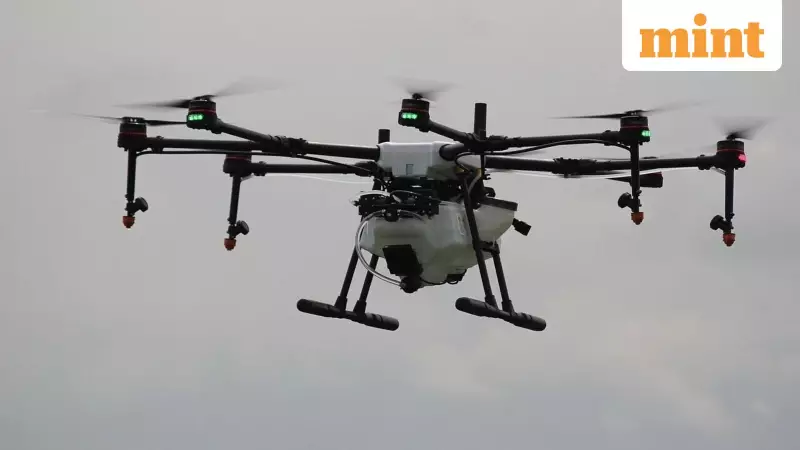
The practical manifestations of China's swarm technology include systems like Swarm 1, a truck-mounted platform capable of launching up to 48 fixed-wing drones simultaneously. Multiple trucks could coordinate to deploy swarms of 200 drones capable of splitting into smaller groups for reconnaissance, strikes, and deception missions. Additionally, the Jiutian mother ship drone, designed to release swarms of smaller drones, completed its maiden flight in December 2024.
Addressing Military Concerns Through Technology
Swarm intelligence offers potential solutions to longstanding concerns within the PLA about the competence of rank-and-file soldiers and commanders who haven't experienced combat since the late 1970s. According to Sunny Cheung, an open-source intelligence expert at the Jamestown Foundation, there's growing consensus in Chinese military writings that "autonomous systems have the potential to perform better than humans" at tactical levels for specific missions.
The technology also addresses skepticism in Beijing about military commanders' reliability. Chinese leader Xi Jinping has repeatedly lamented what he calls the "five incapables" among commanders—referring to their inability to assess situations, make operational decisions, grasp superiors' intentions, deploy troops effectively, and handle unexpected developments. AI-driven systems offer a way to engineer military operations with centralized control from Beijing.

Risks and Ethical Considerations
The rapid advancement of military AI comes with significant risks. PLA engineers might fail to make the technology work effectively in real combat scenarios, potentially making China's robotic forces vulnerable to enemy countermeasures. Alternatively, the AI could function too effectively, making lethal decisions beyond human commanders' understanding or control.
Chinese researchers themselves have expressed concerns about the "algorithm black box" problem, where the opacity of AI decision-making could provide cover for human errors or irresponsible actions. Zhu Qichao, a technology strategist at China's National Defense University, warned that "once an artificial intelligence weapon system produces safety hazards, the 'algorithm black box' may become a rationalized excuse for the relevant responsible parties to shirk responsibility."
Global Competition and Future Scenarios
Competition between American and Chinese militaries over drone swarm technology dates back at least a decade, with both nations setting and breaking records for simultaneous drone control. While early demonstrations were relatively simple, today's battlefield drones—as seen in conflicts in Ukraine and Gaza—are faster, more maneuverable, and increasingly capable of autonomous target tracking and destruction.
According to military analysts, one likely deployment scenario for Chinese drone swarms would be in a potential conflict over Taiwan. After initial rocket attacks, the PLA could deploy swarms from approximately 50 miles away to loiter over the island, searching for remaining Taiwanese jet fighters or air defenses. These drones could then either attack targets directly or mark them for long-range missile strikes.
Despite the rapid advancements, significant technical challenges remain. Justin Bradley, an aerospace engineering expert at North Carolina State University specializing in autonomous systems, notes that current drone systems still struggle with perception and rely heavily on radio communications vulnerable to electronic warfare disruption. Advanced AI could mitigate these vulnerabilities by enabling drones to automatically track each other and identify obstacles, but training reliable models requires substantial data that remains difficult to obtain.
As both China and the United States continue their pursuit of military AI superiority, the international community faces growing calls for global regulations governing autonomous weapons systems. However, as retired PLA senior colonel Zhou Bo noted, both nations will likely want to fully understand AI's battlefield capabilities before agreeing to any limitations, suggesting that the race for AI military dominance will continue accelerating in the coming years.