

Chinese Scientists Claim Breakthrough in Synthesizing Harder Hexagonal Diamond
Scientists from China have announced a significant breakthrough, claiming they might have discovered a mineral that surpasses the hardness of cubic diamond, long regarded as the world's hardest existing mineral. The hexagonal diamond, also known as lonsdaleite, is purported to be the toughest mineral, though its existence has been a subject of debate for decades.
Decades of Pursuit Culminate in Laboratory Success
Hexagonal diamond is typically found at meteorite impact sites, but in minimal quantities and often mixed with other minerals, leading some scientists to question whether it is a distinct material. A recent paper published in the prestigious Nature journal details how researchers have successfully produced a bulk piece of pure lonsdaleite by applying extreme pressure and heat.
On March 4, Nature highlighted China's researchers' claim to have identified a mineral harder than cubic diamonds, which are celebrated as 'Ultimate Semiconductors' in scientific and industrial circles. This pursuit has focused on an unusual variant called hexagonal diamond, which may exhibit superior hardness.

After years of conflicting reports about the feasibility of synthesizing this elusive material in a laboratory setting, Chinese researchers now report achieving this milestone. Chongxin Shan, a physicist at Zhengzhou University and co-leader of the study, emphasized the material's potential applications, stating it could be used in cutting tools, thermal management materials, and quantum sensing.
Verification and Historical Context of Hexagonal Diamond
Oliver Tschauner, a mineralogical crystallographer at the University of Nevada, Las Vegas, who served as an expert reviewer for the paper, noted, "There are hundreds of claims from people who believe they have seen it, but this is the first very accurate characterization of this elusive material."
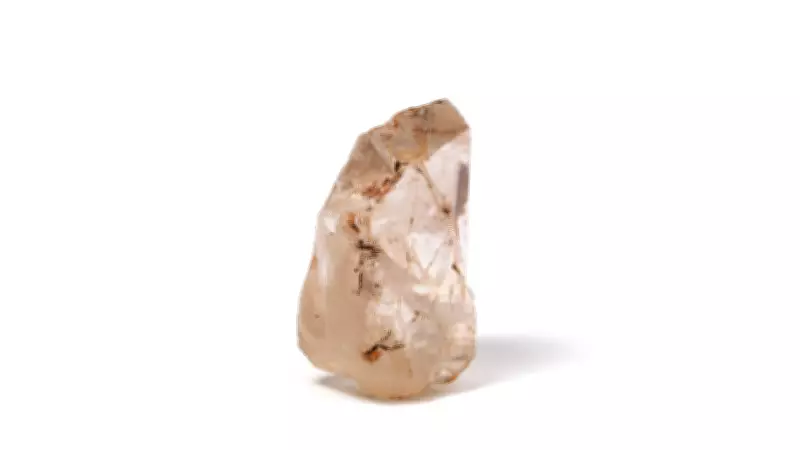
According to Mindat.org, hexagonal diamond is a transparent brownish-yellow or greyish mineral named after Dame Kathleen Lonsdale, a pioneering crystallographer who determined the structure of benzene using X-ray diffraction in 1929 and contributed to diamond synthesis research.
In their experiment, the research team started with highly oriented graphite, a well-ordered form of carbon similar to that found in pencils. They compressed it between tungsten carbide anvils under 20 gigapascals of pressure—approximately 200,000 times atmospheric pressure—at temperatures ranging from 1,300 to 1,900 °C. This compression targeted the stacked carbon layers from above, resulting in a millimeter-sized sample of pure hexagonal diamond.
To confirm the synthesis, the team utilized X-ray diffraction to map atomic arrangements and atomic-resolution electron microscopy, which revealed the distinctive hexagonal stacking of carbon atoms, ensuring structural purity.
Resolving Long-Standing Debates and Future Implications
This research aims to settle the ongoing dispute over the existence of hexagonal diamonds as a distinct carbon phase. It offers new insights into the graphite-to-diamond transition, paving the way for further studies and practical applications in advanced technologies.
Historically, just five years after hexagonal diamonds were first predicted, geologists claimed to have found a natural specimen in a meteorite, naming it lonsdaleite. Around the same time, another team reported creating hexagonal diamonds by compressing graphite in the lab. However, nearly 50 years later, studies led by the same researcher revealed that neither the meteorite sample nor the synthetic crystals were genuine hexagonal diamonds; they were instead cubic diamonds with unusual defects.
In the early 2020s, new experiments produced variants of 'lonsdaleite', but these were either microscopic or short-lived, disappearing in nanoseconds. Consequently, the existence of hexagonal diamonds remains highly contested and difficult to prove, primarily due to challenges in fabricating bulk quantities of pure-phase material.
If validated, this new material could revolutionize various industries, with potential uses in cutting tools, abrasives, and high-performance electronics, potentially transforming leading global sectors.






