Crocodile Growth Patterns Challenge Dinosaur Age Calculations
For decades, paleontologists have relied on a fundamental principle similar to dendrochronology: counting annual rings in bones to determine the age of ancient animals. This "one ring per year" rule has been a cornerstone of understanding prehistoric life cycles. However, groundbreaking research on modern reptiles is poised to revolutionize this long-standing methodology.
Flexible Growth Cycles in Modern Reptiles
Recent studies published in the Journal of Morphology have examined crocodile growth patterns with remarkable findings. Researchers discovered that crocodile growth cycles fluctuate significantly based on environmental temperature and food availability. Unlike the rigid annual patterns previously assumed, these reptiles demonstrate remarkable biological flexibility.
The research reveals that what were once considered "annual" rings in dinosaur bones might actually represent seasonal growth cycles. This distinction is crucial because if dinosaurs exhibited similar growth flexibility to modern crocodiles, our entire understanding of dinosaur longevity requires reevaluation.

Reevaluating Lines of Arrested Growth
The scientific community has traditionally used Lines of Arrested Growth (LAGs) in fossilized bones as reliable age markers. However, the new crocodile research demonstrates these markers are far more sensitive to environmental changes than previously understood.
- Metabolic Acceleration: When crocodiles experience abundant food or seasonal temperature spikes, their metabolism accelerates, depositing new bone tissue layers
- Environmental Triggers: A single year with two distinct wet or warm seasons can produce two separate LAGs
- Growth Plasticity: Reptile growth stretches and contracts based on external conditions rather than following a fixed internal clock
This "extra cycle" phenomenon suggests that a dinosaur fossil displaying 30 rings might actually represent only 15 to 20 years of life. Such a revelation implies dinosaurs reached their massive sizes in approximately half the time once estimated.
Implications for Famous Predators
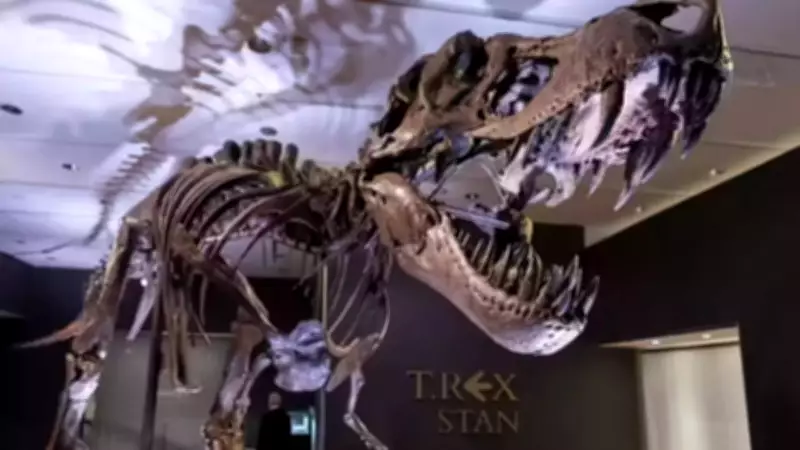
The most dramatic implications concern the world's most famous dinosaur: Tyrannosaurus rex. If the new growth cycle theory proves accurate, T. rex specimens could be significantly younger than current estimates suggest.
This recalibration of dinosaur ages would transform our understanding of predator-prey dynamics throughout the Mesozoic era. Rather than being long-lived giants, dinosaurs may have been fast-growing biological machines that achieved enormous proportions in relatively brief timeframes.
Transforming Ecological Models
The potential age corrections necessitate reimagining the entire Mesozoic ecosystem structure. Two particularly significant implications emerge from this paradigm shift:
- Rapid Population Turnover: If Tyrannosaurus reached reproductive maturity at 8 years rather than 18 years, populations would have turned over much more rapidly. This accelerated lifecycle could explain how dinosaur populations recovered quickly from minor extinction events preceding the catastrophic end-Cretaceous extinction
- Juvenile Prevalence: With dinosaurs maturing in approximately 10 years, ecosystems would have contained abundant "teenage" dinosaurs approaching adult size but exhibiting different hunting behaviors. These younger dinosaurs would have occupied distinct ecological niches, creating more complex food webs than current models suggest
Methodological Revolution in Paleontology
The crocodile growth research represents more than just a correction to specific age estimates; it signals a fundamental shift in how paleontologists interpret fossil evidence. The study demonstrates that biological systems are far more responsive to environmental conditions than previously acknowledged.
As scientists continue to refine their understanding of growth patterns in modern reptiles, they gain valuable insights for reinterpreting the fossil record. This interdisciplinary approach—combining observations of living animals with analysis of ancient remains—promises to yield more accurate reconstructions of prehistoric life.

The research underscores the importance of questioning long-held assumptions in scientific fields. What began as a study of crocodile growth patterns has evolved into a potential revolution in dinosaur paleontology, reminding us that even established scientific principles must remain open to revision as new evidence emerges.