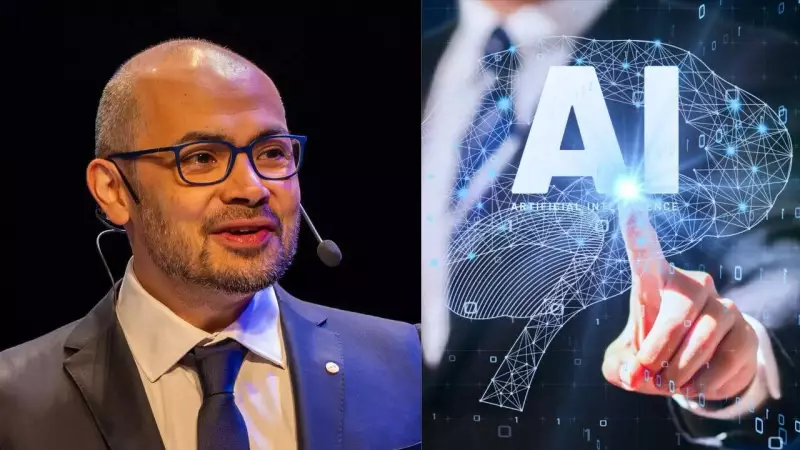
Demis Hassabis, the CEO of Google DeepMind, has once again highlighted his deep-rooted passion for chess, a game that fundamentally shaped his path into the world of artificial intelligence. The AI pioneer recently took to social media to applaud chess grandmaster Magnus Carlsen for a monumental achievement.
Hassabis Hails Carlsen's Historic 20th World Title
Following Magnus Carlsen's victory at the 2024 World Chess Championship, Demis Hassabis publicly celebrated the Norwegian's exceptional skill. "Congrats to Magnus on his phenomenal 20th World title, he is the greatest mental athlete of all time in my opinion," Hassabis posted online. He also commended the runner-up, Nodirbek Abdusattorov, for a fantastic tournament and a great fight in the final, noting that "Magnus is just too insanely good at endgames."
This is not the first time Hassabis has engaged with top-level chess drama. Earlier in 2024, he reacted to Indian Grandmaster D Gukesh's stunning upset win over Carlsen in Norway. Acknowledging the intensity of the game, he had stated, "Chess is a much more intense game than people realise. I feel for Magnus here (he was winning earlier), but congrats also to Gukesh!"

The Chessboard as a Catalyst for AI Innovation
Long before his groundbreaking work in AI earned him the 2024 Nobel Prize in Chemistry for contributions to protein-folding, Hassabis was a competitive chess player. He represented England's junior national teams and achieved master status in his teens. In a lecture at the University of Cambridge this year, he revealed that his early mastery of chess served as a direct catalyst for his journey into artificial intelligence.
"My journey on AI started with games and specifically chess," Hassabis explained. He described being fascinated by the mental processes behind the game: "You know, how does our mind come up with these plans, with these ideas, how do we problem solve, and how can we improve?" He found the exploration of these cognitive mechanisms more intriguing than the games themselves.
From Plastic Chess Computers to AlphaZero
This childhood fascination with how machines could play chess laid the groundwork for his future innovations. Hassabis recalled using early chess computers for training but being more captivated by the programming behind them. "I remember being fascinated by the fact that someone had programmed this lump of inanimate plastic to actually play chess really well against you," he noted.
This curiosity eventually led him to co-found DeepMind and invent AlphaZero, a revolutionary AI system. Unlike its predecessors, AlphaZero taught itself to master chess from scratch, without using any human game data, relying solely on self-play and reinforcement learning. It demonstrated a creative, unconventional style that stunned the chess world.
The story of Demis Hassabis powerfully illustrates how a deep interest in complex games like chess can fuel scientific discovery. His trajectory from a chess prodigy to a leader in AI development shows that the skills of strategic thinking and problem-solving are universally valuable, bridging the gap between human intellect and machine learning.