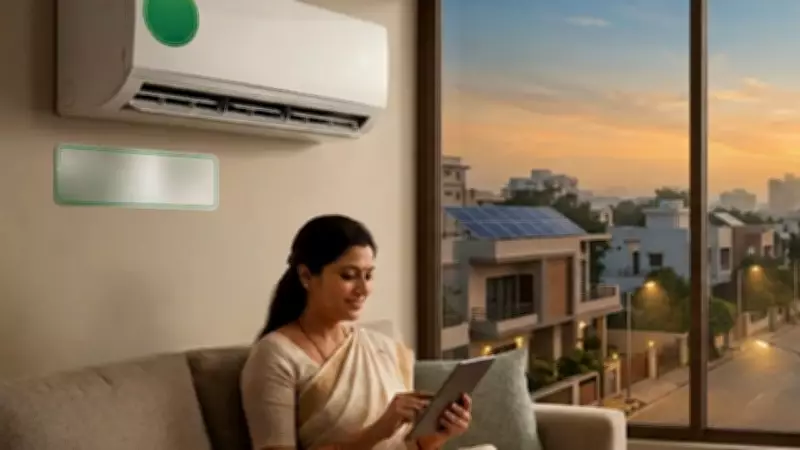
A new study from the India Energy and Climate Center (IECC) at the University of California, Berkeley has revealed that India can prevent power shortages and help consumers save up to Rs 2.5 lakh crore by doubling the energy efficiency of room air conditioners (ACs) over the next decade. This comes as the country's power grid faces intense strain during another scorching summer.
Growing AC Demand and Grid Pressure
The study highlights that India adds 10 to 15 million new ACs annually, with an additional 130 to 150 million units expected over the next ten years. Without policy intervention, ACs alone could drive peak power demand to 120 gigawatts (GW) by 2030 and 180 GW by 2035. Currently, ACs contribute 60 to 70 GW to peak demand, and their rapid growth is outstripping the grid's ability to keep up, especially after sunset.
Nikit Abhyankar, a UC Berkeley faculty member and lead author of the study, warned: "Without intervention, we risk blackouts or costly emergency fixes. But with smart policy, we can turn this challenge into a win for consumers, manufacturers, and the grid."

Current Situation and Policy Recommendations
According to a power ministry official, extensive use of ACs in urban and semi-urban areas amid rising temperatures pushed national power demand to an all-time high of 270.8 GW on May 21. The official noted that there are an estimated 1.3 crore AC units in the country, with numbers growing at 15 to 20 percent annually.
The study mentions that the Bureau of Energy Efficiency has planned an upgrade to AC efficiency standards in 2028, which may raise the minimum threshold by 25 percent. However, it calls for a long-term roadmap that progressively raises the bar until the most efficient AC available in India today becomes the minimum standard by 2033.
Potential Benefits
Implementing such measures could reduce peak demand by 10 GW by 2030 and 47 GW by 2035 — equivalent to roughly 100 large power plants — while saving an estimated Rs 8 lakh crore in avoided power infrastructure investment. Additionally, efficient ACs offer substantial consumer benefits. Even with slightly higher upfront prices, they could deliver net savings of Rs 90,000 to 2.5 lakh crore by 2035, paying for themselves within two to three years through lower electricity bills.
Addressing Cost Concerns
Amol Phadke, co-author and UC Berkeley faculty member, addressed a common concern: "A common concern is that more efficient ACs will be more expensive. But our analysis of global markets, including India, shows that efficiency is not the main driver of retail prices. With the right policy support, higher efficiency can go hand in hand with lower costs as manufacturers scale production, supply chains mature, and markets become more competitive."