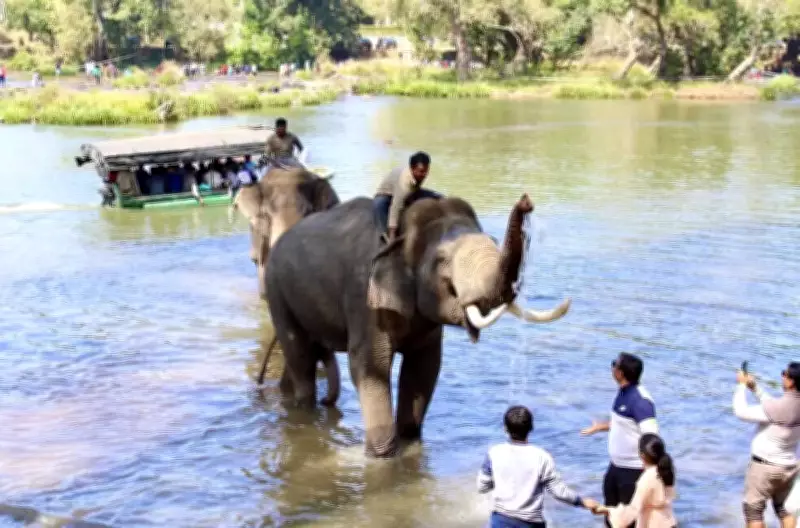
The horrifying incident at Dubare Elephant Camp in Karnataka reveals an uncomfortable truth: wildlife tourism has crossed the line from appreciation into dangerous entitlement. A 33-year-old woman lost her life during what was supposed to be a routine elephant bathing session in the Cauvery River. Two elephants, one of which later succumbed to injuries, reportedly turned on each other, and in the chaos, she was caught in the middle and crushed. A family outing became a tragedy within seconds, and what makes it even more unsettling is how familiar the experience feels to many who have stood just as close to captive wild animals for similar photo opportunities, believing the interaction was perfectly safe.
Immediate Bans and Long-Overdue Measures
In the aftermath, forest officials at Dubare have banned feeding and bathing captive elephants, prohibited close-range photo opportunities, and proposed designated viewing zones for tourists. These measures are necessary and long overdue, but they should not have taken a death to arrive at. This was not merely an isolated accident; it was the predictable outcome of a tourism culture that increasingly treats wild animals as immersive entertainment experiences. Across the world, the wildlife tourism industry has built an economy around the illusion that wild animals can be made safe for human interaction.
The Illusion of Safe Encounters
From elephant camps in South India to tiger photo attractions in Thailand, tourists are encouraged to step closer, touch more, and pose longer for dramatic social media content. The closer the interaction, the more marketable the experience becomes. What this process overlooks is the most important fact of all: these are still wild animals. No amount of training, conditioning, or human familiarity can completely suppress instinct. An elephant does not stop being an elephant because tourists are watching. A tiger does not become harmless because it has posed beside hundreds of visitors before. Stress, territorial aggression, noise, crowding, heat, hormonal changes, or a sudden trigger can overturn these so-called controlled environments within seconds.

Respecting Wildlife Means Accepting Boundaries
Animals are not obligated to bend themselves around human entertainment. Respecting wildlife means accepting its unpredictability, honoring its boundaries, and resisting the dangerous fantasy that wild animals exist for our convenience. Even safari parks designed around controlled viewing have not been immune. Multiple incidents at drive-through lion parks across different countries have involved tourists rolling down windows or stepping out of vehicles for closer videos and selfies, only to be attacked within moments.
The Common Thread: Human Proximity
The common thread running through all these cases is obvious: human proximity. Whether it is a captive elephant overwhelmed by crowds, a stressed tiger reacting to forced interaction, or a wild animal defending its territory, tragedy often begins when humans erase the boundary between observation and intrusion. The problem is not wildlife itself; the problem is human behavior and the industries profiting from it. Visitors are invited to bathe elephants, feed them, ride them, or pose beside predators. What is marketed as a connection with nature is often captivity packaged for Instagram. These environments are stressful for animals and misleading for tourists. When an animal feels trapped or overstimulated, instinct takes over, and the result can be catastrophic.
A Call for Ethical Wildlife Tourism
What happened at Dubare should not lead to temporary outrage only. This death must become more than another fleeting headline. It should force a larger reckoning with the way wildlife tourism is marketed and consumed. The decision to create designated viewing areas and ban direct interaction with elephants is a strong first step, but such measures should become standard practice wherever wildlife tourism exists. Ethical wildlife tourism means accepting distance and understanding that a wildlife encounter can be less dramatic. Watching an elephant from afar may not go viral online, but it preserves the dignity and safety of both species. The most responsible thing humans can do is simply step back.