Evolution's Unending Journey: How Life Adapts and Who Might Succeed Humans
Professor Tim Coulson describes evolution as a gradual, powerful process that transforms living organisms across generations. The mechanism is ordinary yet profoundly effective. Small genetic mutations continuously appear in DNA. Most of these mutations have little impact or even cause harm. However, a select few enhance survival or reproductive success. These advantageous traits are passed on more frequently, gradually becoming common within a population.
Over immense stretches of time, this steady, relentless sorting reshapes entire species. It provides the fundamental explanation for why life on Earth appears as it does today. From the earliest single-celled organisms to the most complex animals, every living form carries indelible traces of prior adaptation. Humans themselves are an integral part of this same grand pattern. Crucially, evolution has not ceased. It continues quietly in every new generation, perpetually shaped by environment, competition, and unpredictable chance events that no species can fully control.
The Inevitability of Change and Extinction
According to an interview published on The European, life on Earth has been evolving for approximately four billion years. Animals emerged roughly 600 million years ago, while modern humans are a much more recent arrival, appearing only around 300,000 years ago. In his comprehensive work, The Universal History of Us, Coulson traces this immense chain of events from the Big Bang to the present day. His argument is starkly simple: extinction is a normal, natural process. Nearly every species that has ever existed has ultimately disappeared. Humanity will not be an exception to this rule, even if our eventual end lies far in the distant future.

If humans were to vanish, the planet's landscapes would not remain barren or empty. Forests, oceans, and grasslands would dynamically shift and transform. Species that managed to survive would rapidly expand into the ecological niches and spaces left behind. Some would successfully adapt to new conditions, while others would inevitably fail. This process of recolonization and change would not be orderly or predictable. In nature, such transitions rarely are.
Potential Successors in a Post-Human World
Primates Face Limits Despite Intelligence
Chimpanzees and bonobos are frequently viewed as potential successors due to their notable intelligence and complex social structures. They utilize tools and demonstrate sophisticated cooperation within groups. Yet, significant constraints exist. Their populations are currently small and fragmented across habitats. They reproduce at a relatively slow rate and depend heavily on stable, specific forest environments. In a hypothetical scenario involving large-scale ecological or societal collapse, these primates could face pressures similar to those challenging humans. This suggests that intelligence alone may not guarantee evolutionary dominance or survival.
Birds and Insects Exhibit Structured Societies
Certain bird species, including crows and parrots, demonstrate remarkable problem-solving abilities once thought to be uniquely human. Some insects, such as ants and termites, construct vast, highly organized colonies. These examples reveal that complex social behavior and intelligence can evolve through diverse, independent pathways. However, physical limitations are crucial. Wings and generally small body sizes restrict the scale and type of construction birds can undertake. Insects often operate through rigid, inherited behavioral patterns rather than flexible, learned planning. Their societies are intricate but typically fixed in their fundamental structure.
Octopuses Combine Intelligence and Adaptability
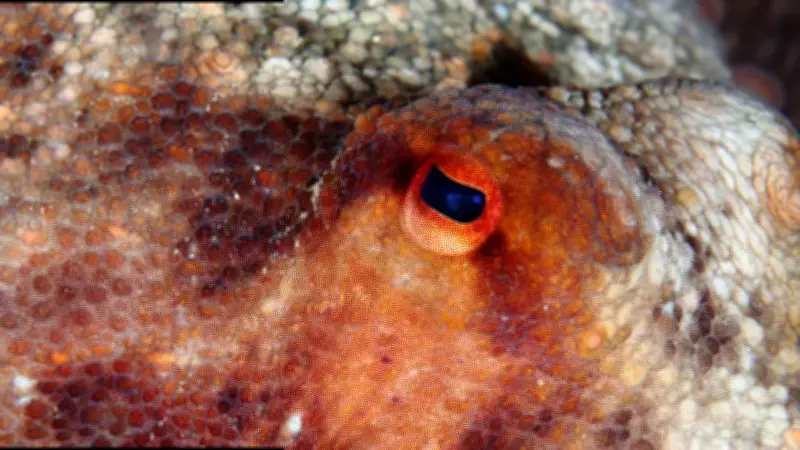
Professor Coulson proposes octopuses as a more unconventional candidate in discussions about post-human evolution. Octopuses possess remarkable abilities to manipulate objects with their flexible arms and display advanced, creative problem-solving skills. Their nervous systems are partly decentralized, allowing for independent control of their limbs. They exhibit impressive adaptability to varied marine environments, ranging from shallow coral reefs to the deep ocean's darkness.

Nevertheless, octopuses face their own evolutionary constraints. They lack internal skeletons, which makes extended movement on land extremely difficult, binding them primarily to aquatic environments for the foreseeable future. Any major transition to terrestrial dominance would require monumental evolutionary change over vast geological periods. Yet, it is worth noting that oceans cover most of our planet. Intelligence evolving in marine settings may follow developmental paths that appear entirely unfamiliar from a human, land-centric viewpoint.
The Continuous Narrative of Life
Evolution is not a historical event but a persistent, dynamic force. It operates through the dual engines of random genetic variation and non-random natural selection, quietly sculpting the tree of life with each passing generation. The question of who or what might succeed humans is not just speculative fiction but a reminder of life's relentless adaptability. From the genetic drift in a population of fruit flies to the potential rise of an intelligent marine species, the story of evolution continues to be written, an unending journey of adaptation, competition, and survival on a changing planet.