Experts Demand Fundamental Rethink of Digital Tools in Autism Care
In a significant development from Bengaluru, multidisciplinary experts have issued a compelling call for a fundamental transformation in how digital tools and artificial intelligence are conceptualized, designed, and implemented within autism care. The consensus strongly advocates for technology that remains inherently flexible, deeply human-centred, and meticulously responsive to individual needs and contexts.
Global Convention Highlights Need for Customization
These crucial recommendations emerged prominently during the third Global Autism Convention, which was organized by St John's National Academy of Health Sciences in collaboration with several partner organizations. The five-day event, inaugurated on Wednesday, carried the theme ‘Autism in the Global South: Culture, Community, and Neurodiversity’, deliberately focusing on local realities and resource-constrained settings.
Speaking at a dedicated symposium titled Digital Tools & AI-based Interventions on Friday, autism advocate and app developer Alice Mamaga Akosua Amoako from Ghana powerfully articulated technology's immense potential to bridge global disparities in autism care. However, she issued a stark warning against adopting uniform, standardized approaches.

"Some children are highly tech-savvy, while others may avoid screens entirely. Parents, caregivers, teachers, and professionals must understand each child's individual needs, interests, age, and developmental level before choosing any digital or AI-based intervention," Amoako emphasized, underscoring the necessity of personalized assessment.
Inclusive Design and Alternative Pathways
Echoing this imperative for customization, Matthew K Belmonte of Nottingham Trent University highlighted a critical gap in current research and tool development. He pointed out that minimally speaking autistic individuals, despite having relatively intact comprehension abilities, are frequently excluded from studies and technological solutions.
Presenting an innovative, Bengaluru-developed, open-source, iPad-mediated therapy platform, Belmonte stressed that digital platforms must function primarily as enablers and facilitators, not as constraints. He demonstrated how alternative communication pathways can uncover abilities and potentials that conventional assessments often overlook.
"Citing an example, he said iPads typically assess responses based on the point of contact made by a child, whereas recognising the moment of departure from contact could be more meaningful. When the departure is recognised, the computer's response can be more congruent to the user's intention," Belmonte explained, illustrating the nuance required in interface design.
Challenging Rigid Models with Data-Driven Approaches
Bringing a vital engineering and neuroscience perspective to the discussion, Suresh Sundaram, a professor at the Indian Institute of Science (IISc) in Bengaluru, directly challenged the prevailing rigid behavioural models used in many digital interventions.
"We all recognise an apple even when we can't explain how—autism works the same way. Behaviour emerges from functional brain networks, muscle memory, and subtle emotional signals, not deterministic rules," Sundaram stated. He advocated strongly for probabilistic, data-driven methodologies that utilize multimodal data streams, including brain signals, behaviour patterns, language use, visual cues, and physiological metrics.
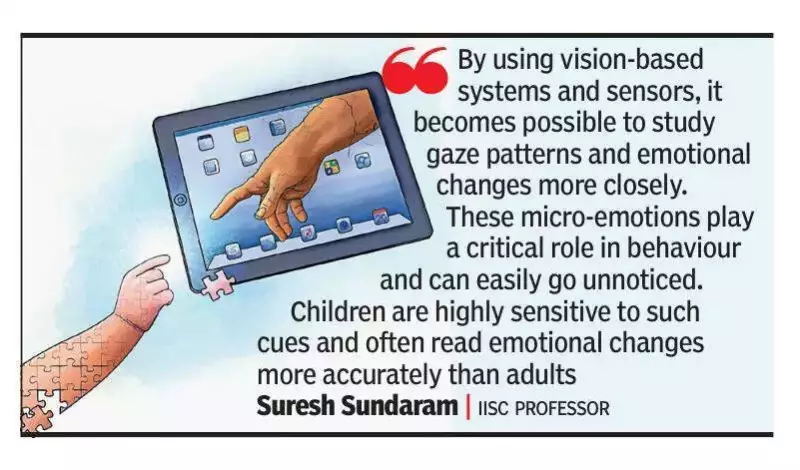
He further noted that stereotypical behaviours in autistic children can appear suddenly without obvious external triggers. Identifying the underlying neural or emotional causes through advanced sensing could help interrupt escalation cycles. "By using vision-based systems and sensors, it becomes possible to study gaze patterns and emotional changes more closely. These micro-emotions play a critical role in behaviour and can easily go unnoticed. Children are highly sensitive to such cues and often read emotional changes more accurately than adults," Sundaram added.

Focus on Local Realities and Early Identification
Dr Vijaya Raman, professor of psychiatry at St John's Medical College Hospital and chair of the convention, clarified the event's deliberate grounding in local contexts. "This year's convention was designed specifically for low-resource settings like ours, where solutions from the West are often not directly replicable. We wanted to bring parents, clinicians, therapists, educators, and researchers together to look at autism through the lens of culture, community, and neurodiversity, and to develop approaches that work within our realities—strengthening families while reducing caregiver burden," Dr Vijaya said.
She also highlighted the transformative potential of digital tools and AI in early identification processes. These technologies are now capable of flagging potential signs of autism spectrum conditions much earlier than clinical observation alone—sometimes as early as 9 to 12 months of age—opening new avenues for timely support and intervention.
The convention served as a powerful platform, uniting global expertise with local insights to push for a more ethical, effective, and individualized future for technology in autism support, with Bengaluru at the forefront of this important dialogue.