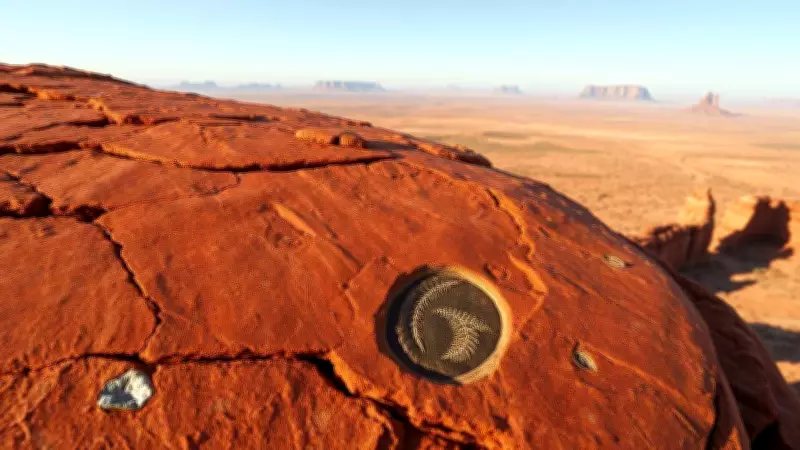
On a calm day in 2024, a farmer in New South Wales, Australia, was shifting troublesome stones along a rusty fence line on his property. What he uncovered was far more than an ordinary rock: a perfectly preserved leaf print embedded in iron-rich stone. This accidental discovery revealed an entire fossilized rainforest from the Palaeozoic era, preserved in goethite, a mineral similar to rust.
Iron Mystery of McGrath's Flat
Scientists who visited McGrath's Flat were amazed. Unlike typical fossils formed in sedimentary rocks like clay or limestone, these fossils are encased in goethite. According to a study in Science Advances, the iron deposits acted like a vacuum, replacing biological material with incredible efficiency. Even individual cells and hairs on insect legs are visible under a microscope.
This preservation is extremely rare. Most fossils only preserve hard parts like bones or shells. At McGrath's Flat, researchers found soft-bodied secrets that usually decay within days. A study in Gondwana Research detailed fossils including colorful peacock spiders, giant cicadas, and ancient bird feathers. It's like viewing a high-definition photograph of a world 15 million years ago, all because a farmer decided to clear some scrub.

A Window into a Changing Climate
Approximately 15 million years ago, Earth was cooling, and Australia's vast rainforests were drying up, eventually leading to today's deserts. The fossils at McGrath's Flat represent the last remnants of this era, capturing a time of environmental change that still echoes in Australia's wilderness.
Magic in Common Dirt
There is something quintessentially human about this discovery. The rocks seem mundane—just a pile of rusted ironstone. But a sharp-eyed local recognized their true value. These "junk" rocks held pieces of history waiting to be discovered. As this story shows, some of the world's most treasured secrets aren't buried under oceans or in caves, but lie right at our feet.
The discovery has united the farming community as stewards of a hidden treasure. People now walk their farms in awe, imagining the ancient jungle alive underground. Scientists from the University of New South Wales have spent months in the fields, partnering with locals to painstakingly break open ironstones. Every hammer strike holds the chance of revealing something never seen before.
These fossils will eventually adorn museums, preserved for future generations. But for the farmer who first saw that glowing leaf, nothing will ever be the same. It wasn't just discovering leaves from times long gone—it was uncovering a lost world.