Fungus with 'Midas Touch' Transforms Gold into Crystals, Accelerates Growth
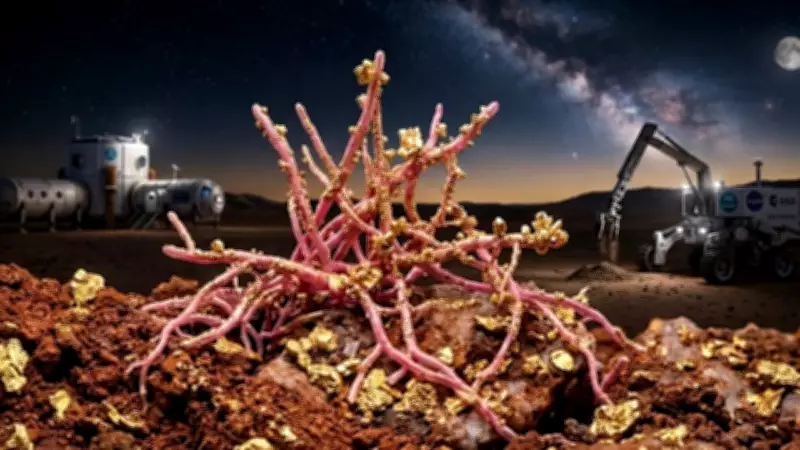
In a remarkable discovery in the goldfields of Western Australia, researchers have identified a unique strain of the fungus Fusarium oxysporum that exhibits a literal 'Midas touch.' This pink-colored organism interacts with underground mineral deposits, breaking them down into a liquid state and ultimately growing solid gold crystals on its thread-like hyphae. The presence of gold on these fungal filaments not only enhances their aesthetic but also significantly increases growth rates and sizes compared to non-gold-infected cultures.
How the Fungus Absorbs and Precipitates Gold
Scientists from the Commonwealth Scientific and Industrial Research Organisation (CSIRO) detailed that Fusarium oxysporum absorbs gold from its environment through a process of dissolution. It then precipitates this gold as nanoparticles onto its hyphae, involving a highly reactive mechanism where the fungi produce superoxide to oxidize the gold, resulting in a durable gold coating. This biological alchemy allows the fungus to thrive in mineral-rich soils, offering insights into natural resource processing.
Gold as a Catalyst for Fungal Advantage
Analysis published in the journal Nature Communications reveals that fungi coated with gold demonstrate superior growth rates compared to those without gold interaction. This suggests gold may act as a catalyst for biochemical reactions or aid in nutrient uptake, providing a competitive edge in the harsh, mineral-dense environments of the Australian outback. The findings highlight how extreme conditions can drive evolutionary adaptations in microorganisms.

Bio-Mining: A Sustainable Alternative for Space Exploration
The exploration of microbes for mineral processing, known as bio-mining, is gaining traction among agencies like NASA and the European Space Agency (ESA) for potential space applications. With the high costs and logistical challenges of transporting heavy machinery to celestial bodies such as the Moon or Mars, microorganisms like Fusarium oxysporum could be employed to extract gold and other metals from regolith. This approach to in-situ resource utilization (ISRU) promises to support long-term human presence in space in a more sustainable and cost-effective manner.
Earthly Applications: Reducing Exploratory Drilling Costs
Beyond space, this discovery has immediate practical applications on Earth. CSIRO scientists note that the presence of gold-coated fungi on the surface can serve as a biological indicator for deeper, high-concentration gold deposits. This could potentially eliminate the need for expensive exploratory drilling by mining companies, allowing them to use these natural markers to target resources more efficiently and reduce environmental impact.
The integration of fungal bio-mining technology represents a groundbreaking step in both terrestrial and extraterrestrial resource recovery, blending biology with engineering to unlock new frontiers in mining and space exploration.