

Gen Z Redefines Cool: The Rise of 'Posting Zero' and Offline Luxury
At a time when nations like France, Italy, China, and Australia are implementing stricter regulations on teenage social media usage, Generation Z is quietly redefining what it means to be cool by voluntarily opting out of the constant online visibility race. This movement, dubbed the 'posting zero' trend, signals a profound cultural shift rather than a fleeting internet fad. In an era obsessed with digital presence, many young people are making invisibility aspirational and turning offline moments into an exclusive luxury.
The Personal Shift: From Frequent Posters to Quiet Observers
Sanket Mistry, a 27-year-old currently based in Ireland, exemplifies this transformation. Once an active social media user who regularly shared updates, he now posts content only once every three months. "I used to post a lot, but now I'm bored with it, and I'm trying to maintain some distance," he explains. Mistry feels no external pressure to participate in the social media game, stating, "It's my account. Why would I feel the pressure? No one is eagerly waiting for my specific post anyway."
This conscious stepping back has brought tangible benefits to his life. By reducing his online activity, Mistry has opened up valuable time for more productive and fulfilling pursuits. As an avid cinephile, he now dedicates more hours to reading novels and watching films, activities he deeply values. His experience reflects a broader trend among Gen Zers who are prioritizing real-world engagement over digital validation.

Redefining Engagement: Low-Visibility Over Performative Detox
Contrary to popular assumptions, Gen Z isn't completely abandoning social media or advocating for dramatic digital detoxes. Instead, they are choosing to engage with these platforms in fundamentally different ways. Namrata Jain, a psychotherapist and relationship expert, observes, "Digital detox is too performative. Instead, Gen Z is opting for low-visibility. They are still on social media, but they've stopped feeding the beast."
Ekta Bhanushali, a mental health professional and relationship coach, echoes this perspective, adding, "They are redefining what participation online looks like. Instead of posting, they are simply consuming content." This shift represents a move from active content creation to selective consumption, where social media becomes a tool for information rather than a stage for self-presentation.
Saaheel, a 27-year-old from Goa, embodies this approach. He no longer posts on his main feed and shares stories only occasionally. "If I do share something, it is usually an interesting piece of content. I don't play the social media visibility game," he states. For Saaheel, these platforms serve more as informational tools than spaces for self-expression. He primarily scrolls to stay informed, preferring phone calls or direct messages for genuine communication.
"People assume that being quiet online means having an uneventful life, which isn't true. It simply means that I choose depth over display. My life does not need to exist publicly to feel real or meaningful," Saaheel emphasizes, highlighting the philosophical underpinnings of this trend.
The Driving Forces Behind the Choice
Several factors are fueling this movement toward digital minimalism. Social media has become increasingly overcrowded, hyper-curated, and artificial, with AI-generated content adding to the noise and diminishing authenticity. In response, Gen Z is posting less and engaging more intentionally. Jain explains, "Gen Z has realized that personal branding is an exhausting, unpaid second job. This reflects improved emotional intelligence."
This generation is beginning to value autonomy over external validation. Jain elaborates, "Gen Z is starting to value autonomy over validation. They have realized that if you don't document the sunset, you actually get to see the sunset. It's a move from 'look at my life' to 'let me live my life' – a vital step in developing a stable sense of self that isn't dependent on likes."

In today's hyper-connected world where everyone seems accessible 24/7, the person who isn't constantly online is perceived as having higher status. Jain notes, "In an era where everyone is accessible 24/7, the person who isn't is perceived as having more status. Being offline signals, 'My life is so interesting, I don't need to prove it'. That's offline capital – real connections and a sense of security that doesn't require a digital receipt."
Beyond the Feed: Where Gen Z Is Actually Showing Up
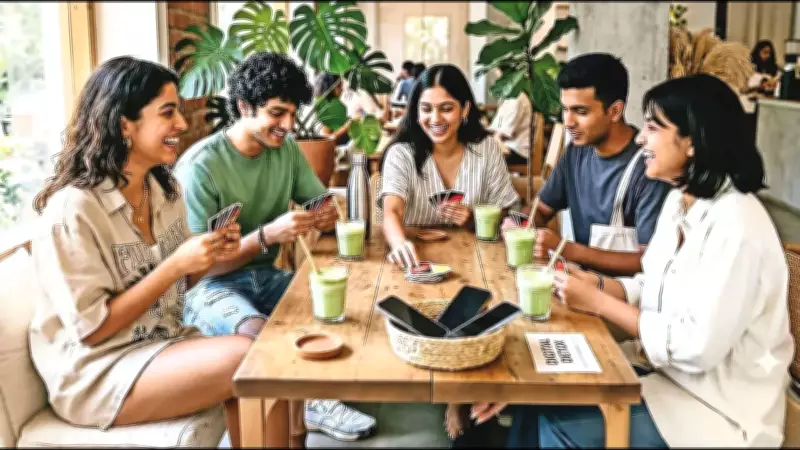
This shift isn't about complete disengagement but rather a redistribution of energy toward more meaningful activities. Gen Z is increasingly visible in physical spaces designed for community rather than content creation. They are participating in pottery workshops, sip-and-paint nights, bhajan clubs, and board game cafés. Parks and libraries are becoming popular hangouts, offering environments built for genuine interaction.
Online, their presence has become more private and selective. Instead of broadcasting on public feeds, many are active in direct messages and conversational platforms like Reddit, where engagement is more focused and intimate. Bhanushali observes, "Gen Z thinks that if they don't put themselves out there, their digital minimalism will bring more value. Earlier, people believed that sharing their personal lives online made them relevant, but that has changed. Now, they feel that doing less is more and that rarity feels more valuable."
This cultural movement represents a significant reevaluation of digital life's role. By embracing 'posting zero' and low-visibility engagement, Gen Z is crafting a new paradigm where offline experiences and private connections hold greater worth than public validation. As social media continues to evolve, this generation's approach may redefine not just coolness but the very nature of digital citizenship in the years to come.





