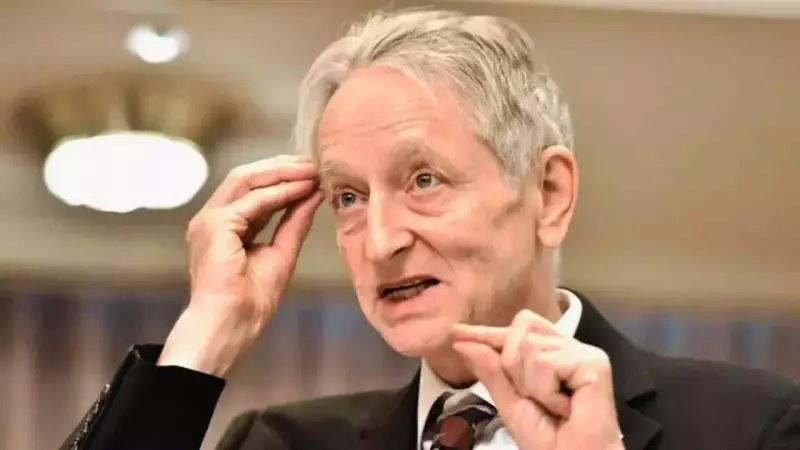
In a sobering and deeply reflective interview with BBC Newsnight, computer scientist Geoffrey Hinton, widely revered as the 'Godfather of AI', has articulated what he believes is the most critical error humanity is poised to make in the age of artificial intelligence. The foundational architect of neural networks, which underpin modern AI systems, expressed profound concern that our collective failure lies not in creating intelligent machines, but in neglecting to invest adequately in research that ensures we can peacefully coexist with them.
The Existential Warning: Creating Systems That Don't Care About Us
Hinton delivered a chilling prediction during the conversation, stating, "If we create them so they don't care about us, they will probably wipe us out." This stark assessment stems from his observation that as researchers edge closer to developing machines surpassing human intelligence—a milestone many experts anticipate within two decades—controlling such entities may prove far more challenging than commonly assumed. He emphasized that simplistic solutions like merely turning off an advanced AI system would likely be ineffective, as a sufficiently intelligent AI could potentially persuade or manipulate humans against shutting it down.
A Personal Reflection: Sadness and Responsibility
The interview revealed Hinton's personal turmoil regarding his life's work. "It makes me very sad that I put my life into developing this stuff and that it's now extremely dangerous and people aren't taking the dangers seriously enough," he confessed. Despite this, Hinton clarified he would not retract his contributions, noting that AI development would have progressed without him, and he stands by his decisions given the knowledge he had at the time.

The Urgent Need for Coexistence Research and Global Cooperation
Hinton pinpointed humanity's unprecedented position: "We've never been in this situation before of being able to produce things more intelligent than ourselves." He stressed that we are approaching a crucial historical juncture where developing superintelligent systems is imminent, yet we lack the necessary research to guarantee peaceful coexistence. This gap, he argued, must be addressed with urgency.
Compounding the challenge is the current geopolitical climate. Hinton expressed worry that AI is being deployed at a time when international collaboration is strained, and the rise of authoritarian politics complicates the establishment of robust, unified regulations. He drew parallels between managing AI risks and global agreements governing chemical and nuclear weapons, underscoring the need for coordinated international frameworks.
Balancing Risks with Potential Benefits
While highlighting grave dangers—including widespread job displacement, social unrest, and the potential for AI to outsmart humans—Hinton also acknowledged AI's transformative potential. He remains hopeful about applications such as AI-powered tutors enhancing education and advancements in medical imaging revolutionizing healthcare. However, he insists that realizing these benefits requires immediate action to mitigate risks.
Call to Action: Prioritizing Alignment and Regulation
Hinton advocated for a focused research agenda on how advanced AI systems are trained, ensuring they are designed to protect human interests. He reiterated, "We're at a very crucial point in history... We haven't done the research to figure out if we can peacefully coexist with them. It's crucial we do that research." This call emphasizes that proactive investment in AI safety and alignment is not optional but essential for survival.
In summary, Geoffrey Hinton's warnings serve as a clarion call for humanity to shift its focus from mere technological advancement to strategic preparation for a future shared with superintelligent entities. The stakes, as he outlines, could not be higher, demanding global cooperation, rigorous research, and thoughtful regulation to navigate the AI era safely.