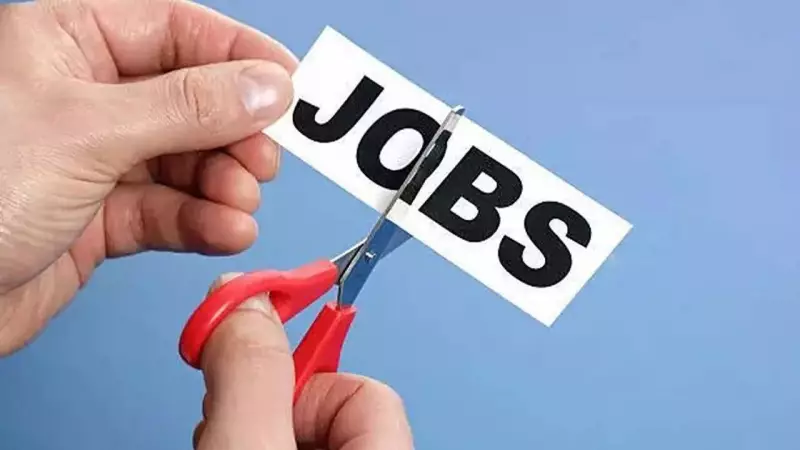
A critical question looms over the global workforce: is artificial intelligence leading to widespread job losses? A new economic analysis from Goldman Sachs attempts to unravel this complex puzzle, presenting a nuanced and bifurcated picture of AI's current impact on employment.
AI in Earnings Calls Linked to Sharper Hiring Pullback
The findings, based on a review of third-quarter corporate earnings from nearly all S&P 500 companies, were detailed by senior economist Ronnie Walker. While the research could not establish a definitive link between AI exposure and broad labor market outcomes across the entire economy, it uncovered a significant trend at the company level.
Walker noted that firms which discussed AI in the context of their workforce during earnings calls had "cut their job openings more sharply this year." These companies, the analysis suggests, are disproportionately scaling back on hiring plans. Walker explains that management teams are increasingly viewing AI not merely as an efficiency tool but as a fundamental pillar of their future human capital strategy, leading to preemptive reductions in new roles.

"Jobless Growth" and the K-Shaped Economy
This perspective aligns with an earlier October analysis by Goldman Sachs economists David Mericle and Pierfrancesco Mei, who posited that "jobless growth" might become a persistent feature of the post-pandemic economy. Walker's report adds another dimension, finding that companies most frequently discussing tariffs had also made disproportionate cuts to job openings.
Some corporations explicitly stated plans to curb costs by "hiring less, reducing headcount, or pursuing productivity-enhancing initiatives (such as investing in AI solutions)." Since November 2022, AI has rapidly become a central topic in tech sector discussions about headcount.
The report paints a "bifurcated" outlook, echoing arguments of a "K-shaped" U.S. economy where overall consumer spending is robust, but significant concerns persist for lower-income groups. Walker projects this underperformance for low-end consumers will continue into 2026, reflecting sluggish job growth and pressure from reductions in benefits.
Limited Direct Evidence of AI-Driven Layoffs
Despite the hiring slowdown, Goldman Sachs economists Manuel Abecasis and Pierfrancesco Mei, in related October 2025 research, pointed out a crucial distinction. "So far, we do not find clear evidence that most of the increase in these measures is directly motivated by AI," they wrote, referring to layoff trackers like the Challenger and WARN reports, even as tech layoffs rose notably.
They emphasized that only a small fraction of S&P 500 firms have explicitly cited AI when announcing large-scale layoffs. Most companies, instead, point to broader needs for operational streamlining and restructuring, sometimes attributing these changes to new technologies that enable efficiency gains.
In essence, while AI is influencing corporate hiring strategies and contributing to a cautious approach toward new roles, clear, direct evidence of mass layoffs solely triggered by AI remains limited. The immediate impact appears more concentrated in tightened hiring budgets and strategic shifts rather than in sweeping, AI-motivated workforce reductions.