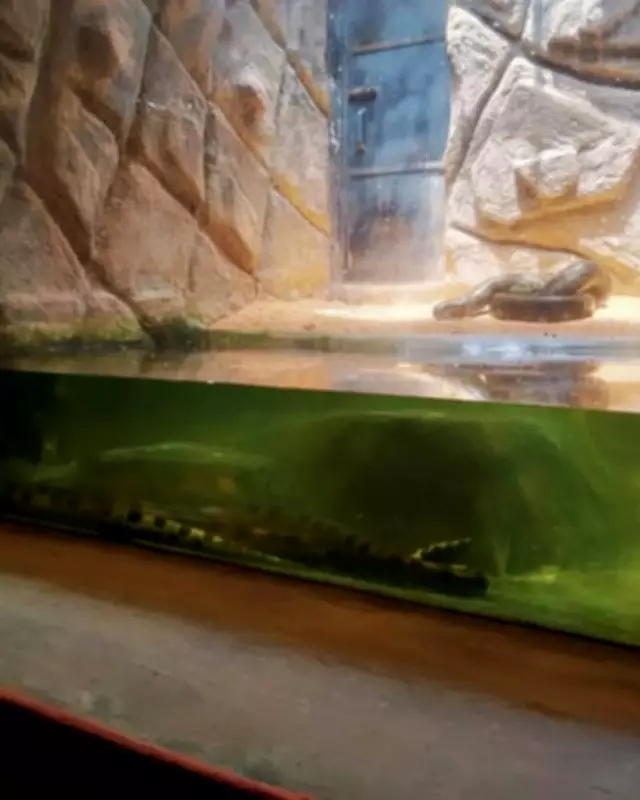
Chennai: Three massive green anacondas—Tamilselvam, Loki, and Medusa—bred at the Madras Crocodile Bank have become the newest stars of the reptile park. They now form the facility’s largest snake exhibit yet, bringing one of South America’s most formidable predators to public view in Chennai.
The Trio and Their Names
All three were born at the Bank, and caretakers christened them—the seven-year-old male as Tamilselvam, and the six-year-old females as Loki and Medusa. Tamilselvam is the lightest of the trio at roughly 8 kg, while Loki weighs about 11 kg and Medusa 12 kg. These juvenile weights hint at the far larger sizes these snakes may reach in the wild.
Size and Physical Characteristics
Green anacondas are among the heaviest and most powerful reptiles. Fully grown adults can weigh up to around 80 kg and stretch to nearly 20 feet. Their olive-green skin, patterned with black blotches, provides ideal camouflage in the murky water bodies they favor.

Aquatic Adaptations
Madras Crocodile Bank Education Officer Vaibhavi Bhardwaj explained that anacondas are built for aquatic life. Their eyes and nostrils sit atop the head, allowing them to remain nearly hidden beneath the surface as they wait to ambush prey. Though cumbersome on land, their streamlined bodies move with surprising stealth underwater, where they hunt capybaras, caimans, and deer by constriction. Females grow substantially larger than males, a pronounced sexual dimorphism that shapes their ecology and captive care.
Reproduction and Care
Unlike most snakes that lay eggs, green anacondas are viviparous. After a gestation of six to nine months, a female may give birth to a litter ranging from a dozen to many dozens of fully capable, swimming young. This reproductive strategy, together with their size and specific habitat needs—swamps, marshes, and slow-moving rivers—makes them challenging to keep outside suitably designed zoological facilities.