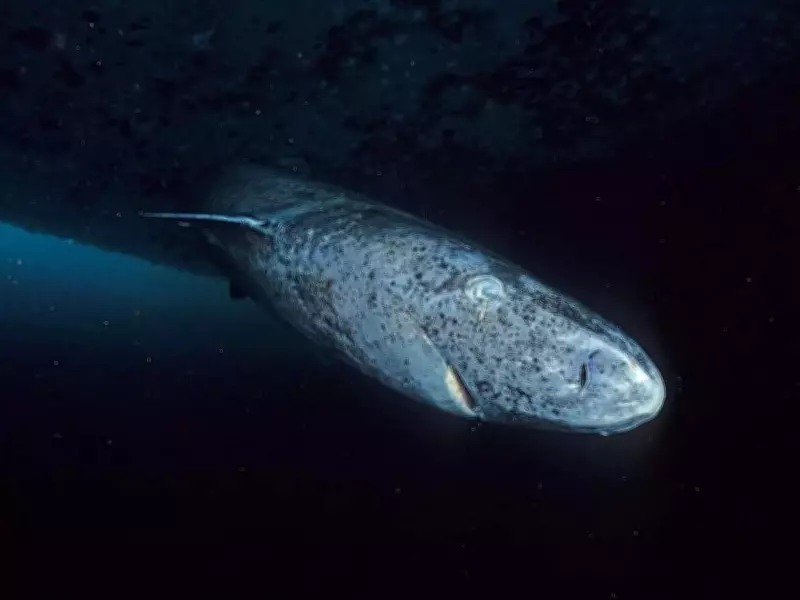
A shark that may be older than the United States has generated massive interest as one of the most unique animals inhabiting our oceans. Shockingly, this theory has been backed by various experts who claim it may be accurate.
The Greenland Shark: Earth's Longest-Lived Vertebrate
As it turns out, the Greenland shark, also known as Somniosus microcephalus, is thought to be the longest-lived vertebrate on earth. Some individual sharks have been reported to live for 250 to 500 years, according to a National Geographic study.
Determining the Shark's Age
One unique aspect of Greenland sharks is that they lack bones, which contain growth rings that help determine ages. For quite some time, the age of these species remained unknown until a recent breakthrough. The age of Greenland sharks was determined through radiocarbon dating analysis of specific tissues. Eye lenses have been found to develop in the earliest stages of life. Scientists examined some of these tissues and calculated that the oldest female Greenland shark had lived up to 272 years. According to marine biologist Julius Nielsen, who led the research reported in Science (2016), the results surprised even experienced researchers. She noted that these sharks unexpectedly grew older than most other animals, reaching such extreme ages.

Greenland Sharks Have a Slowed Metabolism
One possible explanation for the shark's longevity is associated with living conditions. The Greenland shark inhabits cold waters near the North Pole and the North Atlantic. Temperatures there fall well below zero, and there is practically no sunshine. According to various studies, animals from colder regions grow slowly and live longer due to less intense metabolic processes. All biological processes slow down in such an environment, and this became a factor for the Greenland sharks. Another factor is associated with swimming speed. These animals have one of the lowest speeds among all marine creatures – approximately one foot per second.
Greenland Sharks Are Intimidating Predators That Rarely Rush
Despite their slow speed, Greenland sharks are among the largest marine predators. They can reach lengths of 23 feet and weights of over a ton. There have been findings of remains from seals, horses, and reindeer in their stomachs. Some scientists, as reported in the Canadian Journal of Fisheries and Aquatic Sciences, speculate that Greenland sharks ambush seals while sleeping. This claim has been made based on their swift reactions. However, many aspects of Greenland sharks remain unknown due to the depth at which they can dive – up to 7,200 feet deep.
Slow Growth and Late Sexual Maturity
One other interesting characteristic of Greenland sharks includes their slow pace of growth. They are thought to reach sexual maturity between 150 years old. This is very rare, even for vertebrates. Other sharks tend to mature between 10 and 40 years of age. Also, their slow growth means that it takes a long time for depleted populations to recover. According to several studies, the Greenland shark is a threatened species due to accidental catches by fishermen, marine pollution, and climate change.
Greenland Sharks Have Weak Sight but Are Strong Survivors
A large number of Greenland sharks suffer from poor vision because of a parasite that attaches to their eye. The organism called Ommatokoita elongata damages the cornea of Greenland sharks. At the same time, the sharks manage to survive in complete darkness. Scholars suggest that this is because Greenland sharks rely on their sense of smell rather than vision.
Why the Greenland Shark Is Important
The marine animal is more than a fascinating biological phenomenon. The life cycle of the shark provides valuable information about longevity and ways of avoiding diseases. As National Geographic states, researchers can use this knowledge to study how living cells age. It is possible that there are Greenland sharks in the ocean that swam there when major events, such as those of the 18th century, took place. Concludingly, the idea transforms the perception of time in nature. There is an organism that can be older than a whole nation.