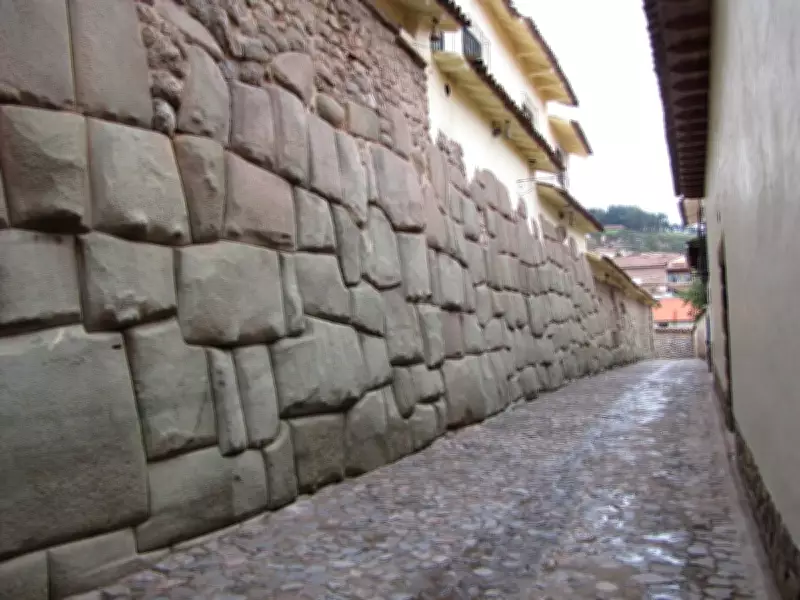
When strolling through Cusco, it can feel as if the city's story has already been fully told. Stone walls, broad plazas, and narrow alleys seem to narrate the tale of the Inca Empire. For centuries, people believed that what was visible aboveground was everything left from this ancient civilization. However, recently, specialists began searching deeper beneath the soil and discovered something truly astonishing. It appears that the old capital of the Incas hides a vast underground world beneath our feet, not just a single abandoned tunnel.
Discovering an Underground City Using Radar
Finding out what lies beneath a modern city is extremely challenging. Digging up the entire city is not a viable option. That is why modern technology is so vital for history and archaeology. Scientists use special devices to scan soil without digging holes in the ground. As a result of a recent study indexed on PubMed, researchers managed to discover a hidden subterranean city in the Plaza de Armas, the central square of Cusco. Using radar technology, they created a map showing the structure of layers underneath the soil. The research suggests that soil can preserve a record of past activity, and radar technology can be used for discovering and studying hidden objects. Ground-penetrating radar allows researchers to map urban subsoils cleanly.
The Inca Were Excellent Underground Architects
The uncovering of objects hidden beneath Cusco is logical considering the typical approach to building used by the Inca. These were excellent architects and builders who not only constructed stone walls and terrace farms but were equally interested in what was happening underground. As mentioned in a 2023 peer-reviewed article in Scientific Reports, the Inca created intricate subsurface systems that helped drain away water and hide special water channels underground. The article provides physical evidence of a tunnel that carried water directly into the temple. The use of such techniques in well-known structures makes it natural to expect the same from a capital city. Water management, secret passages, and drainage systems were common practices for these ancient people, who felt confident forming underground spaces for their cities.

What This Means for Our History
This discovery may change how we think about Cusco. Historically, the old capital was considered nothing more than an architectural masterpiece—an artifact preserved until our day and studied exclusively based on the visible part of its walls. Now, however, it is obvious that Cusco was never just an old monument but rather an actively operating archaeological site. As it turned out, the Incas designed their own capital as a multi-layer structure existing above and beneath the soil surface. The new construction that occurred when colonial and modern constructions were placed on top of the ruins throughout the centuries did not destroy the old layers but simply concealed them. This allows us to see Cusco as a fully operational city with rich historical layers.
This subterranean network makes Cusco seem even more complex and mysterious. Cusco is not only an archaeological site but an extraordinary engineering masterpiece whose secrets are far from being revealed. Today, we can see that Inca history extended below street level as well. There were many other layers of their lives underground. Although our knowledge of the specifics of this intricate system is currently limited, certain things we can be sure of: Cusco appears to have been a multilayered city, though many details remain unknown.