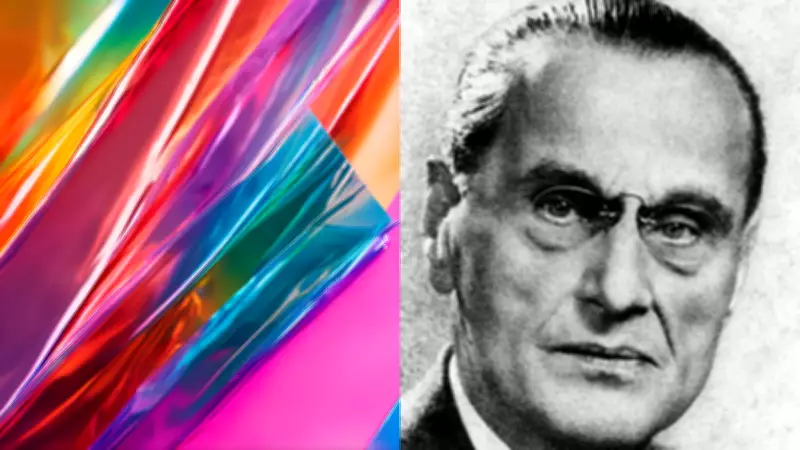
It all began in 1908 when a Swiss engineer and inventor, Jacques E. Brandenberger, witnessed a drink spill on a linen tablecloth in a restaurant. This incident inspired him to search for a way to create a waterproof material for coating fabrics. Although he never succeeded in producing stain-proof cloth, he stumbled upon something far greater: a flexible cellulose film known as cellophane. Cellophane became widely used in the food and consumer goods industry due to its ability to protect packaged foods while offering consumers visibility. In fact, cellophane is one of the very first clear wraps ever created.
Who Was Jacques E. Brandenberger?
Jacques Brandenberger was a Swiss inventor born in 1872, who began his career focusing on textile production. At the dawn of the 20th century, Europe was experiencing rapid industrialization and scientific advancement, leading to the emergence of innovative materials aimed at improving daily life. As documented by the National Inventors Hall of Fame, Brandenberger was inspired by watching wine spill on a tablecloth at a restaurant, prompting him to develop a stain-resistant material by adding a protective layer to fabrics. While this goal was not unrealistic, initial tests resulted in stiff fabrics. Although the tablecloth failed to meet expectations, Brandenberger realized that the thin plastic sheet used to coat the material could be separated from it.
How Cellophane Was Invented from a Failed Experiment
It took Brandenberger several years to develop a transparent film from cellulose. His original idea of creating water-resistant fabrics evolved into producing a transparent cellulose film that was both flexible and strong. In 1912, he invented machines capable of manufacturing commercial-grade transparent films. Brandenberger patented the invention and named it “Cellophane,” a combination of “cellulose” and “diaphane,” meaning transparent. According to a scholar from Harvard Business School, cellophane transformed the way people shopped by allowing them to view products without exposing them to dust. Thus, cellophane revolutionized retail packaging.

The product quickly caught the attention of food producers, who began using it to wrap chocolate, bakery items, and cigarettes. Moreover, cellophane created a new buyer-to-product relationship, as appearance played a significant role in sales.
Why Cellophane Changed the Packaging Industry
Before the development of cellophane, most items were packaged in opaque papers or boxes that concealed their contents. Brandenberger’s innovation made visible packaging available, something now taken for granted in modern supermarkets and retail stores. One key breakthrough occurred in the 1920s when improvements were made to cellophane’s ability to repel moisture. This enhanced its protective value for food packaging and significantly broadened its commercial applications.
The clean, clear, and convenient cellulose packaging gained immediate popularity in the food industry. Companies understood that consumers were more inclined to purchase products they could see through the packaging. Cellophane was also widely used for gift wrappings and medicines. For decades, it symbolized modernity and hygiene.
The Environmental Legacy of Cellophane Today
Although plastic is commonly associated with clear packaging materials today, natural cellophane originates from cellulose extracted from wood pulp or cotton plants. Unlike synthetic plastics, natural cellophane decomposes and biodegrades under the right environmental conditions. This has made it particularly popular recently, as many companies seek sustainable packaging alternatives to single-use plastics. Scientists exploring biodegradable materials often turn to old inventions like cellophane as innovations in renewable packaging.
Historians often note that the history of cellophane serves as an example of how failure can redirect the course of invention. What began as an attempt to improve tablecloths ultimately transformed the fields of packaging, retail, and global consumption. More than a century ago, a simple accidental discovery led to the invention of transparent films, influencing the consumer goods industry to this day.