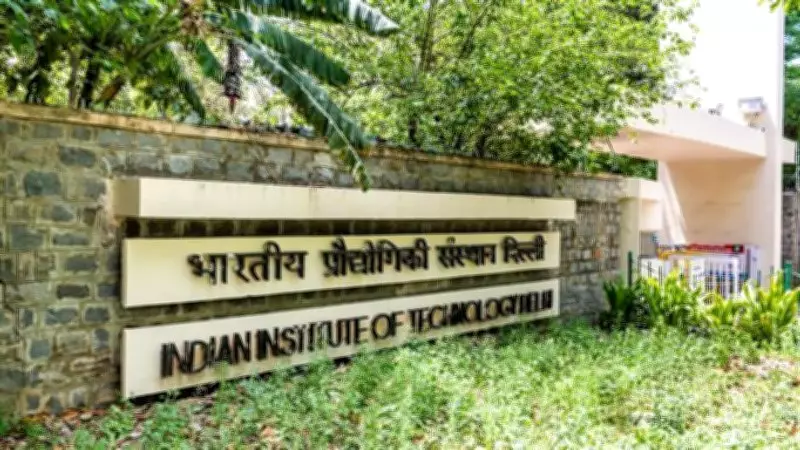
The Indian Institute of Technology (IIT) Delhi on Wednesday showcased an indigenous AI-enabled aerostat surveillance system designed to make aerial monitoring smarter, more cost-effective, and efficient.
Technology developed under DRDO collaboration
Developed under a Defence Research and Development Organisation (DRDO)-supported project, the technology is the result of collaboration between IIT-Delhi, deep-tech startups, and industry partners. The demonstration marks a step towards deploying advanced surveillance systems for defence and civilian applications.
During the demonstration, a 24-cubic-metre tactical aerostat was flown to a height of 30 metres, carrying a payload of up to 10 kg. The tethered, lighter-than-air platform supported surveillance, security operations, and remote communication while transmitting live aerial data.

Advantages over drones
Unlike drones, aerostats use helium to remain airborne for longer durations, enabling continuous surveillance. They can carry cameras and advanced sensors while offering lower operating costs, higher payload capacity, and greater reliability.
The technology can support applications such as border surveillance, disaster management, infrastructure monitoring, environmental observation, traffic management, and emergency response.
Made in India through research and innovation
The aerostat technology was developed under the DRDO Industry Academia-Centre of Excellence (DIA-CoE) through the SITEX-I and SITEX-II research programmes at IIT-Delhi. Led by Prof Mangala Joshi and Prof B S Butola from IIT-Delhi’s Department of Textile and Fibre Engineering, researchers developed indigenous aerostat hull materials and engineering technologies. The innovation is expected to reduce dependence on imported strategic materials and strengthen India’s capabilities in lighter-than-air systems.
The research was converted into a deployable platform by GB Texcoat Solution Pvt Ltd, a FITT-IIT Delhi-incubated deep-tech startup. The company developed the complete aerostat system using proprietary high-performance coated textile materials designed for better helium retention, lightweight construction, durability, and all-weather performance at any time of the day.
AI integration for real-time analysis
A key feature of the demonstration was the integration of artificial intelligence into the surveillance platform. The aerostat carried a high-definition surveillance payload, while CYRAN AI, an IIT-Delhi faculty-led deep-tech startup, used Edge AI algorithms to analyse live aerial imagery in real time.