In India, a popular saying encourages sharing food with love, reflecting the country's hospitality. However, it also subtly acknowledges that not everyone has equal access to resources. When it comes to clean drinking water, many people struggle to obtain it easily and affordably. Some must climb mountains or dive into wells to fetch a bucket of water.
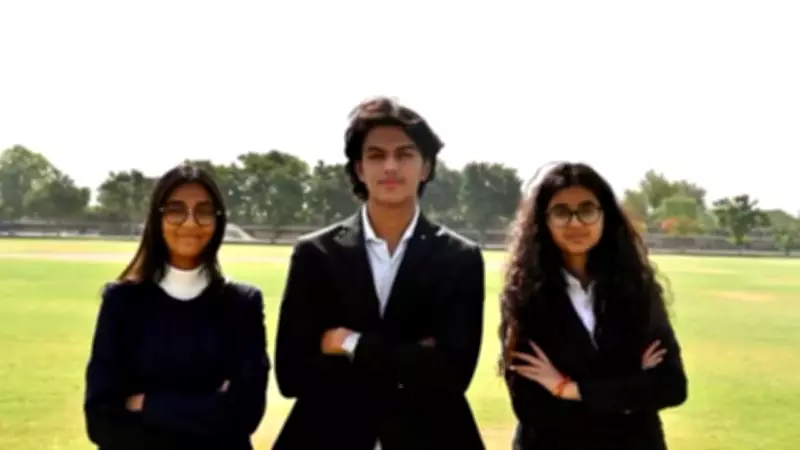
Three 16-year-old Indian teenagers set out to solve this problem. Avyana Mehta, Ariana Agarwal, and Vivaan Chhawchharia recently won the Earth Prize 2026 for creating a low-cost method to remove microplastics from water. They were named Global Winners at the Earth Prize awards ceremony in Geneva on May 29. Their invention, Plas-Stick, was chosen by a public vote of 23,000 people from seven regional finalists, making them the first Indian team to receive the award.
What is Plas-Stick?
Plas-Stick is a powder made from waste tamarind seeds that binds microplastic particles into visible clumps. The winning project was developed in collaboration with IIT Guwahati. According to Tatler Asia, Plas-Stick has already reached more than 8,000 students and teachers.

The powder is designed specifically for communities without access to clean water or water filtration systems. Its unique selling point is that it requires no electricity. The idea came to the trio after they saw a child drink water directly from a large plastic container. When added to contaminated water, the powder attracts microplastic particles and causes them to form larger clumps that can be removed using a handheld magnet. Tamarind seeds naturally contain sticky polysaccharides and binding compounds that help attract and aggregate particles in water.
Why Microplastics Are a Global Concern
Microplastics are extremely small plastic fragments, less than five millimeters in size, created by the breakdown of larger plastics, synthetic fabrics, industrial waste, and packaging materials. A UNICEF report from August 2025 states that almost 2.1 billion people worldwide still lack access to drinkable water. Recent scientific studies have found microplastics in drinking water, seafood, human blood, lungs, placentas, and even brain tissue.
Following their win, the teenagers plan to scale their invention and expand it to rural communities across India.
What is the Earth Prize?
The Earth Prize is considered the world's largest environmental competition and ideas incubator for teenagers aged 13 to 19. Founded by the Earth Foundation in Geneva, Switzerland, during the 2019 School Strike for Climate movement, the program supports youth-led sustainability projects through mentorship, education resources, and funding opportunities.
2026 marks the prize's fifth year. Over the years, it has reached more than 21,000 students across 169 countries and territories. As Asia winners, the three Indian students received $12,500 in funding to continue developing their project, along with mentorship opportunities and international exposure.
Peter McGarry, Founder of The Earth Foundation, said that the invention is exactly the kind of invention the prize was created to elevate. "By transforming agricultural waste into a practical tool for removing microplastics from drinking water, these young innovators are addressing a growing global challenge with remarkable creativity and purpose," McGarry added.
While Avyana, Ariana, and Vivaan's win created an invention that can impactfully help communities in need, it has also inspired the country's youth to observe problems and act upon them.