India Announces Sovereign AI Initiative to Counter Foreign Dominance
In a significant move to assert technological independence, India declared on Tuesday its intention to develop sovereign artificial intelligence models. This strategic initiative aims to address the nation's specific requirements while incorporating the rich contextual nuances of its diverse culture and languages.
Strategic Independence from Global AI Giants
The announcement comes as American large language models like OpenAI's ChatGPT, Google's Gemini, and offerings from Anthropic and Perplexity continue to expand their global footprint. Simultaneously, Chinese AI solutions such as DeepSeek and Qwen are also gaining international traction. India seeks to create customized AI models that are finely tuned to its unique needs, including industry demands, linguistic diversity, and cultural subtleties.
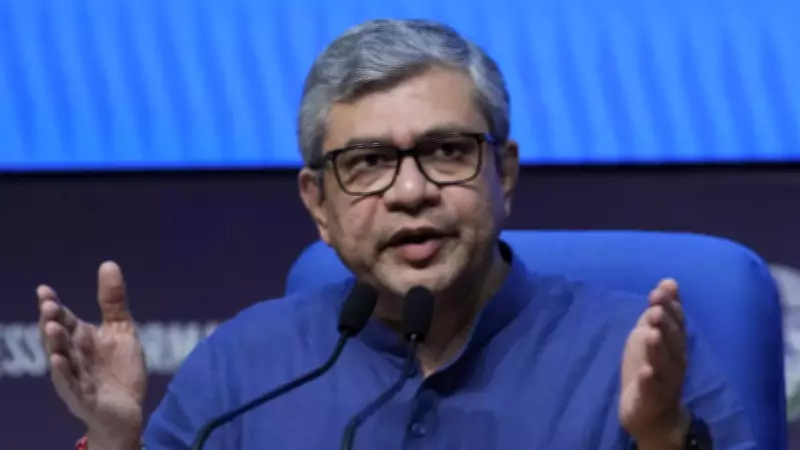
IT and Electronics Minister Ashwini Vaishnaw emphasized this vision during his address at the India AI Impact Summit. "We want sovereign AI models so that we don't remain dependent on anybody for our strategic requirements," Vaishnaw stated. He further explained that this approach ensures India possesses the capability to innovate and develop new technological solutions independently, marking a crucial component of the sovereign AI process.

Government Leadership and Local Innovation
Prime Minister Narendra Modi demonstrated strong support for this initiative by visiting the India AI Impact Summit just a day prior to Vaishnaw's announcement. During his visit, the Prime Minister explored pavilions of domestic AI companies, including Sarvam AI and gnani.ai, which are actively building India-centric solutions and intellectual properties.
This high-level engagement underscores the government's commitment to fostering homegrown AI technologies that can compete with international offerings while remaining deeply rooted in India's socio-cultural fabric.
Addressing AI Safety and Ethical Concerns
Beyond development, Minister Vaishnaw highlighted the government's proactive measures to mitigate potential harmful effects of artificial intelligence. India is advocating for a techno-legal framework to ensure AI is used for beneficial purposes while containing negative impacts.
"Everybody believes that AI should be used for good, and that harmful impact should be contained through a techno-legal approach," Vaishnaw remarked. He stressed that effective AI governance cannot rely solely on legislation but must integrate technical solutions. To this end, India's AI Safety Institute is collaborating with numerous academic institutions to develop technological safeguards against AI-related risks.
Massive Investment Influx Projected
The sovereign AI initiative is attracting substantial financial interest from global players. Vaishnaw revealed that international technology companies and venture capitalists are keen to invest in India's AI infrastructure and practical applications.
Projections indicate planned investments exceeding $200 billion over the next two years, with approximately $200 billion allocated to infrastructure development alone. An additional $17 billion is expected to flow into deep technology and application-based AI, areas where venture capital firms are actively committing funds.
"This number will only increase as we go forward, and confidence builds on India," Vaishnaw optimistically noted, signaling strong growth potential for the country's AI ecosystem.
India's push for sovereign AI represents a strategic pivot towards technological self-reliance, aiming to carve out a distinct space in the global AI landscape dominated by American and Chinese models. By focusing on localized solutions, safety protocols, and massive investment, the country positions itself as a formidable player in the future of artificial intelligence.