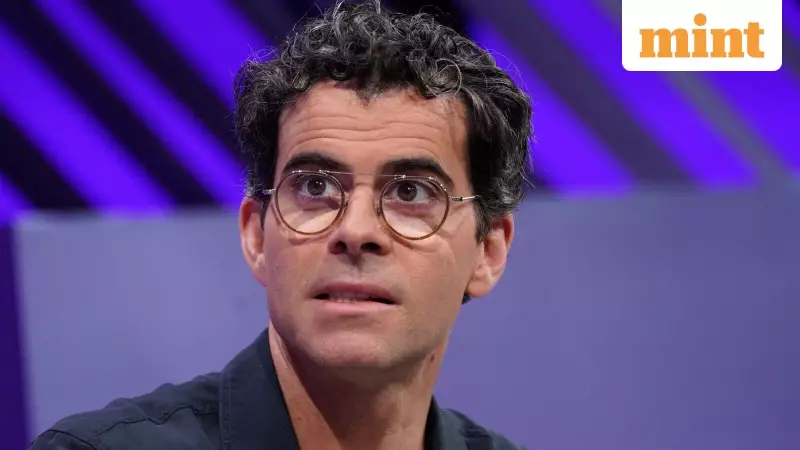
In a sobering year-end reflection, Instagram Head Adam Mosseri has issued a stark warning about the future of social media, predicting that AI-generated content will soon overwhelm user feeds and fundamentally challenge our perception of reality. Shared on the Threads platform, his insights point to 2026 as a pivotal year where skepticism must become the default stance for online media consumption.
The End of Assuming Reality
Mosseri reflected that for most of his life, he could safely assume photographs and videos were accurate captures of real-life moments. That era is conclusively over. He stated that the advent of sophisticated artificial intelligence means synthetic content, including deepfakes, is becoming indistinguishable from real media. This shift will force humanity to undergo a years-long adaptation process.
"Over time we are going to move from assuming what we see is real by default, to starting with skepticism when we see media," Mosseri wrote. He emphasized that users will need to pay much more attention to who is sharing something and why they might be sharing it.

Impact on Creators and the Rise of 'Rawness'
The Instagram executive outlined profound implications for content creators. The very qualities that brought success—authenticity, connection, and a unique voice—are now easily replicable by AI. This makes authenticity a scarce resource.
Mosseri predicts the creative bar will shift from "can you create?" to "can you make something that only you could create?". In response, he foresees a significant acceleration of a raw, unproduced aesthetic. Savvy creators will intentionally share unflattering or imperfect images as a defensive signal of reality in a world of perfectible AI content.
"In a world where everything can be perfected, imperfection becomes a signal. Rawness isn’t just aesthetic preference anymore—it’s proof," he explained. However, he cautions that AI will soon be able to simulate any aesthetic, including an 'authentic' imperfect one, making the source of content paramount.
A Practical Solution: Fingerprinting Real Media
With AI detection tools likely to fall behind as technology advances, Mosseri suggested a more practical, proactive approach. Instead of trying to identify fake content, platforms should focus on verifying the real.
"There is already a growing number of people who believe, as I do, that it will be more practical to fingerprint real media than fake media," he said. This could involve camera manufacturers cryptographically signing images at the moment of capture, creating a verifiable chain of custody for genuine content.
He also acknowledged that social media platforms, including Instagram, will face increasing pressure to label AI-generated content. This pressure will mount as the technology for mimicking reality improves, making detection ever more challenging.
Ultimately, Mosseri's vision for the near future is one where trust is personal, not digital. "At this point we’ll need to shift our focus to who says something instead of what is being said," he concluded, marking a potential return to evaluating credibility based on the source rather than the content's surface appearance.