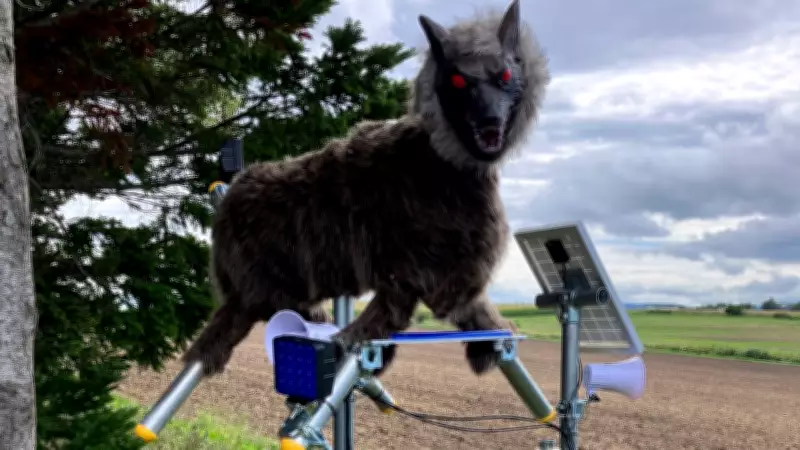
In rural Japan, conflicts between humans and wildlife are escalating, prompting innovative technological solutions. Among these, the "Monster Wolf"—a robotic wolf with lights, sensors, solar power, and sound effects—has gained attention as a bizarre yet effective deterrent against bears, deer, and boars.
What Is Japan's Monster Wolf Robot and Why Is It on the Rise?
At first glance, the Monster Wolf resembles a creature from a science fiction film. Covered in fur, with glowing red eyes and sharp teeth, it is designed to intimidate animals before they approach farms or homes. Created by Japanese company Ohta Seiki in collaboration with scientists and local authorities, the robot features a motion sensor that activates upon detecting activity. When triggered, it emits loud noises, flashing lights, and growls to scare away wildlife.
The Monster Wolf is powered by solar cells for outdoor use and can produce dozens of sounds to confuse animals. Priced at approximately $4,000, it has been deployed in many rural areas. Its unique design is intentional: to perplex animals and prevent habituation.

Why Are Bear Encounters Increasing in Japan?
Human-bear encounters have risen in recent years due to several factors. According to The Wildlife Society, rural depopulation is a major cause. As young people move to cities, abandoned farmlands and villages become quiet havens for wildlife, making it easier for bears to roam and seek food. Ecological and climatic changes also play a role. The Japanese Ministry of the Environment notes that shifts in forest food availability, such as poor acorn yields, drive bears toward inhabited areas.
Researchers at the Wildlife Conservation Society highlight that bears are highly intelligent. Traditional deterrents like bells, scarecrows, and fences often fail because animals adapt over time. This has led to the adoption of mechanical robots like the Monster Wolf. Field tests show that the robotic wolf reduces repeated animal intrusions in some farming areas, as its constantly changing sounds and sudden movements make adaptation difficult.
How Technology Is Changing Wildlife Protection
Robotic wolves represent a broader trend in wildlife management that incorporates technological innovations. Globally, specialists are using artificial intelligence, drones, automated tracking, and smart deterrents to reduce human-wildlife conflicts. Unlike lethal methods, robotic deterrence systems repel animals without causing death. Conservationists advocate non-lethal solutions for their positive ecological impact.
However, experts caution that technology alone is insufficient. Wildlife specialists emphasize that habitat preservation, forest management, and proper waste disposal remain essential for reducing conflicts. A 2025 study by the International Union for Conservation of Nature on human-wildlife coexistence underscores the importance of balancing ecological protection and community safety.
Can These Robot Wolves Become the Future of Wildlife Management?
As interest in Japan's Monster Wolf grows, it is clear that societies are adopting innovative approaches to environmental challenges. What once seemed far-fetched has become a practical wildlife control method. For many farmers, the mechanical wolf symbolizes the fears associated with human-wildlife interactions. Yet, it also showcases how innovation can provide better methods for handling dangerous encounters.
Whether this technology will be replicated worldwide remains uncertain. Nonetheless, Japan's initiative highlights the need for new coexistence strategies in an era of increasing wildlife conflicts.