There are moments in buying decisions when the conversation shifts quietly. Someone asks for a price, hears it, and the tone changes. Not always because it is unaffordable, but because the situation was never really about comparison in the first place.
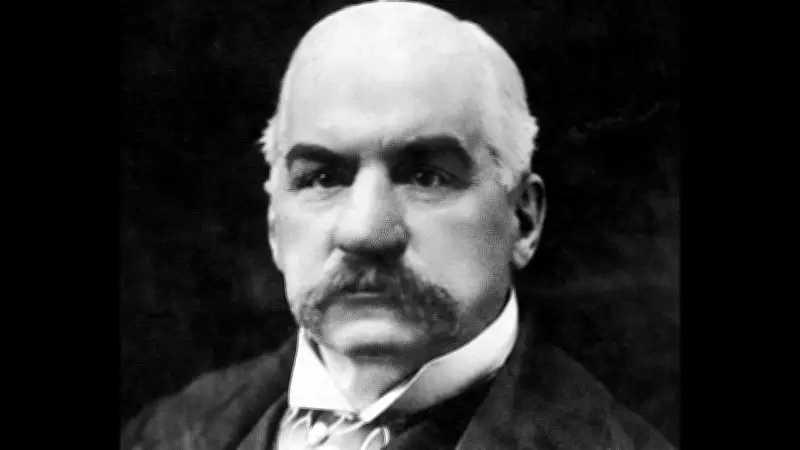
That shift is what people often associate with J.P. Morgan, one of the most influential figures in American banking history. His world was finance at scale, where transactions were often less about everyday budgeting and more about access, institutions, and influence.
In that setting, price was not always a starting point. Sometimes it arrived much later in the conversation, if at all.

Quote of the day by J.P. Morgan
“If you have to ask how much it costs, you can’t afford it.”
Read literally, it sounds like a statement about wealth. But the way it gets used today is broader than that.
It points to a gap between curiosity and commitment. In some situations, people ask about cost because they are still trying to locate themselves in relation to the decision. In others, the decision has already been mentally made, and price is not the main filter anymore.
The quote survives because it reflects a familiar social reality. Not every purchase begins with calculation. Some begin with aspiration, preference, or expectation, and only later circle back to numbers.
What is the meaning of this quote in practice
In day-to-day life, price usually acts as a filter. People compare, evaluate, adjust, and decide based on limits. That is normal and necessary.
But there are also contexts where the process works differently.
A person looking at a premium service, a luxury product, or even a highly specialised experience may not be asking “how much is it” in the same way. The question sometimes signals uncertainty about whether they belong in that space at all.
That is where Morgan’s line gets its force. It is not really about money alone. It is about alignment. Whether someone is already operating within the assumptions of a certain level of choice.
In simpler terms, the quote is less about affordability and more about mental framing.
Why this still shows up in modern conversations
Even now, in a world where almost every price is searchable in seconds, the idea has not disappeared.
High-end markets still rely heavily on context. So do professional services, niche experiences, and even certain digital ecosystems. In many of these spaces, price is not the first signal people receive. Design, reputation, scarcity, or exclusivity often come first.
But the quote also shows up outside luxury settings. People use it informally when describing anything that requires a level of commitment someone is not ready for, whether that is time, effort, or responsibility.
A training program. A demanding role. A long-term obligation. The pattern is similar. If the first reaction is hesitation about “what it costs,” it may already suggest a mismatch in expectations.
Lessons that come out of this
It is not always about affordability
People often assume cost is purely financial. In reality, cost can also mean time, effort, or attention. The quote works across all of these layers.
Readiness shapes perception
Two people can see the same option and interpret it differently depending on what they are prepared for. That difference is often more important than the price itself.
Questions can reveal positioning
Asking about price is not just information gathering. Sometimes it reflects whether someone is already imagining themselves inside that decision or still standing outside it.
Value is not experienced the same way by everyone
What feels out of reach for one person may feel routine for another. The difference is rarely just income. It is context, exposure, and expectation.
About J.P. Morgan
J.P. Morgan was a major figure in American finance during the late 19th and early 20th centuries. He played a central role in banking, industrial consolidation, and large-scale corporate financing during a period when modern financial systems were still taking shape.

He was known not only for his wealth but for his influence in stabilising markets during financial crises and structuring major industrial enterprises. His name later became associated with one of the most powerful banking institutions in the United States.
Other famous quotes by J.P. Morgan
- “The first step towards getting somewhere is to decide you’re not going to stay where you are.”
- “A man always has two reasons for doing anything: a good reason and the real reason.”
- “I don’t know as I want a lawyer to tell me what I cannot do. I hire him to tell me how to do what I want to do.”
- “Go as far as you can see; when you get there, you’ll be able to see further.”
How this idea plays out in real life
Most people encounter versions of this quote without noticing it.
Sometimes it happens while choosing services or experiences. Sometimes it appears in career decisions or long-term commitments. The common thread is not luxury, but alignment.
The real question underneath is rarely just “how much does it cost.” It is often “is this even something I am considering at this level.”
Once that distinction becomes clear, the quote starts to read less like a statement about wealth and more like a comment on decision-making itself.
The deeper meaning behind Morgan’s famous line about price
Morgan’s line continues to circulate because it captures a specific moment in human behaviour. The point where curiosity meets positioning. Where someone is not just asking for a price, but revealing how they are approaching the decision in the first place.
It is less about exclusion than it is about perspective. Different situations simply begin from different assumptions.
Catch the latest world news and top headlines. Download the TOI App.
About the Author
TOI World Desk
At TOI World Desk, our dedicated team of seasoned journalists and passionate writers tirelessly sifts through the vast tapestry of global events to bring you the latest news and diverse perspectives round the clock. With an unwavering commitment to accuracy, depth, and timeliness, we strive to keep you informed about the ever-evolving world, delivering a nuanced understanding of international affairs to our readers. Join us on a journey across continents as we unravel the stories that shape our interconnected world.