Meta Pauses 2Africa Cable Work in Persian Gulf Amid Escalating Conflict
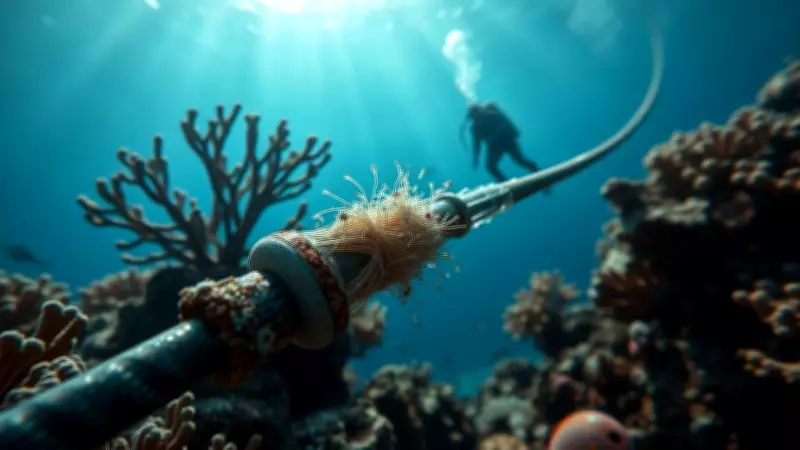
Facebook-parent Meta has become the latest technology giant to face disruptions from the ongoing military tensions between Iran, the United States, and Israel. The company has reportedly halted work on a critical section of its ambitious 2Africa underwater cable project in the Persian Gulf region.
Safety Concerns Force Work Stoppage
According to a Bloomberg report, the decision to pause operations stems from heightened safety risks in the area, making it unsafe for the French contractor, Alcatel Submarine Networks (ASN), to continue laying the fibre-optic line. ASN has issued force majeure notices to customers and reported that its installation ship, the Ile De Batz, is stranded off the coast of Dammam, Saudi Arabia.
This suspension affects the "Pearls" segment of the massive 45,000-kilometre 2Africa cable system, which was designed to connect landing stations across multiple countries, including Oman, the United Arab Emirates, Qatar, Bahrain, Kuwait, Iraq, Pakistan, India, and Saudi Arabia. Meta, along with consortium partners like Saudi Telecom Co.'s Center3, had aimed to bring this section online as early as this year.

Second Major Disruption in Six Months
This marks the second significant disruption to the 2Africa project linked to Middle East conflicts in under six months. Previously, Meta acknowledged delays to another section in the Red Sea due to Houthi attacks and permitting issues. Alan Mauldin from TeleGeography noted that other cables damaged in Houthi strikes in early 2025 were only recently repaired, underscoring the vulnerability of internet infrastructure.
Subsea cables are crucial, accounting for over 95% of global internet traffic. When completed, 2Africa will be one of the largest fibre-optic systems ever built, linking Africa to Europe and the Middle East. The Persian Gulf and Red Sea segments are the last remaining sections to finish.
Broader Impact on Undersea Cable Projects
The conflict has also impacted other undersea cable initiatives in the Gulf. Work has been halted on the Sea-Me-We 6 cable, developed by a consortium including French telecom Orange, and the FIG project overseen by Qatari firm Ooredoo. Representatives for these projects did not respond to requests for comment.
Moreover, repair ships are avoiding the area due to active military operations, posing challenges for maintaining existing cables. Bertrand Clesca, a submarine consultant, warned that cables could be damaged by anchors from ships hit by missiles, leading to prolonged repair times.
Alternatives and Future Challenges
In response, tech companies are exploring alternate routes. Hasnain Ali, a subsea cable consultant, stated that until the US-Israel campaign against Iran, the Persian Gulf was a popular substitute. Meta plans to build Project Waterworth, a new cable bypassing the Middle East to connect the US, India, South Africa, and Brazil, but it is years from completion.
Internet traffic can be rerouted through other cables or terrestrial routes across Oman and Saudi Arabia, though speeds may slow. Even after the war ends, undetonated bombs in the Gulf will require seafloor surveys before work can resume, adding further delays.
These developments highlight how geopolitical volatility threatens billion-dollar investments in internet infrastructure, raising questions about the sustainability of such projects in conflict-prone regions.