Prime Minister Modi Champions Open AI Development at Global Summit
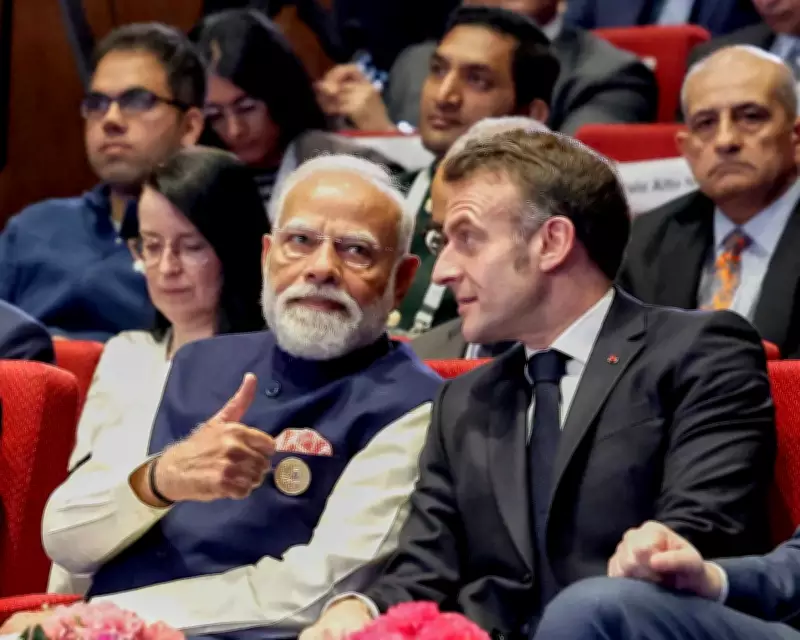
Prime Minister Narendra Modi delivered a powerful address at the AI Impact Summit on Thursday, strongly advocating for the democratization of artificial intelligence as a tool for global inclusion and empowerment. Speaking before an audience that included heads of foreign governments, technology industry leaders, and representatives from approximately one hundred nations, the Prime Minister positioned India's approach in direct contrast to countries and corporations treating AI as a proprietary strategic asset developed behind closed doors.
India's Vision: AI as a Shared Global Resource
"We believe AI will benefit the world only when it is shared," declared Modi, invoking the principle that sunlight serves as the best disinfectant. "When codes are open and shared, millions of young minds can make them safer and better. Therefore, let us resolve to develop AI as a global common good." This statement directly challenges the prevailing secrecy surrounding advanced AI development by certain nations and private entities, particularly highlighting the need for openness across the Global South.
The Prime Minister unveiled India's guiding principle through the MANAV framework, which stands for responsible, human-centric artificial intelligence. This framework explicitly cautions against the reduction of human beings to mere data points or raw material for algorithmic processing, emphasizing dignity and ethical considerations at the core of technological advancement.

Balancing Fear with Fortune in the AI Era
Addressing widespread global anxieties about artificial intelligence—including risks from autonomous weapon systems, loss of developer control, and the potential widening of geopolitical power gaps—Modi struck a deliberately optimistic yet prudent tone. "Today, the world is divided into two kinds of people: those who see fear in AI and speak only of that fear, and those who see fortune in AI," he observed. "I say with responsibility and with pride that India does not see fear in AI, India sees fortune in AI. India sees the future in AI."
He acknowledged the unprecedented speed and scale of transformation represented by AI, describing it as a definitive turning point for human civilization that demands careful navigation by global leaders and innovators alike.
Navigating the Regulation-Innovation Paradox
Prime Minister Modi addressed the complex debate between calls for stringent AI regulation and concerns that excessive controls might stifle innovation critical for solving humanity's greatest challenges, from Alzheimer's and cancer to climate change. "We must give AI the open sky, but keep the command in our hands," he articulated, using the analogy of GPS navigation systems that suggest routes while leaving final directional decisions to human users. "The path we choose for AI today will determine the future we create tomorrow."
This balanced perspective comes amid international positioning on AI governance, following remarks by White House AI policy adviser Sriram Krishnan about promoting the American AI stack globally just one day prior.
Establishing Global Standards and Digital Authenticity
Highlighting practical concerns, the Prime Minister flagged the destabilizing impact of deepfakes and fabricated content on open societies. He proposed an innovative solution inspired by nutrition labeling on food products. "The digital world should have authenticity labels on content so that people know what is real and what is created by AI," Modi suggested, emphasizing the growing necessity for watermarking and clear source standards as AI generates increasing volumes of text, images, and video content.
"That's why it's necessary that this trust be built into technology from the beginning," he added, underscoring the foundational importance of transparency.

Drawing Parallels and Defining a Human-Centric Future
Modi drew a thoughtful parallel with nuclear technology, noting how the world has witnessed both its destructive capabilities and its positive contributions to energy and medicine. "AI, too, is a transformative power—if directionless, it leads to disruption; if guided rightly, it becomes a solution," he reflected.
The Prime Minister concluded by framing the summit's core purpose around a critical question for present and future generations: "How to make AI human-centric, sensitive and responsible." He rooted India's entire approach in the summit's Sanskrit theme, 'Sarvajan Hitaya, Sarvajan Sukhaya'—meaning welfare and happiness for all—which he presented as India's fundamental benchmark for technological progress.