The Ancient Fascination with Our Celestial Neighbor
For thousands of years, humanity has gazed upward with wonder at the Moon, our closest celestial companion. This enduring obsession spans cultures and civilizations, yet despite nightly observations, many across the globe remain curious about the truth behind the Moon's changing appearance. The phenomenon of the Moon's shifting shape, known as lunar phases, continues to captivate minds and inspire questions about our place in the cosmos.
Understanding Moon Phases: The Natural Lunar Cycle
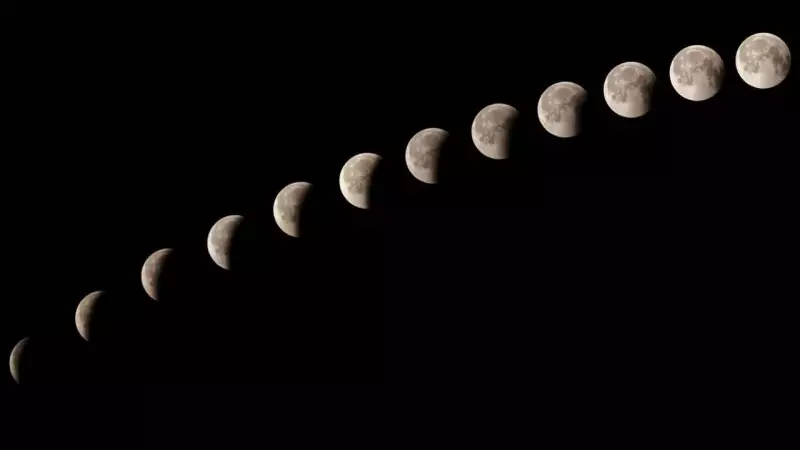
Contrary to popular misconceptions, the Moon does not physically grow or shrink, nor does Earth cast a shadow on it during a typical month to create these phases. The changing appearance is a natural consequence of the Moon's orbit around Earth. As NASA explains, the Moon completes a cycle of eight distinct phases approximately every 29.5 days. The Sun consistently illuminates half of the Moon, while the other half remains in darkness. What we perceive from Earth depends on how much of that illuminated portion is visible to us.
The Eight Phases of the Moon
New Moon: The Beginning of the Cycle
During the New Moon phase, the Moon positions itself between Earth and the Sun. The side facing Earth remains completely unilluminated, with the sunlit side turned away from our view. Consequently, the Moon becomes invisible in the night sky. Interestingly, the New Moon rises and sets with the Sun, marking the start of the lunar cycle.

Waxing Crescent: A Sliver of Light
Following the New Moon, a thin crescent of light becomes visible, signaling the Waxing Crescent phase. The term waxing indicates growth, as the illuminated portion gradually increases each night. This crescent appears on the side opposite the Sun from our earthly perspective, while the remainder of the Moon stays shrouded in darkness.
First Quarter: The Half-Illuminated Moon
At the First Quarter phase, exactly one-half of the Moon's near side becomes illuminated by sunlight, presenting as a perfect half-circle. This phase sees the Moon rising around noon, reaching its peak in the sunset sky, and setting approximately at midnight.
Waxing Gibbous: Approaching Fullness
After the First Quarter, more than half of the Moon's surface becomes illuminated, entering the Waxing Gibbous phase. Gibbous describes a shape larger than a semicircle. Each night, the Moon grows brighter as the illuminated area expands, steadily progressing toward the Full Moon.
Full Moon: The Peak of Illumination
The Full Moon occurs when the Moon positions itself opposite the Sun in the night sky, with Earth situated between them. This alignment allows the entire near side to be fully illuminated. Rising at sunset, the Moon appears as a brilliant, perfect circle, remaining visible throughout the night until dawn.
Waning Gibbous: The Gradual Decline
Following the Full Moon, the illuminated portion begins to decrease, marking the Waning Gibbous phase. Waning signifies reduction. The Moon now rises slightly later each night, with the illuminated side opposite to that seen during the First Quarter. Despite the decrease, more than half of the Moon remains lit.
Last Quarter: The Opposite Half
During the Last Quarter phase, the Moon again appears half-illuminated, but this time it's the opposite half compared to the First Quarter. The Last Quarter Moon rises around midnight and sets around noon, showcasing a different perspective of lunar illumination.
Waning Crescent: The Cycle's Conclusion
The final phase, Waning Crescent, features only a thin sliver of the sunlit side remaining visible. Night by night, this crescent diminishes until the cycle completes with the next New Moon, ready to begin anew.
The Geometry Behind the Phases
These phases follow a consistent sequence each month as the geometric relationship between Earth, Moon, and Sun continuously evolves. Over weeks, observers on Earth witness varying portions of the Moon's illuminated half, creating the familiar and predictable cycle of lunar phases that has guided calendars and inspired mythology for millennia.

Debunking the Myth of the Dark Side
A common misconception revolves around the so-called dark side of the Moon. In reality, the Moon does not possess a permanently dark side. All parts of the lunar surface experience sunlight at different times. The misunderstanding stems from the Moon being tidally locked with Earth, meaning it rotates on its axis at the same rate it orbits our planet. Consequently, Earth always sees the same side of the Moon, while the opposite side, known as the far side, remains hidden from view.
The far side is not perpetually dark; it simply faces away from Earth. During the New Moon phase, when the near side is unilluminated, the far side receives sunlight, and vice versa. Thus, the dark side more accurately refers to the unseen side of the Moon, not a side devoid of light. This clarification helps deepen our understanding of lunar dynamics and celestial mechanics.