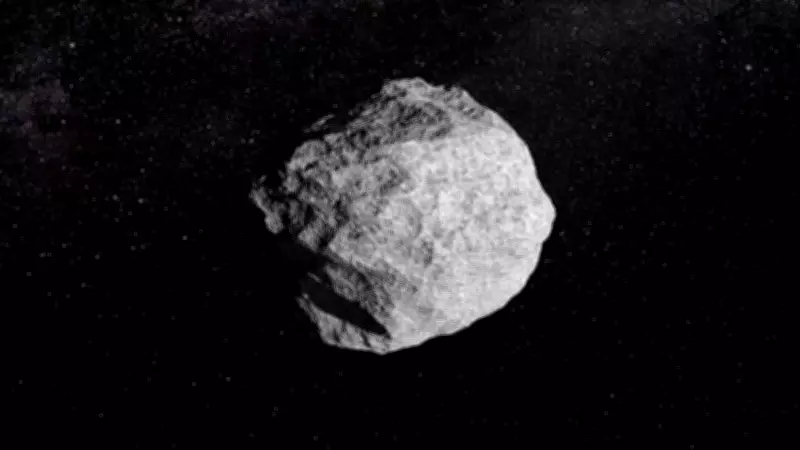
NASA Confirms Asteroid 2024 YR4 Poses No Lunar Impact Threat in 2032
Space rocks regularly traverse Earth's cosmic neighborhood, with most passing unnoticed by the general public. However, occasionally a newly discovered asteroid captures significant attention from both scientific communities and space enthusiasts worldwide. This was precisely the case with asteroid 2024 YR4, an object first detected in late 2024 that initially sparked concerns about a potential lunar collision in 2032.
Initial Discovery and Early Impact Concerns
The asteroid designated 2024 YR4 measures approximately 200 feet, or about 60 meters, in diameter. While substantial enough for astronomers to track, this size pales in comparison to the largest objects moving through our solar system. When sky surveys first identified this space rock in 2024, researchers lacked precise orbital data, leading to early calculations suggesting an unusually close approach to the Moon in December 2032.
Initial impact probability estimates reached approximately 4.3%, a figure that, while relatively low, warranted careful monitoring by planetary scientists. This uncertainty generated considerable media attention and public speculation about potential lunar impacts, despite the relatively modest odds.

James Webb Space Telescope Provides Crucial Data
A significant breakthrough occurred when astronomers utilized the powerful James Webb Space Telescope to observe asteroid 2024 YR4 this year. Positioned well beyond Earth's atmosphere, this advanced observatory delivers exceptionally precise positional data for distant celestial objects. In February, scientists incorporated these new observations to substantially refine their orbital calculations.
The updated data revealed the asteroid's trajectory would pass considerably farther from the Moon than originally projected. NASA experts concluded that 2024 YR4 will maintain a safe distance of 13,200 miles, or 21,200 kilometers, during its lunar approach in December 2032, effectively eliminating any impact possibility.
Earth Impact Possibilities Ruled Out
When asteroid 2024 YR4 was initially discovered, some preliminary projections briefly suggested potential Earth approaches as well. Astronomers specializing in near-Earth object tracking quickly examined these possibilities through detailed analysis.
Further investigation definitively ruled out any collision risk with our planet for at least the next century. As additional observations accumulated, the Moon remained the only celestial body with even minimal theoretical risk, which has now been completely eliminated through refined orbital calculations.
Why Asteroid Monitoring Matters
Space agencies worldwide systematically track near-Earth objects, including asteroids and comets, as part of comprehensive planetary defense programs. While most follow stable, non-threatening orbits, understanding each object's precise trajectory enables scientists to identify potential hazards decades in advance.
- Early detection provides crucial response time if any object were discovered on a collision course with Earth
- Planetary defense initiatives continue improving detection systems and monitoring methodologies
- Regular observation helps distinguish between genuinely hazardous objects and those posing no threat
Scientific Context and Future Implications
Scientists emphasize that situations like the 2024 YR4 case represent routine aspects of asteroid discovery and tracking. When researchers first identify a space rock, they typically possess only limited observational data, creating initial orbital uncertainties.
As additional measurements accumulate over time, predicted orbits become increasingly accurate, with early uncertainties gradually disappearing through continued observation. The Moon's cratered surface bears witness to countless ancient impacts throughout its history, though significant collision events have become relatively rare in the current geological era.

For now, both Earth and Moon remain completely safe from asteroid 2024 YR4, which will quietly pass by in December 2032 without posing any danger. This case demonstrates how advanced observational technologies like the James Webb Space Telescope enhance our ability to accurately assess cosmic threats and separate genuine concerns from unwarranted speculation.