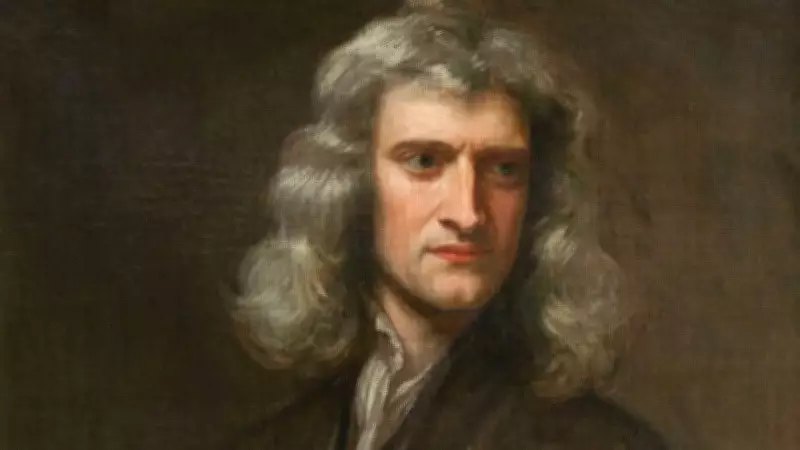
Isaac Newton's Humble Wisdom
People usually expect great scientists to leave behind complicated ideas or technical explanations. Equations, theories, discoveries. Things that sound difficult enough to belong inside textbooks. That is partly why this quote from Isaac Newton catches people off guard even now.
"If I have seen farther than others, it is because I was standing on the shoulders of giants."
It does not sound like science at all. It sounds human.

The line has been repeated for centuries, and probably for good reason. It speaks about something most people eventually realise in ordinary life. Nobody really builds themselves entirely from nothing. People often like the idea of being completely self-made because it sounds powerful and independent. Reality tends to be less dramatic and much more interconnected.
Think about almost any important moment in life. Somebody taught you something first. Somebody encouraged you at the right time. A teacher explained an idea differently. A friend gave advice. A parent pushed you when you wanted to quit. Sometimes a stranger, without realising it, changes the direction of another person's life completely.
Newton seemed to understand that idea very well. Interestingly, he understood it while being one of the most influential scientific minds in history.
Quote of the Day by Isaac Newton
"If I have seen farther than others, it is because I was standing on the shoulders of giants."
A quote that feels surprisingly grounded.
There are many famous historical quotes that people admire without really using them in daily life. They sound wise, but they stay on posters or inside books. Newton's line feels different because people actually encounter versions of its meaning all the time.
Someone gets promoted and remembers the manager who trained them years earlier. A musician wins an award and talks about the artists they listened to as a teenager. Writers often describe books that shaped the way they think. Athletes speak about coaches who changed their careers. People rarely arrive somewhere important completely alone.
The funny thing is that success stories sometimes hide that part. Headlines often simplify things because "self-made success" sounds cleaner and more exciting. The image is easy to understand. One brilliant person works harder than everybody else and suddenly changes the world. Real life usually looks messier than that. Most achievements come with invisible people standing somewhere in the background.
Newton Himself Had Giants Before Him
Isaac Newton did not create knowledge from empty space. Before him came scientists, philosophers, and mathematicians who spent years asking difficult questions about the world around them. People like Galileo Galilei and Johannes Kepler had already started exploring ideas about motion, planets, mathematics, and the structure of the universe. Newton learned from that work and then pushed things further.
That is partly what makes the quote so interesting. He was already changing science permanently, yet he still acknowledged earlier thinkers openly. Something is refreshing about that because modern culture sometimes treats success like a competition over who deserves credit most. Newton appears to be saying something simpler. People inherit knowledge, improve it, and pass it forward. Then somebody else continues.
Why the "Self-Made" Idea Feels Attractive
People love stories about individuals succeeding entirely through personal effort. There is something emotionally satisfying about those narratives. Maybe because they feel hopeful. Maybe because independence sounds powerful. The problem is that such stories often leave out important details. Nobody teaches themselves a language as a baby. Nobody creates entire educational systems alone. Nobody invents knowledge completely from scratch.
Even highly successful people rely on support systems, whether they notice them immediately or not. Like teachers, families, books, mentors, earlier generations, and opportunities. Sometimes luck, too, though people do not always enjoy discussing that part. Newton's quote quietly pushes back against the fantasy of complete independence.

The Quote Means More Than Science
One reason this quote keeps surviving is that it escaped science long ago. People use it in classrooms, workplaces, creative industries, and ordinary conversations because the message works almost everywhere. It applies to artists learning from earlier artists. Entrepreneurs learn from previous businesses. Students learning from teachers. Even personal growth works that way.
Most individuals can probably identify people who have changed their thinking over time. Not necessarily famous people either. Sometimes, somebody remembers an old teacher years later. Sometimes advice from parents suddenly makes sense at age thirty, even though it felt annoying at age fifteen. Sometimes a casual conversation stays in a person's mind unexpectedly. Human beings borrow pieces of each other constantly. Newton captured that without making it sound overly philosophical.
Success Often Has Invisible People Attached to It
One strange thing about achievement is that people standing in the background do not always receive attention. People see the final result. They see the book, the invention, the business, the award, or the success story. What they do not always see are the hundreds of smaller influences underneath it. The teacher who stayed after class. The friend who kept encouraging somebody during difficult periods. The parent is working extra hours quietly. The earlier thinkers whose ideas made later discoveries possible. Those people often disappear from public attention. Newton's quote feels meaningful because it brings them back into the picture.
Why Humility May Be the Strongest Part of the Quote
The sentence probably would not feel as memorable if Newton had simply celebrated himself. History already contains plenty of famous people talking about their own brilliance. Instead, this quote feels unusually modest. That does not mean Newton was pretending his work was unimportant. His discoveries transformed science permanently. He understood his achievements mattered. Still, he also recognised something larger. Great work rarely appears in isolation. People build things together, even across centuries. Someone begins an idea. Another person improves it. Somebody else carries it even further. That chain keeps moving.
The Quote Feels Especially Relevant Now
Modern life sometimes creates pressure to appear entirely original. People want unique ideas, unique careers, unique identities. Social media especially encourages individuals to present themselves as independent success stories. Everything becomes personal branding after a while. Newton's quote quietly slows that down. It reminds people that learning from others does not reduce individual achievement. If anything, it strengthens it. Nobody becomes smaller by acknowledging influence. People become more honest.
Other Famous Quotes by Isaac Newton
- "Truth is ever to be found in simplicity."
- "What we know is a drop, what we do not know is an ocean."
- "I can calculate the motion of heavenly bodies, but not the madness of people."
- "Nature is pleased with simplicity."
- "Tact is the art of making a point without making an enemy."
- "To every action there is always opposed an equal reaction."
Why People Still Return to These Words Centuries Later
Some famous quotes survive because they sound dramatic. Others survive because they continue feeling true, no matter how much the world changes. Newton's line belongs in the second category. People still teach one another. Ideas still travel across generations. Young people still inherit knowledge they did not create themselves. Human beings continue building on foundations left by others, whether in science, art, business, or ordinary life. Maybe that is why the quote still feels comforting somehow. It reminds people that progress is rarely a lonely process. Even the individuals history remembers as giants often had giants standing beneath them, too.