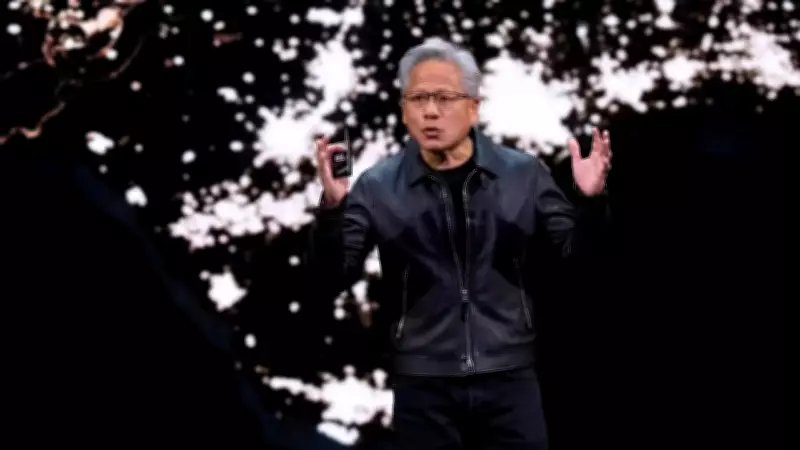
Nvidia CEO Jensen Huang Counters AI Chip Competition Narrative as Misinterpretation
In a detailed discussion on the Dwarkesh Podcast, Nvidia CEO Jensen Huang provided a straightforward rebuttal to those viewing recent moves by tech giants like Google, Meta, Anthropic, Amazon, and OpenAI as a significant threat to Nvidia's dominance in the AI chip market. Huang emphasized that these developments are being misinterpreted and do not signal a five-alarm fire for the world's most valuable chipmaker.
Huang's Defense of Nvidia's Position Amid Rising Pressure
As pressure mounts on Nvidia from multiple fronts, including Meta's unveiling of four new in-house MTIA chips co-developed with Broadcom, Amazon's near-sold-out Trainium4, and OpenAI's collaboration with Broadcom on custom silicon, Huang spent a substantial portion of the nearly two-hour podcast arguing that these initiatives are not as threatening as they appear. He pointed to Anthropic's massive pivot to Google TPUs, a deal securing approximately 3.5 gigawatts of computing capacity through 2031, as a unique case rather than a market trend. "Anthropic is a unique instance, not a trend," Huang stated. "Without Anthropic, why would there be any TPU growth at all? It's 100% Anthropic."
The Core of Huang's Argument: CUDA Ecosystem and Architectural Superiority
Huang's defense centers on Nvidia's established strengths, including the CUDA ecosystem, hundreds of millions of installed GPUs across major cloud platforms, and annual architectural advancements that competitors cannot easily replicate. He highlighted the history of canceled custom chip projects, noting, "Look at the number of ASICs that have been canceled. Just because you're going to build an ASIC doesn't mean you've built something better than Nvidia." Regarding margins, Huang countered the notion that Nvidia's roughly 70% gross margins leave room for cheaper alternatives by pointing out that ASIC margins are around 65%, suggesting minimal actual savings for customers.

Concessions and Strategic Adjustments by Nvidia
Huang acknowledged one area where Nvidia fell short: the inability to provide multi-billion dollar early investments that Google and Amazon used to secure Anthropic in their ecosystems. "I didn't deeply internalize that they really had no other options," he admitted. In response, Nvidia has since invested in both Anthropic and OpenAI, with Huang vowing not to repeat this mistake in the future.
The Unresolved Challenge: Shift to Inference-Dominated Markets
However, the interview left open a critical question: whether Nvidia's strengths will remain as pivotal in the next phase of AI, which is increasingly dominated by inference rather than training. Bank of America estimates that inference will account for 75% of AI data center spending by 2030, up from about 50% last year. In inference workloads, cost efficiency becomes more crucial, with Google's Ironwood TPU reportedly offering a 30–44% lower total cost of ownership compared to Nvidia's GB200 server. Nvidia has responded by licensing Groq's inference-focused architecture, indicating recognition of this competitive threat.
Huang's Long-Term Vision: Flexibility and Innovation in AI
Huang's long-term bet is that AI will continue to demand the architectural flexibility that Nvidia provides, with researchers developing new attention mechanisms, hybrid models, and innovative techniques likely to prioritize CUDA. "The ability to invent new algorithms is really what makes AI advance so quickly," he argued. The coming years will test whether this argument holds up in an inference market that prioritizes efficiency over flexibility.
Overall, Huang's perspective underscores a belief that Nvidia's ecosystem and technological edge will sustain its leadership, despite growing competition and market shifts.