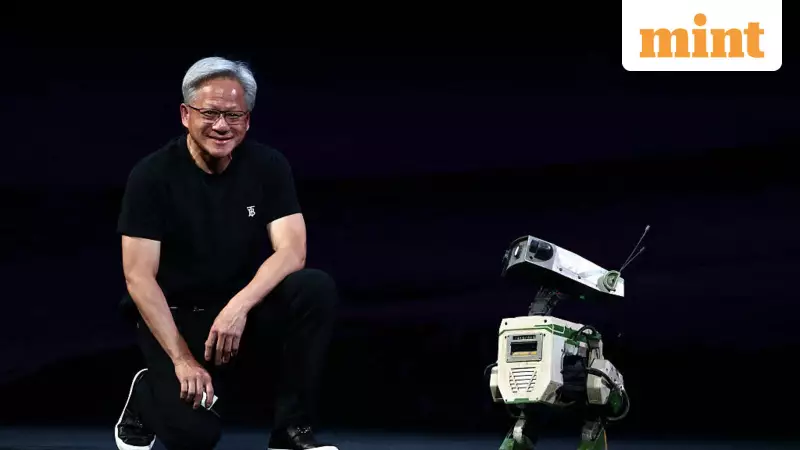
At the high-profile CES tech trade show in Las Vegas this week, Nvidia CEO Jensen Huang made a significant push to spotlight the company's ambitions beyond its core artificial intelligence chip business. However, the market's reaction was notably tepid, with the company's stock showing little positive movement following the announcements.
A Vision for 'Physical AI' Takes Center Stage
During a presentation on Monday, Huang dedicated substantial time to outlining how Nvidia's technology will power what he termed "physical AI." This concept involves artificial intelligence moving beyond data centers and into the physical world, embodied in robots, self-driving cars, and other autonomous systems. To enable this, the chip giant unveiled a suite of new programming libraries and software products specifically designed for robotics and autonomous vehicle development.
The strategic move is seen as an attempt to tap into massive new market segments. Prominent tech bull and Wedbush analyst Dan Ives highlighted this potential in a research note. "We believe the robotics and autonomous technology market represents an incremental market opportunity that Nvidia can tap into," Ives wrote, adding that it supports his view of the company reaching a $5 trillion market cap in the near-term and potentially $6 trillion ultimately.

Investors Stay Focused on Core AI Chip News
Despite the grand vision for robotics, investors appeared more focused on updates concerning Nvidia's primary cash cow: AI accelerators. On that front, Huang delivered positive news, announcing that the next-generation Vera Rubin AI processors are already in "full production." These chips are expected to launch in the second half of 2026.
The company made a bold claim about the Rubin platform's efficiency, stating it offers a tenfold reduction in the cost of AI inference compared to the current-generation Blackwell chips. Inference refers to the process where a trained AI model delivers outputs, a critical and costly phase for widespread AI deployment.
The Market's Muted Verdict
The market's immediate response to the CES announcements was underwhelming. Nvidia shares dipped 0.4% during Monday's regular trading session. In after-hours trading following the presentation, the stock showed no rally, instead edging down a further 0.1%. This indicates that, for now, Wall Street remains firmly fixated on the trajectory of Nvidia's core AI chip business, viewing the robotics and autonomous driving ventures as longer-term bets rather than immediate growth drivers.
The event underscores a key challenge for the tech behemoth: convincing investors of its ability to successfully dominate adjacent markets while maintaining its staggering momentum in the data center. The coming quarters will reveal whether the 'physical AI' narrative gains the traction that Jensen Huang is betting on.