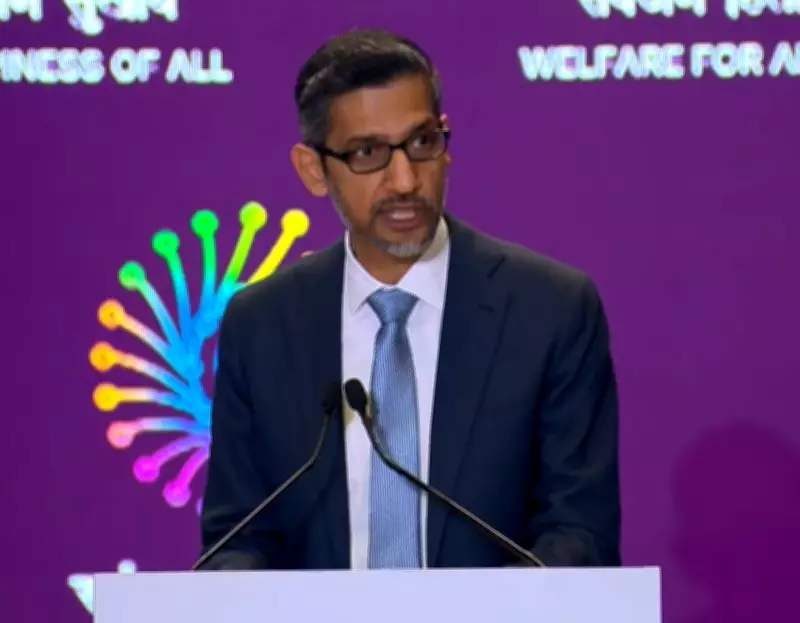
Google CEO Sundar Pichai Champions AI as Catalyst for Global Hyper-Progress
In a significant address, Google CEO Sundar Pichai has articulated that artificial intelligence is ushering in an era of hyper-progress, fundamentally transforming how societies evolve and develop. Pichai emphasized that this technological revolution holds particular promise for emerging economies, offering them a unique opportunity to leapfrog traditional stages of growth and rapidly catch up with more advanced nations.
AI's Transformative Potential for Developing Nations
Pichai detailed how AI technologies can empower emerging economies by providing scalable solutions to longstanding challenges. He pointed out that these nations can bypass costly and time-intensive infrastructure developments by directly adopting cutting-edge AI systems. This approach allows for more efficient resource allocation and faster implementation of critical services in sectors such as healthcare, education, and agriculture.
The Google CEO underscored that AI-driven tools are becoming increasingly accessible, enabling even resource-constrained regions to harness their benefits. By leveraging cloud computing and mobile technology, communities can deploy AI applications that address local needs without requiring extensive upfront investments.

Strategic Implications and Global Competitiveness
Pichai's remarks highlight a strategic vision where AI acts as a great equalizer in the global economy. He argued that countries which proactively integrate AI into their national strategies stand to gain a competitive edge, fostering innovation and creating new economic opportunities. This perspective aligns with broader trends in digital transformation, where technology adoption is closely linked to economic resilience and growth.
Furthermore, Pichai noted that the rapid pace of AI advancement necessitates collaborative efforts between governments, private sector entities, and academic institutions. Such partnerships are crucial to ensure that the development and deployment of AI technologies are inclusive, ethical, and aligned with societal values.
Challenges and the Path Forward
While optimistic about AI's potential, Pichai also acknowledged the challenges that accompany its widespread adoption. Issues such as data privacy, algorithmic bias, and the digital divide require careful consideration and proactive management. He called for robust regulatory frameworks and international cooperation to mitigate risks and maximize the positive impact of AI.
In conclusion, Sundar Pichai's insights reinforce the notion that artificial intelligence is not merely a technological tool but a pivotal force in shaping the future of global development. By embracing AI, emerging economies can accelerate their progress, overcome historical disadvantages, and contribute to a more equitable and prosperous world.