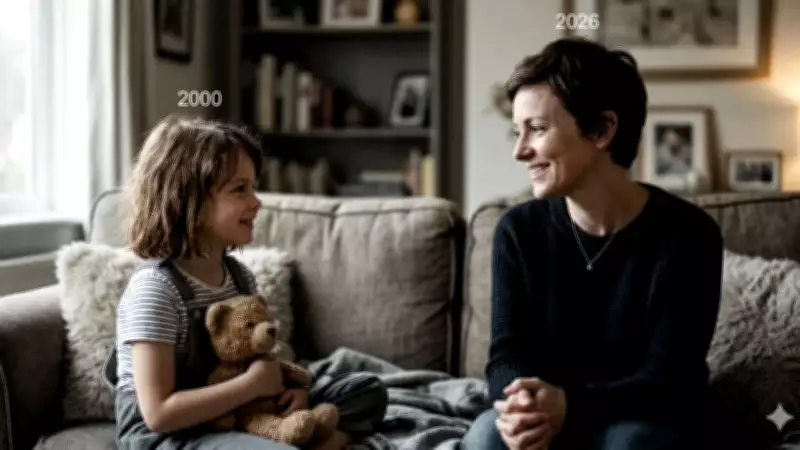
Going back to one's childhood self through recreation is a very creative and imaginative experience that combines memory, visual imagination, and storytelling. It enables the individual to go back to another version of themselves and transform his/her memories into an artistic expression.
What Is Childhood Self Recreation?
Recreation is often employed in the creation of digital art, in photography, as well as in journal entries, where emotional remembrance is critical. The recreation involves focusing on facial expressions, clothing, environment, and little behaviors when one was still young. In doing so, the recreation does not rely entirely on the accurate remembrance of what happened, but on the emotional essence of the event, which is then transformed into a narrative with the aid of visual techniques.
Gemini AI Prompts to Create Your 'Childhood Self' Portraits
Here are some example prompts you can use with Gemini AI to generate childhood self portraits:

- Prompt 1: A black and white cinematic portrait of a woman facing her childhood self across a table with a birthday cake in the center. The cake has candles forming the number '25'. The child is labeled '2001' above her, and the adult is labeled '2026'. Both look at each other with soft emotional smiles. Studio lighting, shallow depth of field, emotional storytelling, fine art photography style, minimal background, highly detailed skin texture.
- Prompt 2: A creative conceptual portrait where a grown woman looks into a mirror and sees her childhood self reflected. The reflection shows '1999' while the real person is labeled '2026'. Emotional, symbolic composition, soft studio lighting, minimal modern interior, fine art photography style with surreal realism.
- Prompt 3: A split-frame cinematic portrait showing two timelines: standing and holding each others' hand. On the right, a child labeled '2001' looking forward; on the left, the same person as an adult labeled '2026' looking back. Black and white aesthetic, dramatic lighting, symmetrical composition, ultra-detailed fine art photography.
- Prompt 4: A close-up emotional black and white portrait of a woman gently smiling while looking at her childhood self across a sofa. The child is labeled '2001' and the adult '2026'. Focus on facial expressions, soft cinematic lighting, shallow depth of field, realistic skin texture, intimate emotional storytelling style.
- Prompt 5: A high-end editorial studio portrait of a woman and her childhood self standing and look at each other. The child is labeled '2001' and the adult '2026'. Clean grey background, softbox lighting, symmetrical composition, fashion photography style, ultra-sharp detail, elegant and modern emotional concept.
- Prompt 6: A top-down cinematic composition showing a woman and her childhood self seated across a round table. In the center is a birthday cake with '25' candles. The child is labeled '2001' and the adult '2026'. Objects like old toys and modern items subtly placed on each side. Soft neutral lighting, minimalist aesthetic, fine art photography style.
How to Create Your Childhood Self: Step-by-Step Guide
The creation of the childhood self-portrait starts by organising one's memory in an organised fashion. Here, the emphasis lies in finding the features from childhood that include hairstyle, facial expression, clothes, surroundings, and many more. Such features are not regarded as historical data, but rather feelings that have been stored within one's mind over the years. The method will work effectively if one remembers such things spontaneously and turns them into imagery without being too particular.
Step 1: Define the Core Childhood Version
The process begins by deciding the exact age range you want to recreate, such as 5, 8, or 12 years old. This helps Gemini structure facial proportions, body type, and expression accurately. The age selection also influences clothing style and environmental context in the output.
Step 2: Write a Detailed Base Prompt
A structured prompt must be prepared before inputting into Gemini. The description should include physical traits, emotional expression, and environment. The clarity of description directly impacts output quality.

Step 3: Add Memory-Based Details
Gemini produces stronger results when personal memory cues are included. These may involve school uniforms, favourite toys, room settings, or seasonal details. The inclusion of such elements helps the AI construct a more personalised visual identity rather than a generic child portrait.
Step 4: Generate and Review Output
After submitting the prompt, the AI generates the first version. This stage involves reviewing facial accuracy, emotional tone, and background consistency. If the result does not align with expectations, adjustments to the prompt are required instead of starting from scratch.
Step 5: Refine Through Iteration
Gemini allows repeated refinement. Small changes in wording such as lighting, expression, or clothing style should be applied gradually. This step improves realism and emotional depth in the final image.
Quick Practical Tips for Better Results
- Tip 1: Focus on emotions first. The emotional tone of childhood memories often creates a more authentic result than precise physical accuracy. Expression and mood should guide the creation process.
- Tip 2: Use consistent memory anchors. Certain repeated memories, such as school uniforms or favourite toys, help maintain stability in the visual reconstruction.
- Tip 3: Keep details simple. Overloading the image with excessive elements can dilute the impact. Simplicity allows the core memory to stand out clearly.
- Tip 4: Blend imagination with memory. Not all childhood details are fully remembered, so filling gaps with thoughtful imagination helps complete the visual story.
- Tip 5: Focus on personal storytelling. The final result works best when it reflects a personal narrative rather than a generic childhood representation.
About the Author: The TOI Tech Desk is a dedicated team of journalists committed to delivering the latest and most relevant news from the world of technology to readers of The Times of India. TOI Tech Desk's news coverage spans a wide spectrum across gadget launches, gadget reviews, trends, in-depth analysis, exclusive reports and breaking stories that impact technology and the digital universe. Be it how-tos or the latest happenings in AI, cybersecurity, personal gadgets, platforms like WhatsApp, Instagram, Facebook and more; TOI Tech Desk brings the news with accuracy and authenticity.