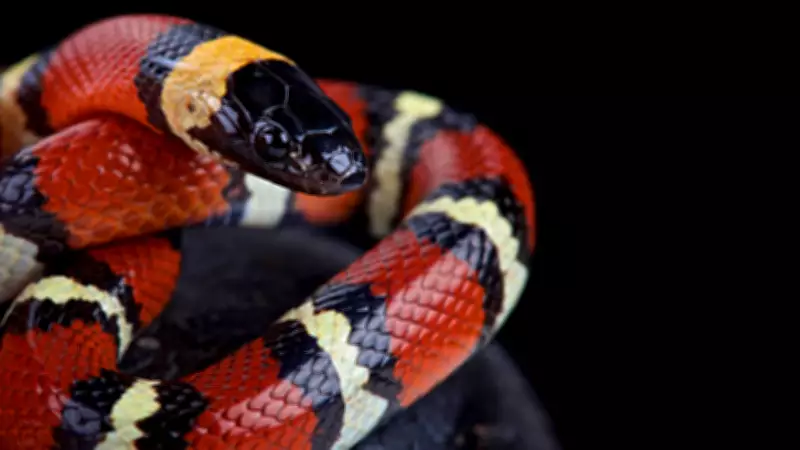
There is an old rhyme that has been drilled into the heads of hikers, children, and anyone who has spent time in the American South: "Red on yellow, kill a fellow. Red on black, friend of Jack." This saying is meant to help distinguish between the deadly coral snake and other colorful, dangerous-looking reptiles. However, nature does not always follow the rules humans create.
The Scarlet Kingsnake: A Case of Mistaken Identity
The scarlet kingsnake is living proof of this. This absolutely stunning red reptile is so frequently mistaken for a coral snake that it has practically become a rite of passage for the species. People see the vibrant red, yellow bands, and black stripes, and they panic. They believe they are about to die. Some even kill the poor snake on sight, convinced they are protecting themselves from a venomous killer. However, the scarlet kingsnake is not venomous at all. It is completely and totally harmless.
The Confusion That Persists
The scarlet kingsnake is genuinely beautiful. It has striking bands of red, yellow, and black that run the length of its body in a pattern that looks unsettlingly similar to a coral snake at first glance. Both snakes are found in similar geographic areas, mostly across the southeastern United States. Both are relatively small, typically ranging from 16 to 24 inches, although some can stretch to about 27 inches. Both have the same eye-catching coloration that makes them stand out against the leaf litter and branches of the forest floor. If you are not paying attention, they could easily fool you.

Key Differences in Pattern
There are actual differences between the two species. The bands on a scarlet kingsnake are arranged differently from those on a coral snake. Coral snakes have red bands that touch yellow bands directly, hence the warning "red on yellow, kill a fellow." Scarlet kingsnakes have black bands separating the red from the yellow. So, the pattern goes red-black-yellow-black-red, versus the coral snake's red-yellow-red-yellow pattern. This is a real difference, but it is the kind of detail that is hard to remember when you are standing in front of a coiled snake and your adrenaline is pumping.
A Harmless Hunter
What makes the scarlet kingsnake so misunderstood is that it is actually a very beneficial snake to have around. These snakes eat other snakes, mostly smaller ones. They are ophiophagous, which is a fancy way of saying they eat reptiles and other snakes. In fact, they will eat smaller snakes without hesitation, including venomous species that people should actually be worried about. If anything, having scarlet kingsnakes in your yard is a good thing.
The Real Problem
The tragedy here is that scarlet kingsnakes have been killed unnecessarily for decades because of this confusion. People see the red bands and panic without actually looking at the pattern carefully. The coral snake, on the other hand, is genuinely venomous. It is the one you should actually be careful around. However, coral snakes are reclusive. If you ever see a snake with red, yellow, and black bands in the South, take a second. Look at the pattern. Check whether the red is touching the yellow.