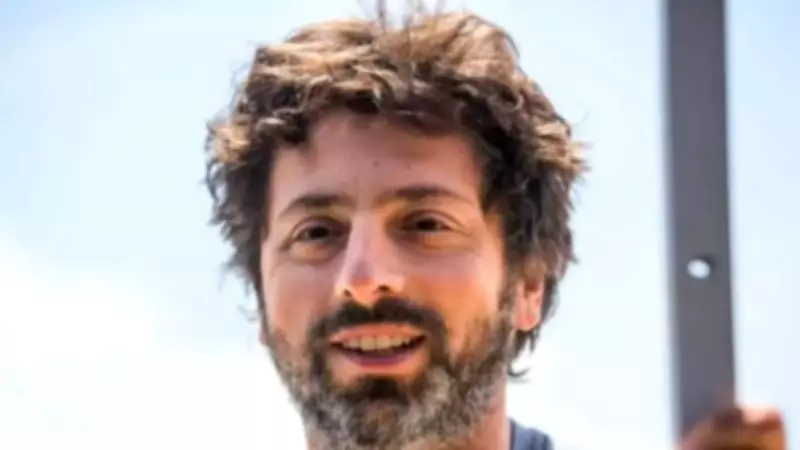
In a world dominated by algorithmic feeds, instant validation, and curated highlight reels, young people today face a paradox: they have more access to opportunity than any generation before them, yet a creeping sense that the mountains ahead are too steep to climb. Sergey Brin, co-founder of Google, sees this paradox clearly and gently pushes back against it. His words do not dismiss the anxiety; they reframe it.
Quote of the Day by Sergey Brin
“I feel there's an existential angst among young people. I didn't have that. They see enormous mountains, where I only saw one little hill to climb.”
What the Quote Actually Means
At first glance, this reads like an older generation failing to understand the pressures of a newer one. However, that would be a misreading. Brin is not saying the mountains do not exist; he is saying that the way you perceive a challenge before you begin determines whether you begin at all. The word “angst” is precise. It does not mean fear of a specific, identifiable threat—that would be anxiety or worry. Existential angst is a broader, more diffuse unease: a sense that the sheer scale of the world, its complexity, its problems, its competition, makes individual effort feel futile before it even starts. Brin is identifying something real in the emotional landscape of young people today and tracing it directly to perception.

What Brin saw when he started Google was not a mountain. He saw a single problem: web pages had no reliable way of being ranked by importance. That was the hill. He climbed it. The fact that climbing it eventually meant building one of the most powerful companies in human history was a consequence of the work, not the weight he carried at the start.
The deeper idea here is about the unit of ambition. Young people today are often told to “think big” and “change the world” before they have solved anything at all. The enormity of the expected goal becomes the obstacle, not the work itself. Brin's instinct was the opposite: find the specific, tractable thing in front of you and climb that. The mountain is what it looks like from a distance. Up close, it is always a series of hills.
There is also something embedded here about the relationship between expectation and paralysis. When you perceive that the challenge or obstacle ahead of you is enormous and you see the full scale of what it takes to succeed, the rational response is often inaction. You feel that the mountain is too high and the risk of failure is also visible. The gap between where you are and where you need to be can be demoralising at times. But when that same task is reframed as a hill, you start working towards it. And starting, as Brin's own story shows, is where everything begins.
Why This Message Matters Today
Today, the generation entering the workforce has already grown up with information about global problems at a pace no previous generation has experienced. Economic inequality, geopolitical instability, AI displacement—their feed never stops, and neither does the sense that the stakes are impossibly high. Additionally, social media has added another layer: the visibility of other people's success, condensed and curated into a stream of apparent mountains already conquered by peers, makes the task of starting your own climb feel even more daunting.
Into that environment, Brin's observation is quietly radical. It does not tell young people to ignore the scale of the world's problems. It tells them to stop letting that scale become the reason they do not act. The existential frame—the sense that everything is enormous and interconnected and weighted with consequence—is not a map. It is a feeling. And feelings, unlike maps, can be changed.
There is also a practical dimension. The young people who actually reshape industries, build successful organisations, and solve meaningful problems are not the ones who spent their early years contemplating the size of the mountain. In fact, these are the people who found a specific hill, then climbed it, looked around, and found the next one, moving on. Progress, in practice, is sequential. It does not require you to see the whole range before you take the first step.

Brin is not dismissing ambition. He is redirecting it away from the paralysing overview and toward the actionable particular. That shift, from mountain-gazing to hill-climbing, may be the most useful thing a young person can do with this quote.
A Simple Takeaway
Sergey Brin was born in Moscow in 1973 and emigrated to the United States with his family at the age of six. He met Larry Page at Stanford University in 1995, where both were PhD students in computer science. Their collaboration, initially an academic project exploring how links between web pages could reveal their relative importance, became Google, launched in 1998 from a garage in Menlo Park. Brin served as President of Google and later of its parent company, Alphabet, before stepping back from day-to-day operations in 2019. He did not set out to build the world's most powerful technology company. He set out to solve a specific problem in how information was indexed and retrieved. That was the hill. He climbed it. The view from the top turned out to be extraordinary, but only because he started climbing in the first place.