Google CEO Sundar Pichai Advocates for Unified AI Development Approach
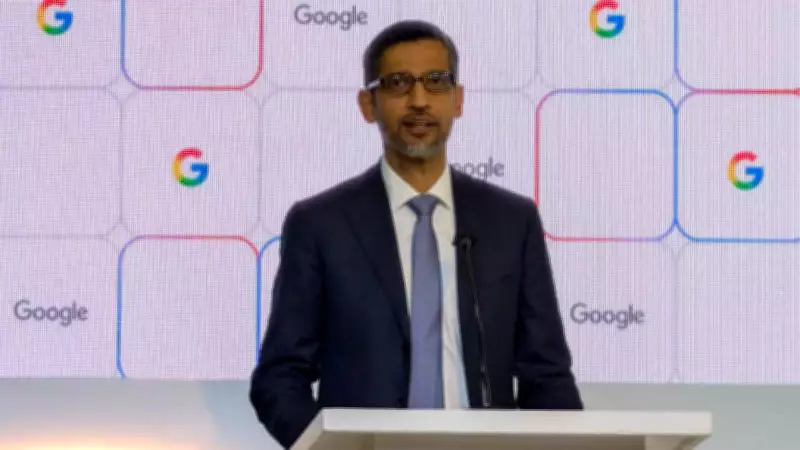
During a keynote address at the India AI Impact Summit 2026, Google CEO Sundar Pichai issued a compelling call to action for technology companies worldwide. He urged all organizations involved in developing artificial intelligence solutions to collaborate closely, not only to drive innovation and transform businesses but also to prioritize upskilling and empowering workers across industries.
AI's Transformative Potential for Global Challenges
Pichai articulated a powerful vision for artificial intelligence, stating that "AI can improve billions of lives and solve some of the hardest problems in science." He emphasized that while the technology presents unprecedented opportunities, the best outcomes are not guaranteed and require deliberate, responsible action from the global tech community.
In a subsequent post on social media platform X, Pichai elaborated on his summit remarks, noting that addressing the India AI Action Summit represented "a profound personal honor." He reinforced his central message that the industry must "pursue AI boldly, approach it responsibly, and work together through this moment."

Bold Innovation Across Scientific Frontiers
The Google CEO expressed extraordinary optimism about AI's potential, describing it as "the biggest platform shift of our lifetimes" and the technology that has him "dreaming bigger" than any other innovation. He highlighted several groundbreaking applications that demonstrate AI's capacity to accelerate scientific discovery:
- AlphaFold Breakthrough: Google DeepMind's solution to the fifty-year challenge of predicting protein structures, which has compressed decades of research into an open database now used by over three million researchers across 190 countries
- Drug Discovery Acceleration: Isomorphic Labs' work to reimagine pharmaceutical development using AI to bring life-saving medicines to market faster
- DNA Research Enhancement: Cataloging DNA disease markers and developing AI agents that can serve as true partners in scientific methodology
Expanding AI Access to Underserved Regions
Pichai stressed the importance of extending AI benefits to regions that have traditionally lacked technological access. He provided specific examples of Google's initiatives in this area:
- El Salvador Partnership: Collaborating with the government to provide affordable, AI-powered medical diagnosis and treatment to thousands who previously couldn't access healthcare
- Indian Agricultural Support: Helping farmers protect their livelihoods through AI-powered monsoon forecasts, enabled by Google's Neural GCM model and distributed to millions of farmers by the Indian government
- African Language Inclusion: Working with universities and NGOs in Ghana to expand research and open-source tools across more than twenty African languages
Responsible Implementation and Infrastructure Investment
The Google CEO emphasized that technological advancement must be accompanied by responsible implementation. He warned against allowing "the digital divide to become an AI divide" and outlined several key strategies:
- Infrastructure Development: Reiterating Google's $15 billion infrastructure investment in India, with additional investments in Thailand, Malaysia, and other regions
- Connectivity Enhancement: Building a vast network of subsea fiber optic cables, including four new systems between the United States and India as part of the America-India Connect Initiative
- Workforce Transformation: Acknowledging that AI will reshape employment by automating some roles, evolving others, and creating entirely new careers
Skill Development and Trust Building
Pichai highlighted Google's commitment to preparing workers for the AI-driven economy, noting that the company has already trained 100 million people in digital skills. He announced a new Google AI Professional Certificate designed to help people master AI applications in their jobs, available globally.

Regarding trust and authenticity, Pichai pointed to tools like SynthID, which journalists and citizen fact-checkers worldwide use to verify content authenticity. He emphasized that trust remains "the bedrock of adoption" for AI technologies.
Collaborative Governance and Global Implementation
The Google CEO concluded by stressing that collaboration across sectors is essential to realizing AI's full potential. He identified several areas where partnership is crucial:
- Government Regulation and Innovation: Governments must establish appropriate regulatory frameworks while also serving as innovators in bringing AI to public services
- Practical Applications: Examples include the Ugandan government using AI and satellite imagery to prioritize electrification areas, and Memphis, Tennessee using AI scans from buses to identify and repair potholes more efficiently
- Corporate Responsibility: Technology companies must build products that enhance knowledge, creativity, and productivity while helping people achieve their aspirations
Pichai called on companies of all sizes to harness AI for business transformation and worker empowerment, expressing confidence that the global community has both "the capability" and "the will" to improve lives at a "once-in-generation scale." He concluded with a simple but powerful directive: "Now we must do the work, together."