The Tyrannosaurus rex has long been depicted as a slow, heavy dinosaur with powerful, flat-footed steps that shook the ground. However, a new scientific study is now adding a different perspective to that enduring image. Researchers suggest that this giant predator may have moved in a manner closer to modern birds than to reptiles.
The study, published in the journal Royal Society Open Science, takes a closer look at how the T. rex foot actually functioned during movement.
Rethinking How T. rex Used Its Feet
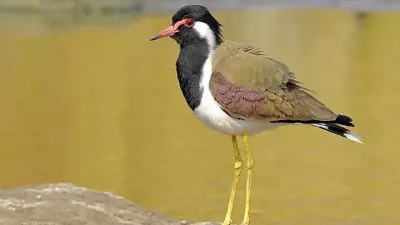
The study questions the long-held idea that T. rex walked with its entire foot touching the ground. Instead, it proposes a walking style known as digitigrade movement, meaning walking primarily on the toes while the heel remains raised. This is how birds move today. The research suggests that T. rex may have employed a similar style, which could significantly alter our understanding of its locomotion.

How the Study Was Conducted
The research was carried out by Adrian Tussel Boeye along with Kyle Logan Atkins-Weltman, J. Logan King, and Scott Swann. The work involved institutions including the College of the Atlantic, Oklahoma State University College of Osteopathic Medicine, and Colorado Northwestern Community College. The team utilized biomechanics, the study of how bodies move using science and physics.
They focused on a simple question: How did the T. rex's foot touch the ground? To answer this, they examined fossil bones and constructed movement models. These models tested three possible walking styles: heel-first, mid-foot, and toe-first. The results indicated that the toe-first movement aligns best with the evidence.
What Fossil Tracks Show
The study also examined fossil footprints, a field known as ichnology. These tracks help scientists understand how dinosaurs may have moved on actual ground. In many large dinosaur footprints, deeper impressions appear near the toe area, supporting the idea that more weight was borne on the front part of the foot. However, the researchers noted that footprints depend on surface conditions like mud or soft soil, making them useful but not always perfect evidence.
How Fast Could T. rex Move?
The study also provides basic speed estimates for T. rex. Adult T. rex may have moved at speeds between 11 and 25 miles per hour, depending on size and age. Younger T. rex were likely faster, while very large adults, including known specimens like Sue, were slower. The study suggests that toe-first movement could increase speed estimates by about 20 percent compared to flat-footed movement. These are short-burst speeds, not long-distance running speeds.
Image: Canva (for representative purposes only)