Amazing fossils are not always found through costly research and long expeditions to distant mountain peaks. In September 2014, young Wylie Brys went on a family trip with his father, Tim, in Mansfield, Texas. The two were searching for fossils at a muddy and heavily dug construction site located right behind a newly emerging shopping centre, with the firm intention of collecting common fossils like shark teeth.
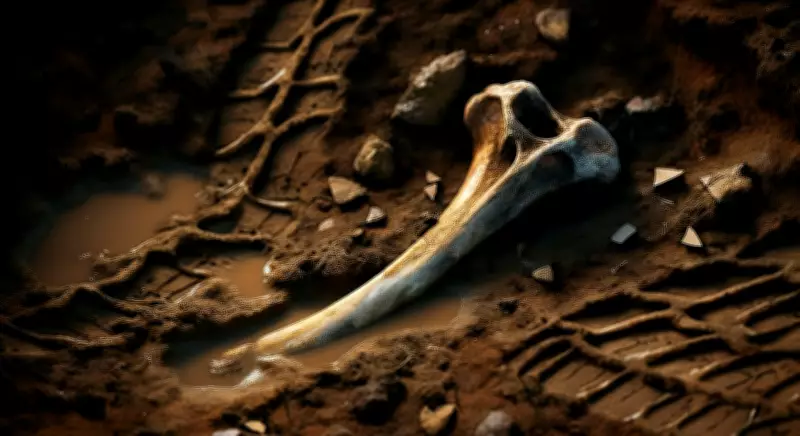
As the child walked slightly ahead of his father, his sharp eyes caught a glimpse of a purplish-grey, waterlogged object protruding from the churned-up earth. Wylie picked up the chunk of bone and proudly ran back to show his dad. While his father initially guessed it might just be an ordinary piece of an ancient turtle shell, he noticed that the fragment was several inches long and surprisingly dense, signalling that they had stumbled onto something far more substantial.
Recognising the possible importance of the discovery, the family got in touch with the earth sciences faculty of a nearby university for an investigation. It did not take long for the professionals to recognise that the curiosity of a kid had led them to an immaculate time capsule from the Late Cretaceous period.

From a Field Discovery to a University Excavation
The early discovery soon turned into a salvage mission as the builders were waiting to resume their operations on the site. According to the research archive compiled by the Southern Methodist University, the one rib bone that caught the eye of the young boy was a portal to a major paleontological site. Scientists from the university spent several days painstakingly sifting through the dirt in search of the bones, finally unearthing an extremely valuable, partially articulated specimen of a skeleton. They managed to unearth crucial parts of the vertebrae, ribs, limbs, and armour-plated skull roof.
What made this discovery really unique was the fact that the rock layer around the dinosaur was completely made up of shallow marine sediments from the period when a giant sea dominated the middle part of Texas. Scientists deduced that this giant terrestrial animal must have died close to an ancient riverbed and then was washed out to sea by a storm, drifted into the deep ocean, and finally settled on the sea floor.
Carving Their Name in Stone
After all these years, the patience and responsible treatment of the specimen were rewarded. According to a peer-reviewed article in the journal PeerJ, analysing the fine differences in the dinosaur's cranial armour and skull fragments is the most accurate way to define a new family of dinosaurs. When researchers meticulously cleaned the Texas specimen and compared its distinct skull structure to existing collections, they confirmed it was an entirely unique, previously unknown genus of nodosaurid, a family of squat, plant-eating dinosaurs that were shaped like compact tanks and covered in heavy, bony armour plates.
To honour the incredible team effort that saved the fossil, scientists formally christened the new species Ferropectis brysorum, using the Latin words for "iron body" and forever naming the dinosaur after Wylie and his father. The new species, named Ferropectis brysorum, highlights the rich paleontological history hidden beneath modern landscapes.
Today, the beautiful fossil remains serve as a wonderful reminder that our fast-paced modern neighbourhoods are built directly on top of majestic, forgotten landscapes. While we go about our grocery shopping or run daily errands, the deep history of our planet is resting just inches beneath the concrete, waiting for someone to take a closer look. Indeed, it is an enjoyable and humble realisation that through playfulness alone, a child was able to drag a 100-million-year-old tank-like dinosaur from the shadows of obscurity to the books of science forever.