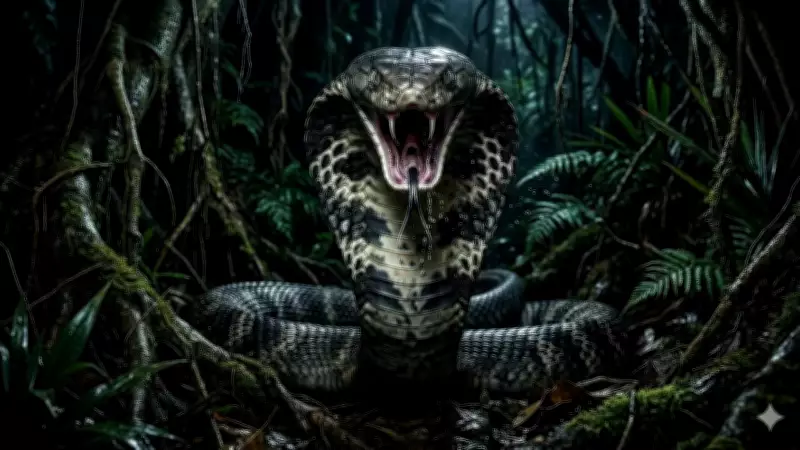
Cobras are undoubtedly some of the most intriguing snakes globally because of their lethal poison, characteristic hoods, and widespread distribution from Asia to Africa. This article discusses the largest cobras in the world, focusing on their size, habitats, behavior, and hunting or defense mechanisms.
King Cobra
The king cobra easily takes the top spot as the largest venomous snake. It typically grows between 10 and 12 feet, though some individuals have reportedly reached over 18 feet. Found across South and Southeast Asia, it prefers dense forests and quiet habitats. Its diet mainly consists of other snakes. Experts often note that it relies on intimidation before striking. When it rises, a large portion of its body lifts off the ground, creating a truly imposing sight. Despite its size and deadly venom, it appears to avoid humans when possible, only attacking when threatened.
Forest Cobra
The forest cobra is considered the longest of the true cobras. It commonly reaches around 7 feet, but some specimens reportedly exceed 10 feet. Native to central Africa, it lives in forests, wetlands, and even near coastal areas. It is incredibly adaptable, capable of climbing trees, swimming with ease, and moving quickly on land. Its size alone makes it intimidating. Experts suggest its venom is potent, and its defensive display is quite dramatic. Still, like many large snakes, it prefers avoiding confrontation unless cornered.

Black-Necked Spitting Cobra
The black-necked spitting cobra has a maximum length of 7.2 feet, placing it in the category of large snakes. This species occurs in many habitats, including central African regions. It has a dark neck and a contrasting body. Its distinguishing feature is the ability to spit venom at an enemy's eyes with precision. This behavior appears defensive rather than aggressive. The animal's behavior seems erratic when disturbed.
Ashe's Spitting Cobra
Ashe's spitting cobra is often called the giant spitting cobra. It usually measures between 4.3 and 6.6 feet, though some individuals reportedly reach nearly 9 feet. Native to East Africa, it prefers dry, lowland regions. Its venom-spitting ability makes it particularly unique. It relies heavily on this defense mechanism, aiming for the eyes of potential threats. Experts suggest it may be one of the heavier cobras, though exact weights are unclear. Its size and behavior give it a confident, almost bold presence.
Egyptian Cobra
The Egyptian cobra grows to around 5 to 6 feet, making it one of the larger African cobras. It is found across northern Africa, often in deserts and scrublands. Its dark coloring adds to its intimidating look. Long-standing stories link it to ancient Egypt, though some details remain debated. Its venom appears both powerful and fast-acting. When threatened, it raises its body and spreads its hood wide. Experts say it can become highly defensive if provoked.
Snouted Cobra
The snouted cobra typically reaches lengths of up to 5.9 feet. It lives mostly in grasslands and semi-desert areas across parts of Africa. Its slightly elongated snout gives it a distinctive appearance. This species spends most of its time on the ground, actively searching for prey rather than waiting in ambush. When disturbed, it displays the classic hood and hissing behavior. It appears less inclined to climb compared to some other cobras. Its venom is still potent, making it dangerous despite its more grounded lifestyle.
Cape Cobra
The Cape cobra measures between 3.9 and 5.2 feet and is known for its speed. Found in southern Africa, it comes in a range of colors, from yellow to dark brown or black. This cobra is active during the day, which increases the chances of encounters with humans. It hunts small animals and reacts quickly when threatened. Experts often describe it as alert and responsive. Its venom is highly toxic, affecting the nervous system. Despite its size, it is considered one of the more dangerous species in its region.

Indian Cobra
Indian cobras generally range between 3.3 and 5 feet long, although some can be much larger. They are found throughout the Indian subcontinent and inhabit areas around human populations. The snake is easily recognizable by the spectacle-like marking on its hood. The Indian cobra is culturally important and has many references in mythology. It is known to be highly potent, with venom that affects the nervous system quickly. Although sometimes docile, it can turn defensive very quickly.
Monocled Cobra
Monocled cobras can grow from 3.6 to 4.9 feet in size, while some specimens have been known to exceed that. These snakes live all over South and Southeast Asia, usually near water sources or farmland. Their name comes from the round hood marking on their head. Monocled cobras are very adaptable, which may explain why they tend to encounter people. Their venom is both potent and quick-acting.
Chinese Cobra
The Chinese cobra is the smallest among this group, usually growing between 3.9 and 4.9 feet. It lives across southern China and Taiwan, often in rural or semi-natural areas. Its dark body and lighter neck markings give it a distinctive look. Despite its smaller size, it is far from harmless. Experts say its venom can cause serious tissue damage. It appears to prefer avoiding humans, but when cornered, it raises its hood and strikes with surprising speed.